Stay current with our airline news coverage.
What Makes an Approach Unstable
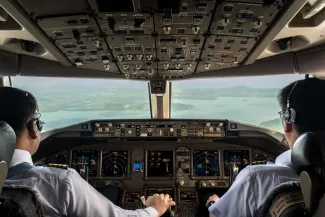
An unstable approach is exactly what it sounds like: the aircraft isn't where it's supposed to be as it lines up to land. Maybe the speed's off, the descent rate's too steep, or the plane isn't properly configured with flaps and landing gear. Aviation organizations recommend stabilizing the approach by a minimum height of either 1,000 feet (305 meters) or 500 feet (152 meters) above airport elevation, depending on whether you're landing in instrument or visual conditions, according to Simple Flying. By 500 feet (152 meters) in good weather, pilots should have nailed the proper speed, landing configuration, and rate of descent. If those boxes aren't checked, the procedure is clear: execute a go-around, circle back, and try again. That's the rule. The published procedure. The thing you brief in training. And yet, 97% of the time, pilots don't do it.Why Pilots Keep Landing Anyway
The good news, if you can call it that, is this doesn't mean the majority of landings are chaotic disasters. Most unstable approaches still end with everyone walking off the plane, bags in hand, complaining about the price of airport coffee. But that's also part of the problem. According to Simple Flying, psychology and the human factor play a huge part in what is really a very short space of time relative to an overall flight. When things mostly turn out fine, the behavior gets reinforced. You've already flown for six, eight, twelve hours. You're minutes from the gate. Fuel is tight, the crew is tired, the passengers are restless, and there's another flight waiting for your gate. Going around feels like admitting failure, like wasting fuel, like inconveniencing everyone. So you keep going. Flight Safety Foundation research, cited in multiple analyses, found that flight crews in only about 3% of unstable approaches actually comply with existing go-around policies. The disparity isn't about skill or training; it's about completion bias, cockpit hierarchy, and the crushing momentum of just wanting to be done. The FAA's ACT ARC Recommendation 24-2 noted that approximately 10% of all approaches are unstable, yet only about 0.5% of those follow the mandatory go-around policy.The Safety Math That Should Worry You
Here's where it gets uncomfortable. IATA data from 2011 to 2015 identified unstable approaches as a factor in 14% of approach-and-landing accidents during that period, according to research compiled by Simple Flying. An earlier Flight Safety Foundation review from 1984 to 1997 found unstabilized approaches were causal factors in 66% of 76 approach-and-landing accidents and serious incidents worldwide. Those aren't fender-benders. We're talking runway excursions, hard landings, tail strikes, controlled flight into terrain, and loss of control. The kind of incidents that turn a delayed arrival into an evacuation, an investigation, or worse. Yet the FAA material also emphasizes that the vast majority of landings that follow an unstable approach have no adverse outcome. That's the paradox that keeps this pattern alive: most of the time, nothing bad happens. So the pressure to continue outweighs the theoretical risk of disaster, even when the theoretical risk has a very real body count attached to it.Should This Change How You Fly?
Look, I'm not about to tell you to stop flying or start white-knuckling every descent. Commercial aviation is still absurdly safe compared to literally every other way you can move your body across a continent. But this study does expose a gap between what the industry says should happen and what actually happens in the cockpit when the ground is rushing up and the clock is ticking. For travelers, especially those of us who rack up hundreds of flights bouncing between hostels, work gigs, and visa runs, the takeaway isn't panic. It's awareness. The next time you feel that hard thump on landing or notice the plane coming in steep and fast, you're probably witnessing one of those 97% moments where the crew chose to push through instead of looping back around. The real question is for airlines and regulators: if go-arounds are the correct response to unstable approaches but pilots almost never execute them, then the system isn't broken by accident. It's designed, through incentives and culture and schedule pressure, to reward continuation over caution. Until that changes, the gap between procedure and practice will keep widening, one landing at a time. And we'll all keep holding our breath on final approach, whether we realize it or not.More travel news
FAA Orders Seat Track Checks on 453 Boeing 737 MAXs
WASHINGTON, D.C. - Federal regulators target Boeing's MAX fleet again, this time over cabin seat installations that may not hold properly during flight.
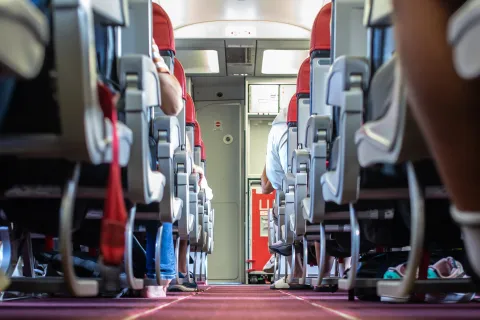
Boeing MAX 8s Scrapped After Just Six Months of Flight
São Paulo, Brazil - Two Boeing 737 MAX 8 aircraft retired after just six months in service with GOL Linhas Aéreas are now being dismantled, highlighting ongoing quality control concerns.
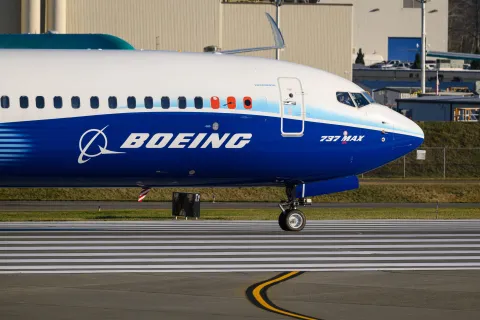
Muscle Memory Betrays 737 Pilots Flying Dreamliners
Experienced 737 pilots transitioning to Boeing's 787 Dreamliner find their hardest test isn't mastering new systems; it's unlearning years of ingrained reflexes during those crucial first approaches.
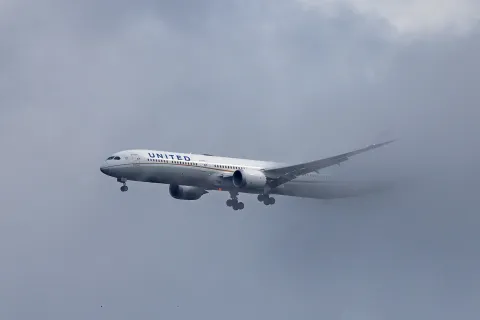
Ultra-Long Flights May Require Fuel Stops Now
GLOBAL - Ultra-long-haul aviation is hitting hard operational limits, with even minor route changes forcing airlines to add unexpected fuel stops on record-breaking nonstop flights.
About the Author

Mariana Torres
Mariana is a 33-year-old travel writer and backpacker who specializes in finding the pulse of a place far beyond the tourist maps.