Stay current with our airline news coverage.
What Went Wrong in Manufacturing
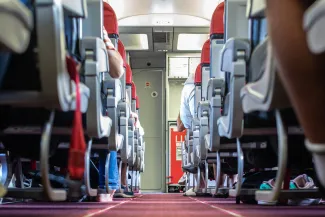
The directive follows Boeing's own service bulletin, issued in December 2025, alerting airlines and regulators to the installation problem. The core issue involves seat track fittings on passenger seat assemblies that may not properly engage with the floor-mounted rails designed to lock seats in place. If the track holes were drilled too large, critical shear plungers could fail to seat correctly, leaving seats vulnerable under increased loads. For travelers, that translates to a risk most never consider when settling into their assigned row: whether the seat itself is securely fastened to the aircraft. While the FAA frames the directive as precautionary, the regulatory language makes clear that improperly secured seats could injure passengers and crew, block evacuation routes, or become projectiles in severe turbulence or emergency landings. The proposed directive is not yet mandatory. It remains open for public comment, a standard regulatory step that allows airlines, manufacturers, and industry stakeholders to weigh in before the FAA issues a final rule. If adopted, operators would be required to inspect specific seat track holes and perform corrective actions before affected aircraft can continue flying.Another Setback for the MAX Program
The timing is less than ideal for Boeing. The 737 MAX has been flying commercially again since late 2020, following a nearly two-year grounding after two fatal crashes tied to the Maneuvering Characteristics Augmentation System. The recertification process subjected the MAX to some of the most intense regulatory oversight in aviation history, and Boeing has spent years working to rebuild trust with airlines, passengers, and regulators. This proposed directive, while unrelated to the MCAS system, adds another data point to an already complicated narrative. It signals that even after the MAX's return to service, the FAA remains willing to issue targeted safety directives based on manufacturing and installation issues flagged by Boeing's own service bulletins. For airlines operating the MAX, the directive represents another compliance hurdle: scheduling inspections, potentially pulling aircraft from service, and coordinating repairs or part replacements if oversized holes are found. For passengers, it's a reminder that safety oversight is an ongoing process, not a one-time certification event.Should This Change Your Booking Strategy?
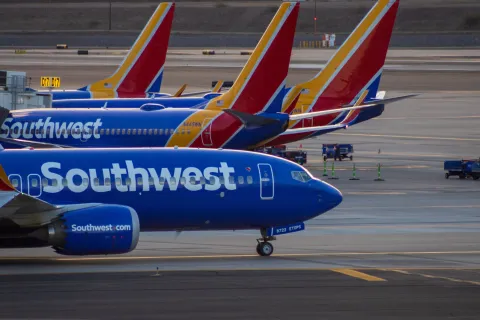
The reality is that most travelers won't know whether they're booked on one of the 453 affected aircraft until they check in, and even then, seat track compliance isn't information airlines advertise. The MAX variants covered by the proposed directive are workhorses on domestic and short-haul international routes for carriers including Southwest, United, and American, among others. From a practical standpoint, this isn't a reason to avoid the MAX outright. Airworthiness directives are routine in commercial aviation; they're how regulators address emerging issues before they escalate into safety events. The FAA's willingness to propose this directive reflects the system working as designed: identify a potential problem, mandate inspections, require fixes. That said, the MAX's history means some travelers will continue to avoid it on principle, and seat track issues, however technical, won't help Boeing's public relations challenge. If you're one of those travelers, most booking platforms and airline apps now display aircraft type during seat selection, making it easier to choose flights operated by 737-800s, A320s, or other narrowbody types. For those less concerned with aircraft type than with overall safety oversight, the directive is arguably reassuring evidence that the FAA is closely monitoring the MAX fleet and willing to act on manufacturing defects, even those affecting cabin components rather than flight-critical systems. The question is whether Boeing can close out these issues faster than new ones emerge, and whether the traveling public will eventually stop tracking every service bulletin and regulatory notice tied to the MAX's serial number.More travel news
U.S. Customs and Border Protection to End Routine Passport Stamps
CBP announced routine passport stamping will end during primary inspection, with limited exceptions; foreign visitors can access admission and authorized-stay details through I-94 or CBP Link.

Southwest, United seek older software on new 737 MAX jets
Southwest and United want earlier software on new 737 MAX deliveries as the FAA reviews a glitch that can block automated guidance after a missed approach if pilots alter the flight path.
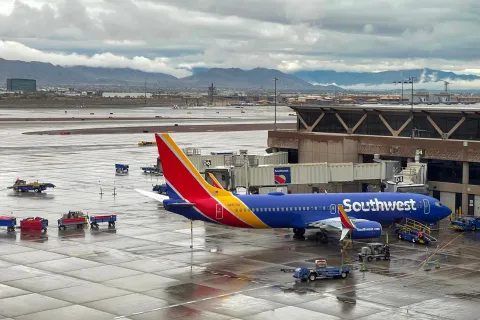
Certain Boeing 737 Max jets have missed-approach software glitch
Boeing is developing a fix for the glitch affecting in-service Max 8 and Max 9 jets running U.14; Southwest Airlines and United Airlines say their Max fleets la...

Jet Fuel Prices Have Doubled Since January
Jet fuel prices have doubled since January, and Leeham News is modeling potential ticket and cargo price effects if the increase persists.
About the Author

James Anthony
James Anthony is a Travel Writer at Jetsetter Guide covering European city breaks and luxury travel on a budget.