Stay current with our airline news coverage.
GLOBAL - The promise of a nonstop flight from Perth to London or New York to Singapore has always carried a certain romance. You settle in, maybe watch three movies, sleep a bit, and wake up on the other side of the world without ever touching down in between. But that guarantee? It's quietly slipping away.
Airlines operating ultra-long-haul routes on aircraft like the Boeing 787-9 are reaching the edge of what's operationally possible, and even small disruptions are forcing them to abandon nonstop service and introduce unexpected fuel stops, according to Reuters.
When 30 Minutes Changes Everything
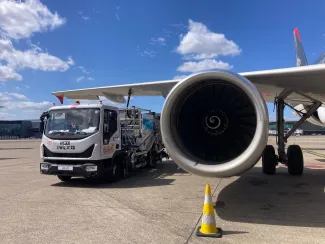
Here's the problem: These flights are so carefully planned that there's almost no margin for error. When you're pushing an aircraft to 7,565 nautical miles, there isn't room to simply add more fuel if something goes wrong. The tanks have volumetric and thermal limits; dispatchers on maximum-range Boeing 787-9 operations can load only about 100 metric tons of fuel, no matter how much they might want to carry more.
So what happens when geopolitics or weather forces a detour? On one fragile 787-9 route, a modest airspace change over the Middle East added just 30 to 45 minutes of flight time. That seemingly minor adjustment was enough to force the airline to abandon the nonstop and introduce a mandatory fuel stop in Singapore, according to Simple Flying.
"Even the smallest of adjustments can be catastrophic for a flight of this length, demonstrating how quickly the entire business case for an ultra-long-haul nonstop route can disappear when subjected to minor external disruptions," Simple Flying noted.
The Physics Airlines Can't Outrun
Ultra-long-haul routes typically run 15 to 20 hours and often exceed 8,000 nautical miles, leaving very little operational margin for fuel, payload, or rerouting, according to Simple Flying. On these missions, total fuel burn can reach approximately 143,000 to 195,000 kg per flight. Every pound counts.
When required trip fuel increases because of headwinds, weather deviations, or geopolitical events, airlines have one major variable they can adjust: payload. That means restricting ticket sales and leaving revenue seats empty to stay within safety margins, Simple Flying reported. "Dispatchers therefore restrict ticket sales, leaving revenue seats entirely empty to compensate for the less dense fuel," the publication explained.
Extreme heat at departure airports compounds the problem, further restricting takeoff weight on aircraft like the 787-9 and increasing the risk that nonstop sectors cannot be dispatched as planned.
Airlines Are Redesigning Cabins to Keep Nonstops Alive
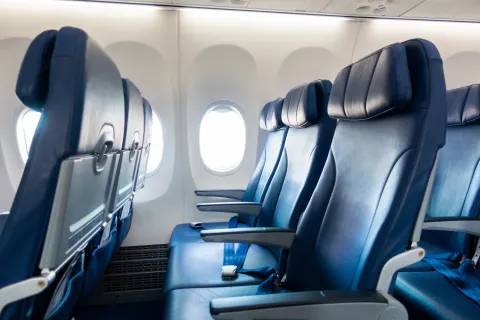
Some carriers are responding by fundamentally rethinking how they configure these aircraft. American Airlines has created a premium-heavy 787-9P subfleet that reduces economy seats to around 161, instead of a more typical 230-plus, and adds more premium suites. The goal? Lower passenger weight so the aircraft can carry greater fuel loads within weight limits and support ultra-long-haul reliability, according to Simple Flying.
Turkish Airlines is taking a similar approach. The carrier plans to launch nonstop Sydney service around late 2027 using A350-1000ULR aircraft, removing standard economy rows and adding premium suites to lower passenger weight and free up weight budget for fuel on ultra-long routes with strong headwinds, Simple Flying reported.
"True ultra-long-haul capability cannot be achieved by simply pushing a standard airframe to its limits... an airline must make a deliberate, upfront choice to sacrifice raw volume in favor of premium yields," Simple Flying observed.
What Changed, and Why Now?
The shift isn't purely about aircraft limitations. Geopolitical airspace closures, extended routing, adverse winds, high temperatures, and seasonal weather shifts are all pushing fuel requirements beyond what aircraft can safely carry at certified limits, according to Simple Flying. A modest additional onboard load over 14 hours can drive 125 to 320 kg of extra fuel burn, equating to roughly 155 to 400 liters of fuel and about $100 to $400 in added fuel cost per flight.
It's a delicate equation, and the margin for maneuvering is shrinking.
The Booking Calculus Just Changed
If you're shopping for ultra-long-haul tickets, it's worth asking a few new questions. Is the route operated by a 787-9 or similar aircraft already flying near its published range? Does it cross regions where airspace restrictions or seasonal headwinds could force detours? And is the airline transparent about the possibility of technical fuel stops?
The romance of a true nonstop flight hasn't disappeared, but it's becoming less of a guarantee and more of an ideal outcome, dependent on conditions outside your control. Airlines are still marketing these routes as nonstop, but operational reality is muddying that promise. Passengers whose "world's longest flight" experiences are disrupted by sudden technical fuel stops or payload-related offloads may find themselves on multi-segment trips they didn't book.
For now, the industry is adapting with premium-heavy cabins, purpose-built ULR variants, and stricter operational protocols. But the era when you could confidently assume a nonstop meant a nonstop, under any circumstance, may already be behind us.
More travel news
Southwest, United seek older software on new 737 MAX jets
Southwest and United want earlier software on new 737 MAX deliveries as the FAA reviews a glitch that can block automated guidance after a missed approach if pilots alter the flight path.
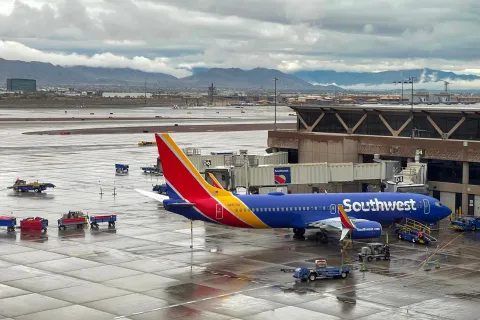
Certain Boeing 737 Max jets have missed-approach software glitch
Boeing is developing a fix for the glitch affecting in-service Max 8 and Max 9 jets running U.14; Southwest Airlines and United Airlines say their Max fleets la...
Jet Fuel Prices Have Doubled Since January
Jet fuel prices have doubled since January, and Leeham News is modeling potential ticket and cargo price effects if the increase persists.
Airlines Put Elite Status on a Higher Price Tag
NEW YORK, United States - Delta, United and other major airlines are raising elite status hurdles, leaving frequent flyers on discounted fares with less credit.
About the Author

Bob Vidra
Bob Vidra is News Editor at Jetsetter Guide, covering airlines, airports and the travel industry since 2023.