Stay current with our airline news coverage.
When Experience Becomes the Problem
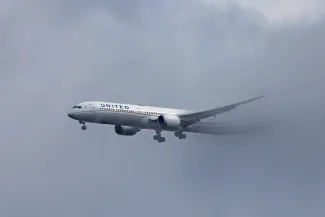
Here's something you might not expect: when a seasoned Boeing 737 pilot climbs into a 787 Dreamliner for the first time, their biggest obstacle isn't the technology. It's not the unfamiliar systems or the different displays. It's the thousands of hours sitting in their hands. For most airline pilots, moving from one Boeing aircraft to another is not a leap into the unknown. The manufacturer has long emphasized cockpit commonality, ensuring that crews transitioning between models encounter familiar displays, procedures, and operating philosophies. Yet when a pilot who has spent years flying the 737 lines up for their first approach in a 787 Dreamliner, one of their greatest challenges is not learning new systems; it is overcoming habits that have become deeply ingrained, according to Simple Flying. "Muscle memory becomes the enemy on a 737 pilot's first approach in the 787," Simple Flying reported.The Physics of Habit
This isn't about skill or systems knowledge. It's about muscle memory, that unconscious automation that happens when you've done something so many times your body just knows. After years of flying the 737, a pilot's hands develop automatic motor patterns for control column movement, thrust changes, and flare technique that are precisely tuned to that aircraft's specific handling and response, according to Simple Flying. The problem? The 787 is a fundamentally different airplane. It's a wide‑body, long‑range, composite aircraft with different aerodynamics, inertia, and integrated flight‑control logic compared with the narrower, more traditionally‑controlled 737, Simple Flying noted. In the 787, actions that felt perfectly natural in the 737 can produce unexpected results, forcing pilots to consciously override years of reflexive movements. What happens in practice is that on early 787 approaches, ex‑737 pilots are prone to overcontrol and pilot‑induced oscillation, as familiar inputs can cause larger‑than‑expected pitch or roll changes, according to Simple Flying. The aircraft responds differently to the same hand movements, and suddenly a routine approach requires intense concentration.Below the Level of Thought
The challenge runs deeper than simple adjustment. Muscle memory operates below conscious awareness, so pilots may intellectually understand the 787's differences while their hands still move as if they are flying a 737, Simple Flying explained. You can know something in your head and still have your body do the opposite. "The main task is not learning how to fly, but learning when not to react the way years of experience tell them to," according to Simple Flying. That's a fascinating inversion of the usual learning curve. Usually, experience makes things easier. Here, it can briefly make things harder.Training Gets Real About Reflexes
Airlines and Boeing haven't ignored this. Transition training now deliberately targets handling qualities and timing, using simulators to expose pilots to overcontrol scenarios and teach smaller, smoother control inputs, Simple Flying reported. The focus has shifted from classroom systems instruction to hands‑on retraining of reflexes. "The first few approaches often require heightened concentration because the transition from conscious adaptation to automatic skill is still in progress," according to Simple Flying. Regulatory and research findings cited by Simple Flying emphasize control feel, centering, and aircraft‑specific handling as key to reducing overcontrol and pilot‑induced oscillation risk when pilots move between types. Airlines operating mixed fleets report that cross‑training pilots onto new types requires structured, type‑specific handling training in addition to standard type‑rating and systems instruction, the publication noted. The industry routinely treats each Boeing type such as the 737, 777, and 787 as a separate type rating, requiring full additional training and certification for each, Simple Flying reported. That's not bureaucracy; it reflects genuine differences in how these aircraft fly and how pilots must interact with them.What Passengers Should Understand
If you're a nervous flyer, don't let this worry you. This isn't about safety risks slipping through the cracks. It's about the aviation industry recognizing and addressing a sophisticated human‑factors challenge head‑on. Modern transition programs use repeated simulator sessions to build new motor patterns before pilots ever fly passengers in the new type, according to Simple Flying. What's actually reassuring here is the level of detail the industry applies to pilot training. We're talking about fine‑tuning reflexes and control inputs down to fractions of an inch and split seconds, not hoping pilots will "figure it out" on the job. The recognition that muscle memory can be an obstacle is itself a sign of how seriously airlines take the transition process. For travelers, this story offers a window into what makes aviation so consistently safe: nothing is taken for granted, not even the skills of highly experienced pilots. Every aircraft demands respect and specific training, even within the same manufacturer's family. That 737 captain moving to the 787 isn't winging it on their first approach; they've spent hours in the simulator deliberately unlearning old habits and building new ones. The next time you're settling into your seat on a 787, you can be confident that the crew up front has done the hard work of retraining their hands to match the aircraft they're flying. Their muscle memory might have been the enemy once, but by the time you're aboard, it's become an ally again; just tuned to a different machine.More travel news
FAA Orders Boeing 737 Max Inspections for Fuselage Cracks
WASHINGTON - Federal regulators mandate structural inspections on nearly 1,500 Boeing 737 Max aircraft worldwide after identifying potential cracks near forward service doors.
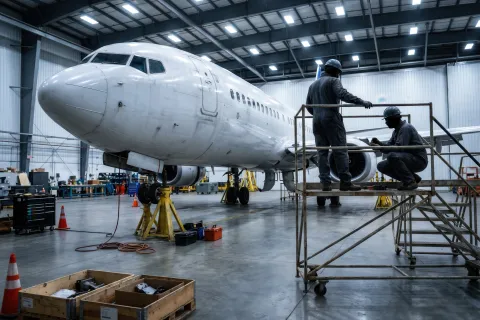
FAA Orders Seat Track Checks on 453 Boeing 737 MAXs
WASHINGTON, D.C. - Federal regulators target Boeing's MAX fleet again, this time over cabin seat installations that may not hold properly during flight.
Boeing MAX 8s Scrapped After Just Six Months of Flight
São Paulo, Brazil - Two Boeing 737 MAX 8 aircraft retired after just six months in service with GOL Linhas Aéreas are now being dismantled, highlighting ongoing quality control concerns.
Ultra-Long Flights May Require Fuel Stops Now
GLOBAL - Ultra-long-haul aviation is hitting hard operational limits, with even minor route changes forcing airlines to add unexpected fuel stops on record-breaking nonstop flights.
About the Author

Bob Vidra
Bob Vidra, based in scenic Tahoe, is an esteemed tech editor known for his deep understanding of the dynamic intersection of technology, travel, and the outdoors.