Stay current with our airline news coverage.
What Happened on Flight AC7664
Air Canada flight AC7664 was traveling from Newark Liberty International Airport to Halifax Stanfield International Airport on Wednesday afternoon with 61 passengers onboard, according to CNN. The aircraft, a De Havilland Dash 8-400 turboprop operated by PAL Airlines under the Air Canada Express banner, departed Newark around 12:39 p.m. Eastern time. Shortly after takeoff, the captain suffered a medical emergency severe enough that he had to be removed from the flight deck entirely. This isn't a case of someone feeling a bit unwell and stepping back; we're talking about a situation serious enough that flight attendants and passengers needed to get involved to physically restrain the incapacitated captain. One passenger gave a remarkably candid account of just how chaotic things got. "It was a fairly strenuous 40 minutes keeping him down," the passenger told CNN, describing the collective effort to help manage the medical crisis while the aircraft diverted. Think about that for a second. Forty minutes of keeping an incapacitated pilot restrained while someone else flies the plane. That's not something you expect when you board a regional turboprop for a routine one-hour flight.Emergency Landing in Boston
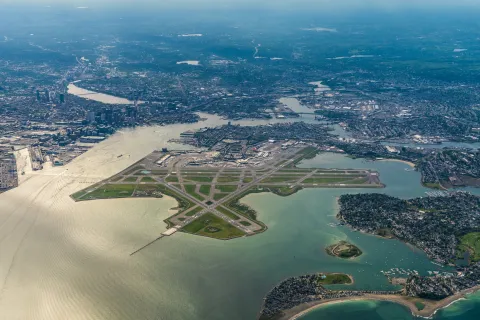
With the captain out of commission, the first officer took full control of the Dash 8-400 and diverted the flight to Boston Logan International Airport, where the aircraft landed safely. Air Canada emphasized that the removal of the captain from the flight deck followed established safety protocols, and that pilots are trained to operate and land aircraft without assistance from a second pilot if necessary. Emergency services met the aircraft on arrival in Boston, and the captain was transported to a local hospital for treatment. The airline arranged alternative travel for the 61 passengers to complete their journeys to Halifax. No passengers were reported injured during the incident, which is frankly remarkable given the circumstances.How This Compares to Industry Norms
Medical emergencies on commercial flights aren't exactly rare; they happen on roughly one in every 600 to 1,000 flights industry-wide, though the vast majority involve passengers, not crew. Pilot incapacitation serious enough to require cockpit removal and an emergency diversion? That's a different story entirely. These incidents are uncommon enough that when they do occur, they tend to make headlines. This is precisely why commercial aviation requires two pilots on the flight deck for nearly all passenger operations. The system is designed with redundancy baked in; if one pilot becomes unable to perform their duties, whether from sudden illness, injury, or even something as dramatic as what occurred on AC7664, the other pilot is trained and capable of completing the flight solo. First officers aren't glorified co-pilots who just monitor instruments and make radio calls. They're fully qualified, current pilots who rotate flying duties with the captain and are specifically trained to handle scenarios like this. In other words, having the first officer land the plane isn't a Hail Mary; it's exactly what the system is built to do.Should You Worry About This Happening to You?
If you're reading this and thinking twice about your upcoming regional flight, take a breath. The fact that this incident ended with a safe landing and no passenger injuries is actually a testament to how well aviation safety protocols work, even under pressure. That said, the passenger accounts describing 40 minutes of physically restraining a pilot do highlight just how unsettling these rare events can be for the people onboard. Medical professionals generally recommend not restraining someone experiencing seizure-like symptoms, but in the confined, high-stakes environment of an aircraft cockpit, crew and passengers had to make real-time decisions to ensure the safety of everyone aboard. It's not a textbook response, but it's the reality of managing a crisis at altitude. For travelers, the practical takeaway here is straightforward: aviation's two-pilot rule exists for exactly this kind of scenario, and it works. Regional carriers like PAL Airlines, flying under the Air Canada Express brand, adhere to the same training and safety standards as mainline carriers. The first officer did what they were trained to do, the diversion happened smoothly, and passengers got home safely, even if the journey took a bit longer and involved more drama than anyone signed up for. If you're booked on a regional turboprop and this story makes you uneasy, remember that these aircraft operate tens of thousands of flights every week without incident. The Q400 is a workhorse in regional aviation, and pilot medical emergencies requiring this level of intervention remain extraordinarily rare. What you saw on AC7664 wasn't a system failure; it was a system working under stress, with passengers and crew stepping up when things went sideways. That's about as good an outcome as you can hope for when something truly unexpected happens at 20,000 feet.More travel news
Summer Storms Ground Hundreds of Flights Nationwide
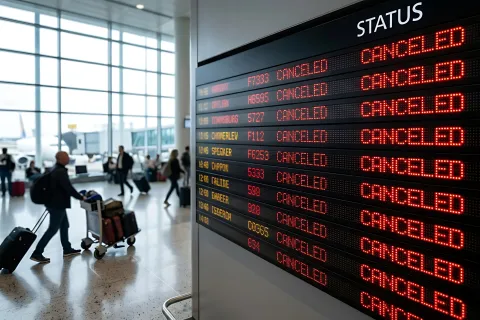
NORTHEAST U.S. - Severe thunderstorms grounded hundreds of flights at major East Coast hubs, leaving travelers stranded and budgets strained as disruptions cascaded nationwide.
United Rewards Passenger 98K Miles for Flight Delay
BOSTON, Mass. - One traveler's six-figure mile haul at Boston Logan shows the hidden power of overbooking auctions for passengers who play their cards right.

FAA Probes Two Close Calls at Boston Logan Airport
BOSTON, Mass. - Two go-arounds in 48 hours at Logan have federal investigators probing intersecting runway operations, communication breakdowns, and what's becoming a troubling pattern.
TSA Warns Soccer Fans Ranch Dressing Banned in Carry-Ons
BOSTON, Massachusetts - As international soccer fans flood New England for the World Cup, TSA issued an unexpected warning about packing America's favorite condiment in carry-on bags.

About the Author

Bob Vidra
Bob Vidra, based in scenic Tahoe, is an esteemed tech editor known for his deep understanding of the dynamic intersection of technology, travel, and the outdoors.