Stay current with our airline news coverage.
You've probably felt it: you settle into your seat, the plane pushes back, and fifteen minutes after takeoff you open your laptop, connect to the "fast, free" Wi-Fi your airline promised, and... wait. And wait. And then maybe load an email, slowly, if you're lucky. Turns out, you're not imagining it. The Wi-Fi provider that keeps several of the country's biggest airlines connected has admitted its service has been dragging lately, especially as more passengers than ever log on, fire up multiple devices, and stream bandwidth-hungry video at 35,000 feet.
What's Slowing Down Inflight Internet
Viasat, the major satellite provider behind inflight connectivity for American Airlines, Delta Air Lines, Southwest Airlines, JetBlue and others, has acknowledged that data supply-and-demand constraints are affecting its service as more passengers simultaneously stream video and use bandwidth-heavy apps aloft, according to The Points Guy. It's a classic congestion story. Airlines spent the past couple of years ripping down the old paywall model; those $10 to $20 per-flight Wi-Fi fees that used to gate access. Now, when the whole cabin logs on for free, everyone's fighting for the same slice of satellite bandwidth. And that slice hasn't grown as fast as the demand. The problem is most acute on long-haul flights to Europe and Asia, where passengers have reported prolonged internet outages and, in some cases, service that barely works at all, according to the Associated Press. One frequent flyer summed it up bluntly: "On my last seven or eight flights, the service has been absolute garbage," The Points Guy reported.
Old Hardware, New Expectations
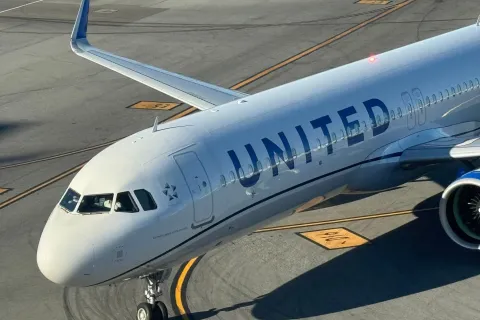
Part of the trouble is that not all inflight Wi-Fi is created equal. Some American and United wide-body aircraft on transatlantic and transpacific routes still rely on older Panasonic Avionics Wi-Fi systems that passengers describe as virtually nonfunctional, according to The Points Guy. One passenger reported a 17-hour United flight from San Francisco to Singapore where the Wi-Fi was effectively unusable; The Points Guy founder himself described "horribly slow and unreliable internet" on a United flight to Rome. And these aren't just free connections passengers are complaining about. On at least one American Airlines flight from Europe, travelers paid around $35 for inflight internet that still performed poorly, The Points Guy noted. Meanwhile, a Viasat satellite launched in 2023 to add capacity and relieve congestion ran into technical problems, limiting the expected bandwidth increase, according to industry reports. That's left the provider scrambling to manage surging demand with finite resources.
The Free Wi-Fi Paradox
Here's the irony: airlines marketed free Wi-Fi as table stakes for modern travel, a must-have amenity for anyone working remotely or keeping the kids entertained on a six-hour flight. And passengers responded. They brought more devices. They streamed more video. They stayed connected the whole flight instead of just checking email once. All good things, in theory. Except the infrastructure wasn't quite ready. Viasat serves over 60 airlines worldwide, The Points Guy reported, and the shift from pay-per-use to unlimited free access triggered a usage tsunami the satellites couldn't absorb. Some airlines have tried to manage the crush by experimenting with new revenue models; inflight digital shopping platforms and other monetization tools to offset soaring data costs, according to industry analysis. Others, like China Airlines, still charge for full-flight unlimited internet plans starting at around $21.95 on long-haul routes, illustrating how the industry hasn't settled on a single model yet.
Should You Adjust Your Expectations?
If you're booking a long-haul flight to Europe or Asia in the coming months, it's worth tempering your Wi-Fi expectations. The airlines and Viasat are working to add capacity and upgrade older systems, but these are slow, capital-intensive fixes; new satellites take years to build and launch, and retrofitting wide-body fleets with modern hardware doesn't happen overnight. For now, treat inflight Wi-Fi on international routes as a nice-to-have, not a guarantee. If you need to get real work done or stream a crucial meeting, download what you can before you board. And if you're paying $35 for a connection that crawls, don't hesitate to ask the airline for a refund; there's a growing conversation about consumer protection and transparency when marketed services simply don't deliver. The good news? This is fixable. The bad news? It won't be fixed tomorrow, and summer travel season isn't waiting. Pack patience along with your passport.
More travel news
Southwest Airlines weighs Boeing 787s for Europe flights
The carrier is exploring its first widebody order and ways to obtain jets sooner, but no aircraft order, European route, cabin design or start date is confirmed.
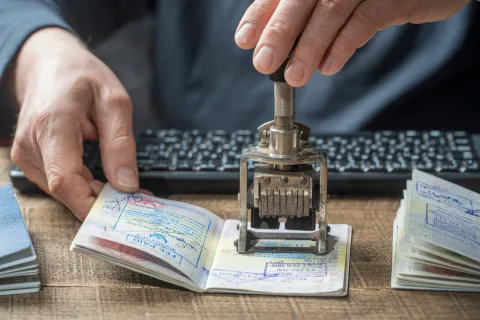
U.S. Customs and Border Protection to End Routine Passport Stamps
CBP announced routine passport stamping will end during primary inspection, with limited exceptions; foreign visitors can access admission and authorized-stay details through I-94 or CBP Link.
United Flight Attendants Can Refuse ICE Questions
Washington, United States - United flight attendants were told they may remain silent when ICE asks about passengers or coworkers as airport arrests increase nationwide.
Airlines Put Elite Status on a Higher Price Tag
NEW YORK, United States - Delta, United and other major airlines are raising elite status hurdles, leaving frequent flyers on discounted fares with less credit.

About the Author

Bob Vidra
Bob Vidra is News Editor at Jetsetter Guide, covering airlines, airports and the travel industry since 2023.