Stay current with our airline news coverage.
The $35 First Class Seat That Launched a Thousand Complaints
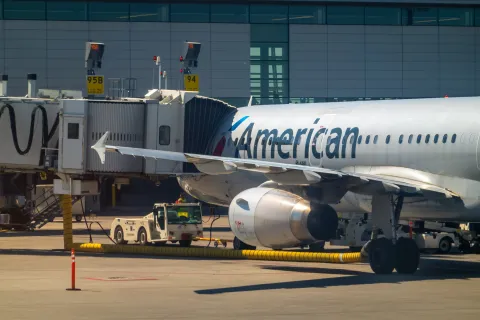
Here's something you don't see every day: American Airlines is catching heat for selling domestic first class upgrades too cheaply. Yes, you read that right. Too cheaply. The airline is under scrutiny after reports surfaced that it's offering first class upgrades on some domestic flights for as little as $35, according to Reuters. On the surface, that sounds like a win for travelers, doesn't it? Who wouldn't want to stretch out in first for the price of a nice airport meal? But the move has set off a firestorm among American's most loyal customers, who are wondering whether the perks they've earned through years of flying and credit card spending are being quietly devalued right in front of them. The pattern, Reuters noted, includes upgrade offers appearing around 24 to 28 hours before departure, with prices dropping to unusually low levels, sometimes $35 to $60. And here's the kicker: elite AAdvantage passengers are reportedly remaining stuck in economy despite available premium seats, watching those same seats get sold off for pocket change to whoever happens to check the app at the right time.
When Cheap Upgrades Feel Expensive
Let's put that $35 figure in context. Industry benchmarks from The Points Guy suggest that a fair value for a purchased domestic first class upgrade runs around $50 per hour of flight time. So on a two-hour flight, you'd expect something in the neighborhood of $100. Even at that price point, frequent travelers on forums report seeing American in-app upgrade offers commonly between $100 and $300 when first class isn't full. But $35? That's another story entirely. It's low enough to make anyone question what their AAdvantage status is actually worth, especially when you consider that non-elite members can upgrade domestically for 15,000 miles plus $75 in many cases, according to Simple Flying. If you can snag the same seat for half that in cash, what's the point of hoarding miles or spending your way to Gold status? This isn't happening in a vacuum. American eliminated its fixed mileage upgrade award chart in August 2025 and replaced it with what it calls "Instant Upgrades," which show real-time cash and miles pricing whenever premium seats are available. The system surfaces these offers in-app, at booking, and increasingly close to departure, alongside the traditional status-based upgrade list. That list, by the way, is prioritized by a complex formula: elite status tier, type of upgrade, Loyalty Points earned in the prior 12 months, fare class, and time of request all play a role. Executive Platinum members can start seeing complimentary upgrades confirm as early as 100 hours before departure; Gold members wait until just 24 hours out. But if those seats get sold off for $35 before the upgrade list ever clears, none of that carefully calibrated hierarchy matters.
Revenue Management Meets Loyalty Backlash
From a pure revenue management perspective, American's strategy makes sense. Any money for an otherwise empty seat is better than no money, and ultra-low last-minute prices can capture incremental revenue from price-sensitive travelers who would never pay full freight. It's rational yield management, the kind of dynamic pricing that airlines have been perfecting for decades. But loyalty programs aren't built on pure rationality; they're built on perception and promise. Elite members spend thousands of dollars and hundreds of hours in the air because they believe their status will deliver tangible benefits when it matters. Complimentary upgrades, early boarding, free checked bags: these aren't just perks, they're the social contract. When a non-status passenger sitting next to you paid $35 for the same first class seat you've been trying to confirm with 175,000 Loyalty Points, that contract starts to feel like a bad deal. This tension is especially sharp given American's broader "premium pivot." The carrier is phasing out its international Flagship First product on 777-300ERs and retrofitting aircraft to add more business class Flagship Suites and premium economy seats. The stated goal is to expand total premium capacity while removing the traditional first class suites. More premium seats theoretically means more upgrade opportunities, but if those seats are being aggressively sold off at fire-sale prices instead of released to the upgrade list, elite members are left wondering who this strategy actually benefits. One frequent American traveler summed up the typical experience on forums: "If you pick the right flights (first class not too full) they will offer you upgrades in-app for $100 to $300. Just keep checking your flight in app and the upgrade offers will show up." That's useful advice for opportunistic upgraders, but it's cold comfort for Platinum Pro members watching their systemwide upgrade certificates expire unused.
The Booking Calculus Just Changed
So what should you do with this information? If you're a casual traveler with no status, keep checking the American app in that 24-to-28-hour window before departure. Upgrade offers can be fleeting, but when they appear at $35 to $60, they're almost certainly worth taking on flights longer than an hour. That's a legitimately good deal by any measure, and it's one of the few ways to sample premium cabins without committing to status chasing or credit card gymnastics. If you're an elite member, the math gets uglier. You're effectively competing against your own airline's revenue management algorithms, and those algorithms don't care about your Loyalty Point total. The practical implication is that traditional complimentary upgrades are becoming harder to confirm on popular routes, precisely because American is harvesting revenue from those seats at the last minute. You might need to adjust your expectations: think of upgrades as a nice surprise rather than a reliable benefit, or focus your loyalty on routes and times where first class tends to be emptier and upgrade inventory more predictable. For everyone else, this is a reminder that loyalty program value isn't static. AAdvantage miles are currently valued at around 1.5 to 1.8 cents each by most analysts, down from higher historical averages. If you're saving miles for upgrades, do the math: is 15,000 miles plus $75 really a better deal than a $35 cash offer? If not, you're better off spending those miles on award flights or redeeming them before they lose more purchasing power. And maybe keep an eye on whether other carriers follow American's lead. If ultra-cheap last-minute upgrades become the industry norm, the whole calculus of airline loyalty could shift. Status might matter less than app-checking discipline, and that would be a fundamental change in how we think about frequent flyer programs. For now, though, American is the one catching the scrutiny, and its most loyal customers are watching closely to see whether this is a blip or the new normal.
More travel news
American Airlines Ends Free Business Upgrades
Fort Worth, Texas - Elite AAdvantage members will no longer receive direct business class upgrades on nine premium domestic routes, instead stopping at premium economy.
Airlines Block ICE From Boarding Planes for Arrests
DALLAS, Texas - Airlines are rejecting federal immigration officers' attempts to board flights for arrests, with Southwest turning away ICE at least six times in recent weeks.

American Airlines Destroys Musician's Guitar on Flight
CHARLOTTE, N.C. - Gospel guitarist Titus Tucker's instrument was reduced to splintered wood after an American Airlines flight from Los Angeles, sparking an investigation that could take 60 days.
American Airlines Flew Uncertified Plane to Hawaii
LOS ANGELES, United States - A dispatch software failure sent the wrong A321 variant 3,000 km over the Pacific on Flight 31, prompting an FAA probe and emergency fixes to American's fleet-assignment system.
About the Author

Bob Vidra
Bob Vidra, based in scenic Tahoe, is an esteemed tech editor known for his deep understanding of the dynamic intersection of technology, travel, and the outdoors.