Stay current with our airline news coverage.
Northeast Storm Front Grounds Over 1,000 Flights
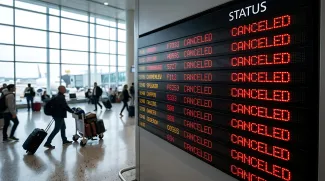
BOSTON, Mass. - If you woke up Tuesday morning with a boarding pass for JFK, LaGuardia, Newark, Philadelphia, or Boston, chances are decent your day didn't go as planned. Summer thunderstorms tore through the Northeast and turned some of the busiest hubs in the country into chaos zones. As of 8:15 a.m. ET, aviation tracking showed 825 flight cancellations and 237 delays across those five airports combined, according to TravelPulse. The hardest-hit airports were LaGuardia and JFK, both of which saw staggering numbers of scrubbed departures. New York area airports alone reported more than 630 cancellations and about 70 delays by 7 a.m., with over 25% of all scheduled flights out of LaGuardia wiped from the board. For anyone traveling on a tight budget or inflexible itinerary, this is exactly the kind of scenario that can blow up a trip. When weather hits the Northeast corridor, it doesn't stay local. These airports are major connection points for domestic and international routes, so a morning ground stop here can strand you in Denver or Dublin by dinnertime.Ground Stops, Cascading Delays, and System Overload
The Federal Aviation Administration implemented ground stops and traffic management initiatives at several East Coast hubs as convective storms rolled through, slowing arrivals and departures to keep airspace safe. That's standard protocol, but the downstream effects are brutal. Once a ground stop goes into effect, flights stack up, gates fill, crews time out, and the domino effect spreads fast. According to Forbes, inclement weather significantly affected air travel that Tuesday, resulting in over 5,600 disrupted flights and multiple ground stops at major East Coast airports. The sheer volume of cancellations meant rebooking lines stretched for hours, customer service phone queues hit triple digits, and app-based support systems buckled under the load. For solo travelers or backpackers trying to stretch every dollar, these disruptions mean more than inconvenience. Missed connections can force you into last-minute hotel bookings, emergency car rentals, or expensive same-day rebooking fees if your original ticket doesn't come with flexibility. Even when airlines offer fee waivers during severe weather events, those waivers don't always cover the cost of an overnight stay or a meal voucher if you're stuck for 12 hours.Not Just a U.S. Problem: Paris Storms and San Francisco Delays
The Northeast wasn't the only region battling summer travel chaos. That same week, storms over Paris forced France's civil aviation authority to step in. "The civil aviation authority said it was asking airlines to reduce their flight schedule at Orly by 20% for later on Thursday evening, and added that delays were also expected at Paris-Charles de Gaulle airport," according to Reuters. Meanwhile, San Francisco International Airport has been dealing with its own mess, though for different reasons. Construction-related constraints pushed 1 in 3 flights to arrive at least 15 minutes late in June 2026, with significant delays up 60% over the previous quarter, according to The Points Guy. The causes vary, but the result is the same: summer 2026 is shaping up to be one of the roughest travel seasons in recent memory for reliability. Even global demand is wobbling. Chinese airlines expect a 3.6% year-on-year drop in passengers during July and August 2026, the first summer peak contraction since 2022, as carriers warn of heavy financial losses, according to Reuters.What Budget Travelers Need to Do Right Now
If you're booking summer travel on a shoestring, you need to build storm contingency into your planning. That doesn't mean avoiding flights, it means accepting that weather is part of the equation and planning around it. First, book your first flight of the day whenever possible. Morning departures have the best shot at leaving on time before convective weather builds. If your flight gets canceled, you'll also have the rest of the day to rebook instead of getting stuck overnight. Second, buy travel insurance that covers weather delays, or use a credit card that includes trip delay reimbursement. A $50 policy can save you $200 in unplanned expenses if storms ground you for a night. Read the fine print and make sure weather-related delays qualify. Third, never book tight connections through major hubs during summer storm season. If you're routing through New York, Philly, Boston, or any other Northeast hub between June and September, give yourself at least two hours, preferably three. That buffer can mean the difference between catching your onward flight and sleeping on a terminal floor. Fourth, always have a backup plan. Know which budget hotels are near the airport, which hostels have last-minute availability, and whether public transit runs late enough to get you into the city if you need to bail on a rescheduled morning flight. Apps like HostelWorld and Google Maps can pull up cheap backup lodging in seconds, but only if you know to look before the crisis hits. Fifth, check airline waiver policies before you fly. During severe weather, most carriers will let you rebook without change fees, but the window is narrow and the rules vary by airline. Screenshot the waiver language and save it offline so you can reference it at the gate. Summer storms aren't going anywhere, and neither are infrastructure constraints or financial strain on the global airline industry. The travelers who survive these disruptions with their budgets intact are the ones who plan for them from the start. Weather happens, but being stranded and broke doesn't have to.More travel news
American Airlines Launches 13 New Global Routes in 2026
DALLAS, Texas - American Airlines launches 13 new international routes in 2026, strengthening hubs in Dallas, Philadelphia, New York, and Miami with expanded Europe, South America, Caribbean, and Canada service.
Ultra-Long Flights May Require Fuel Stops Now
GLOBAL - Ultra-long-haul aviation is hitting hard operational limits, with even minor route changes forcing airlines to add unexpected fuel stops on record-breaking nonstop flights.
Philippine Airlines Boosts North America Routes
MANILA, Philippines - Philippine Airlines expands trans-Pacific reach with increased frequencies to three major North American gateways, betting on diaspora demand and new wide-body capacity.

United Rewards Passenger 98K Miles for Flight Delay
BOSTON, Mass. - One traveler's six-figure mile haul at Boston Logan shows the hidden power of overbooking auctions for passengers who play their cards right.
About the Author

Dana Lockwood
Dana Lockwood is a rising journalist who specializes in budget-friendly solo travel.