Stay current with our airline news coverage.
The Full Stress List
JFK didn't just edge out the competition; it led a pack of airports that'll make any road warrior wince. Coming in second was Newark Liberty International, which honestly feels like JFK's sibling in chaos. Then Ontario International Airport in California, followed by Fort Lauderdale-Hollywood International. That's where the source material cuts off, leaving us with a partial top-nine list. But even these four give you a pretty clear picture: it's not just one region or one type of hub. Big international gateways like JFK and Newark make the list alongside Ontario, a smaller operation east of Los Angeles. The common thread? Enough delays, long enough waits, or brutal enough ground transfers to make business travelers reconsider their itineraries.Why JFK Tops the Misery Index
Let's be honest: JFK has been a poster child for travel stress for years. It's massive, it handles international traffic from every corner of the planet, and it sits in one of the most congested metro areas in the country. Flight disruptions? Check. JFK regularly ranks high for delays, especially during summer thunderstorm season or winter weather events. Customs waits? Absolutely. If you've ever landed on an international flight during peak afternoon arrival hours, you know the drill. And getting into Manhattan or wherever your meeting is? That's a whole separate ordeal involving traffic, AirTrain transfers, and the eternal question of whether to gamble on the subway or splurge on a cab. Newark shares a lot of JFK's pain points; it's another major international hub serving the same metro area, with similar weather patterns and ground-access headaches. Fort Lauderdale, meanwhile, has become a magnet for low-cost carriers and international connections, which can mean packed terminals and longer lines. Ontario's inclusion is a bit more surprising, but it's worth remembering that this Inland Empire airport, while smaller, can involve long ground transfers into central Los Angeles business districts.What Business Travelers Should Do With This
Here's the thing: if you're flying for work, you often don't get to pick your gateway. Your client's in New York, you're flying into a New York airport. But you do have some wiggle room, and this ranking should nudge you to think strategically. First, consider your arrival and departure times. If JFK's already stressful, don't make it worse by booking the tightest possible connection or arriving just in time for the afternoon international rush. Build buffer time into your schedule; if your meeting's at 2 p.m. in Midtown, don't land at noon and hope for the best. According to current Google Flights data, a roundtrip from Los Angeles to New York runs about $357 (departing July 17, 2026, returning July 24), with flights on American and JetBlue averaging around 7 hours and 13 minutes. That's manageable, but once you factor in JFK's ground realities, you're looking at closer to 9 or 10 hours door to door, maybe more if things go sideways. Second, think about accommodations near the action. Hotels in New York for mid-July 2026 run from about $199 to $328 per night, with a median around $229, according to current Google Hotels data. Staying in Hudson Yards, Chelsea, or Times Square puts you closer to typical business districts and shortens that brutal post-flight commute. A five-star spot in Hudson Yards or Chelsea is going for $199 a night right now; that's competitive with generic airport hotels and gets you right where you need to be. Third, know your alternatives. LaGuardia's been renovated and now offers a much better domestic experience, though it still has its moments. If you're not flying internationally, it might be worth checking whether LGA saves you headache. Newark's on this stress list too, but sometimes the train connections work better depending on where your meeting is. And if you've got flexibility, smaller Northeast hubs like Westchester or even Hartford can occasionally make sense, especially if you're renting a car anyway. The reality is that no amount of smart planning can eliminate every stressor; airports like JFK are complex ecosystems with a lot of moving parts. But knowing which hubs consistently deliver the most friction lets you plan around them, adjust expectations, and maybe, just maybe, avoid that sprint through Terminal 4 with your laptop bag bouncing off your hip and your blood pressure spiking. Sometimes that's the best you can do.More travel news
43% of surveyed travelers want to avoid overcrowded destinations
Of 32,500 global respondents, 43% want to avoid overcrowded destinations; Intrepid Travel separately named 10 less-visited places ready for tourism in 2027.
Airlines Put Elite Status on a Higher Price Tag
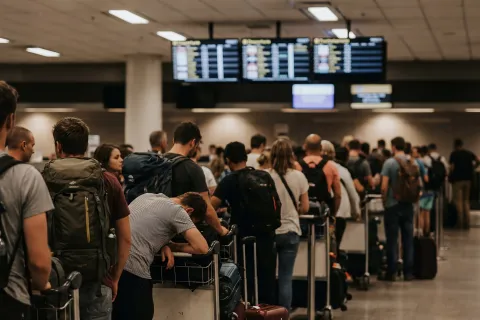
NEW YORK, United States - Delta, United and other major airlines are raising elite status hurdles, leaving frequent flyers on discounted fares with less credit.

Delta Rome Flight Diverts to Canada After Engine Trouble
ST. JOHN'S, Canada - A Delta Airbus A330 diverted safely with 280 people aboard; passengers stayed in hotels before returning to New York for rebooking.
Storm Snarls Northeast Air Travel With 153 Cancellations
NEW YORK, United States - A major storm disrupted Northeast and Mid-Atlantic travel, hitting JFK hardest as flooding, wind and thunderstorms slowed flights.
About the Author

Bob Vidra
Bob Vidra is News Editor at Jetsetter Guide, covering airlines, airports and the travel industry since 2023.