Stay current with our airline news coverage.
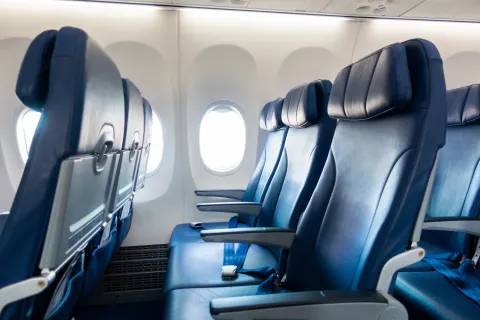
EUROPE — Here's a scenario that'll make your blood boil: You've paid good money for business class seats, settled in with your family, and then someone tells you one of you needs to move. Not because of a safety issue or a mechanical problem, but because an airline employee needs that seat. That's exactly what Ivan Lopes says happened to him, his wife, and their two daughters when they tried to fly home to Brazil after a European vacation. And when the family pushed back? Armed police showed up to escort them off the plane.
What Happened on the Air France Flight
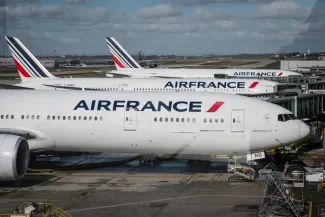
According to reports, Lopes was traveling with his wife and their two daughters, aged 25 and 11, when things went sideways. The family was heading back to their native Brazil with his wife and two daughters, aged 25 and 11, when the chaos unfolded on the Air France flight, according to Airlines. The allegation? The family was told to give up a business class seat for an airline staff member. When they refused, armed police were called to remove them from the aircraft. Let's pause there for a second. Armed police. For a seating dispute.
The Bigger Picture: When Staff Travel Becomes Passenger Problem
This isn't the first time we've heard stories like this, and it probably won't be the last. Airlines have policies that allow their employees to travel on standby, often at heavily discounted rates or free. It's one of the perks of working in aviation. The catch? These "non-rev" travelers usually get the lowest priority, filling seats only after all paying passengers are accommodated. But when things go wrong, when flights are oversold or seat assignments get messy, these policies can create exactly the kind of confrontation we're seeing here. And families like the Lopes', who presumably paid full fare for their business class seats, end up feeling like they're being punished for someone else's staffing logistics.
The Question Everyone's Asking
Why would a family be asked to give up a seat they paid for? And why would that request escalate to the point where armed officers had to get involved? Those are the details we don't have yet. We don't know if the family was offered compensation, alternate seating, or a reasonable explanation. We don't know if there was a legitimate operational reason for the request, or if it was simply a matter of convenience for the airline. And we don't know what the conversation looked like before law enforcement showed up. What we do know is that this situation clearly didn't need to end with a family being marched off a plane by police.
What This Means for Travelers
If there's a lesson here, it's this: Know your rights, but also know when you're fighting a battle you can't win in the moment. Airlines have broad authority when it comes to seat assignments. Even if you've paid for a specific seat, most tickets include language that allows the carrier to change your seat for operational reasons. It's frustrating, it feels unfair, and yes, it's absolutely worth complaining about after the fact. But once the crew makes a decision and law enforcement gets involved, your options narrow considerably. Refusing to comply with crew instructions can get you removed from the flight, banned from the airline, and in some cases, charged with interfering with a flight crew. That doesn't mean you shouldn't advocate for yourself. If you're being asked to give up a seat you paid for, ask questions. What's the reason? What compensation are you being offered? Can you speak to a supervisor? Document everything; take photos of your boarding pass, your seat assignment, and any written communication. And if the situation escalates beyond your control, comply in the moment and fight back later. File a complaint with the airline, contact your credit card company if you paid with points or miles, and if necessary, take it to social media or the press. Airlines hate bad publicity, and sometimes that's the only leverage you've got.
Still More Questions Than Answers
As of now, we're still waiting for more details about what exactly happened on that Air France flight. Was this a case of an airline overstepping, or were there extenuating circumstances we're not seeing? Did the family refuse a reasonable request, or were they standing up for something they'd rightfully paid for? What's clear is that this situation reflects a broader tension in air travel right now. Passengers are paying more than ever for tickets, dealing with tighter schedules and fewer options, and they're expected to be endlessly flexible when things go wrong. At the same time, airlines are juggling complex operations, staffing challenges, and the occasional need to move their own people around. But when those two realities collide, and a family ends up being removed by armed police over a seat assignment? That's when you know something's gone very, very wrong.
More travel news
Southwest Airlines weighs Boeing 787s for Europe flights
The carrier is exploring its first widebody order and ways to obtain jets sooner, but no aircraft order, European route, cabin design or start date is confirmed.
United Plots Europe Expansion With A321XLR Fleet
Washington, United States - United Airlines is mounting its largest international expansion, adding 10 destinations across Europe and Asia during 2027.
United Adds 10 New Routes in Record Global Expansion
Newark, United States - United Airlines is making its largest international expansion yet, targeting strong leisure demand with new routes to Europe and Asia.
Celebrity Unveils Biggest Europe Season for 2028
SOUTHAMPTON, England - Celebrity Cruises is planning its largest European season yet, with eight ships, rare port calls and four Edge-class vessels sailing at once.

About the Author

Bob Vidra
Bob Vidra is News Editor at Jetsetter Guide, covering airlines, airports and the travel industry since 2023.