Stay current with our airline news coverage.
Boeing Takes MAX 10 Autoland to the Edge in West Texas Crosswinds
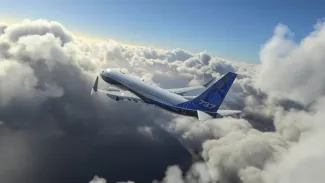
MIDLAND, Texas - The path to aircraft certification doesn't run through ideal weather. Boeing has completed an extreme crosswind flight test campaign for the 737 MAX 10, deliberately hunting down challenging wind conditions at Midland International Air & Space Port to validate the jet's autoland capability before commercial service. The evaluations form part of the certification process for the 737 MAX 10, the largest member of Boeing's MAX family, according to Smokeongo.co. Flight test crews chose Midland for reasons any traveler who has landed at SFO or London City in winter can guess: consistent, punishing crosswinds that force automated landing systems to prove they can execute safely when visibility drops and the runway isn't aligned with the wind. Autoland isn't standard equipment on every commercial flight; it's a certification requirement that matters most when human visual reference disappears and the aircraft needs to complete an approach in Category II or III conditions, essentially landing itself through fog or severe weather.What Autoland Actually Does
Autoland systems take over from pilots during the final approach and touchdown when visibility falls below minimums that would otherwise force a diversion. The technology couples flight control computers with the instrument landing system to manage descent, alignment, flare, and rollout without pilot input on the controls. It's not autopilot in cruise; it's precision automation during the riskiest phase of flight. Boeing's crosswind campaign tested whether the 737 MAX 10's autoland can hold centerline and execute a safe landing when strong winds are blowing across the runway rather than straight down it. Crosswinds force continuous corrections; the aircraft must "crab" into the wind on final approach, then straighten just before touchdown. Automating that sequence in low visibility, on a jet longer and heavier than earlier 737 variants, requires exhaustive validation, according to Boeing.Why Midland, Why Now
Midland's geography and weather patterns deliver reliably difficult conditions. The West Texas plateau generates steady crosswinds, and the airport sees enough variation to let test crews cycle through different wind angles and velocities over a concentrated period. Flight test campaigns are expensive and time-sensitive; finding conditions that replicate worst-case scenarios without waiting months for the right storm matters when certification timelines are already stretched. The 737 MAX 10 is the longest variant in the MAX family, which changes how the aircraft responds to crosswinds during landing. More fuselage length aft of the main gear means more weathervaning tendency; the tail wants to swing into the wind. Validating that autoland compensates correctly, without pilot override, is not optional; it's a certification gate that regulators will scrutinize closely given the MAX's troubled re-entry into service after the 737 MAX 8 and 9 groundings. Boeing has been transparent about the test campaign through social media and technical updates, a shift in communication strategy after years of opacity during earlier MAX certification issues. Posting footage of crosswind landings and explaining the engineering rationale signals confidence that the MAX 10's systems are performing as designed, according to posts on Instagram and LinkedIn.What Crosswind Certification Means for Urban Travelers
If you fly frequently between cities with notoriously tricky approaches, this testing matters more than it sounds. London Heathrow, San Francisco, Wellington, and dozens of other major urban airports see regular low-visibility conditions combined with crosswinds that challenge even experienced pilots. Autoland certification expands the weather envelope in which airlines can commit to operating, which translates directly into fewer diversions, fewer overnight delays in random cities, and more reliable connections during winter. The 737 MAX 10's autoland capability will become standard on the variant once certified, meaning airlines ordering the type can deploy it on routes where fog and wind historically force cancellations. For travelers, that's the difference between a 6 a.m. meeting in London after an overnight from New York and an apologetic gate agent explaining that your flight diverted to Birmingham because Heathrow went below minimums. It also shifts the calculus on which aircraft types airlines assign to weather-sensitive routes. If the MAX 10 proves its autoland system in certification, carriers like United, Southwest, and Alaska Airlines, which have MAX 10 orders on the books, gain operational flexibility to use the jet on routes where older 737s without advanced autoland might require weather alternates or longer delay buffers. That's a scheduling advantage that filters down to passengers as tighter turnarounds and fewer cascading delays when storms roll through hubs. This isn't about flashy in-flight tech or passenger-facing features. Autoland is infrastructure, the kind of unsexy engineering work that keeps travel networks functioning when conditions turn hostile. Boeing's decision to run a dedicated crosswind campaign in Midland rather than relying on opportunistic weather during broader flight testing suggests the company understands that regulators and airlines will demand proof, not promises, that the MAX 10 can handle the real-world conditions city-to-city travelers encounter every winter. The test results won't appear on any marketing brochure, but they'll shape whether your next transatlantic redeye actually makes it to the gate on time when the weather goes sideways.More travel news
American Airlines Disrupts Loyalty With $35 Upgrades
FORT WORTH, Texas - American Airlines' ultra-cheap last-minute upgrade offers are sparking debate over whether the carrier is undermining its own loyalty program to fill empty premium seats.
Boeing MAX 8s Scrapped After Just Six Months of Flight
São Paulo, Brazil - Two Boeing 737 MAX 8 aircraft retired after just six months in service with GOL Linhas Aéreas are now being dismantled, highlighting ongoing quality control concerns.
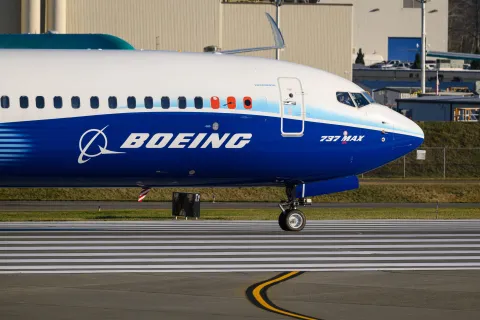
Muscle Memory Betrays 737 Pilots Flying Dreamliners
Experienced 737 pilots transitioning to Boeing's 787 Dreamliner find their hardest test isn't mastering new systems; it's unlearning years of ingrained reflexes during those crucial first approaches.
Ultra-Long Flights May Require Fuel Stops Now
GLOBAL - Ultra-long-haul aviation is hitting hard operational limits, with even minor route changes forcing airlines to add unexpected fuel stops on record-breaking nonstop flights.
About the Author

James Anthony
James Anthony specializes in redefining luxury for the next generation.