Stay current with our travel industry news coverage.
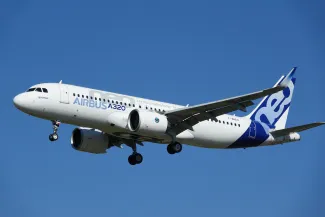
A tool left inside an aircraft’s tail is hardly a reassuring discovery. Airbus is now recommending inspections of 139 A330neos already delivered to airlines after finding one inside a jet during production, according to Simple Flying. But the manufacturer’s position is clear: There’s no immediate safety concern, and it says it can demonstrate that an aircraft remains safe to operate even if a similar tool is present.
The recommendation extends a manufacturing investigation beyond aircraft still at Airbus facilities to jets already in airline service. Simple Flying reported on Oct. 17 that checks have been recommended during routine maintenance while Airbus works with the European Union Aviation Safety Agency, or EASA, on the final approach.
For passengers, the important distinction is between an inspection population and a confirmed problem across a fleet. These are 139 aircraft Airbus wants examined, not 139 aircraft known to contain forgotten tools. The company deliberately chose a broad delivery window as a precaution, according to Simple Flying.
Which Airbus A330neos are covered?
The recommended checks cover both A330neo variants, the A330-800 and A330-900, delivered from 2021 through the end of May 2026, Simple Flying reported. The scope is tied to that delivery period, rather than an announcement that every A330neo has the same manufacturing flaw.
Julien Puyou, Airbus’s head of long-range programs, discussed the discovery with media in Toulouse on Oct. 13. According to Simple Flying, he explained that Airbus selected the wide window to be cautious and examine as many potentially relevant aircraft as possible.
The tool was found inside the horizontal tail plane, also called the horizontal stabilizer. That structure helps control the aircraft’s pitch, according to Simple Flying. Equipment left inside it is a manufacturing-quality concern; it shouldn’t remain within an aircraft structure after assembly.
Still, the location of the discovery shouldn’t be confused with evidence of a flight-control failure. Simple Flying reported that Airbus had not said the tool caused damage or affected flight control. The manufacturer is seeking to determine whether there are comparable cases elsewhere while maintaining that safe operation is possible even with a similar item inside.
Routine maintenance first; the final policy is still coming
As of mid-October, Airbus had not announced a final inspection deadline for the 139 aircraft, according to Simple Flying. The recommended routine-maintenance checks are the current approach while the manufacturer and EASA work through the requirements. Whether further action, potentially including mandatory inspections, will be necessary remains part of that regulatory process.
The next milestone is expected in mid-November. Aviation Week reported on Oct. 14 that Airbus would present its policy for addressing the production flaws to EASA by then. That’s a policy-development milestone, not a published deadline by which every affected airline must finish inspecting its aircraft.
There’s also a practical question for operators that have already carried out checks: How will that work count toward any subsequent requirements? Simple Flying reported that Airbus and EASA were still coordinating how Condor’s previous inspections would be treated. Completing a maintenance check now and satisfying a final inspection program aren’t necessarily the same thing; the agreed requirements will determine that.
Condor has checked its fleet, but a new jet is delayed
Condor offers the clearest reported example of how the investigation is affecting both operating aircraft and pending deliveries. According to Aviation A2Z, the inspection population includes all 18 A330neos operated by Condor and all 16 delivered to ITA Airways.
Condor said its aircraft had already undergone checks during regular maintenance, with no related abnormalities or findings identified across its fleet, Aviation A2Z reported. The airline said any subsequent checks would follow the manufacturer’s instructions and the relevant authorities’ requirements. Those findings are useful information about Condor’s aircraft; they don’t establish results for other operators.
A separate Condor aircraft is still waiting to join the fleet. Aviation A2Z reported that the A330neo expected to carry registration D-ANRR, manufacturer serial number 2143, was completed by early July and remained at Airbus’s Toulouse facility while additional checks associated with the investigation were carried out.
Condor’s revised expected handover is the second half of November 2026, according to Aviation A2Z. Simple Flying likewise reported the planned delivery window, noting that it remained subject to the latest schedule.
The delivery disruption began well before this month’s discussion of aircraft already in service. According to Simple Flying, A330neo handovers stopped in June and July 2026. Citing AeroTime’s figures, the publication reported that deliveries resumed with one aircraft in August and two in September. Resuming handovers, in other words, hasn’t meant every aircraft awaiting delivery has cleared the additional work.
Does this change the picture for passengers?
The documented consequences are additional maintenance coordination for airlines and delays to aircraft awaiting handover, according to Simple Flying. Airbus’s safety assessment and its inspection recommendation address different questions: whether the aircraft can operate safely, and whether equipment was left inside other jets.
It’s reasonable to expect an explanation when a tool turns up somewhere it plainly doesn’t belong. But the useful facts here are more specific than an alarming fleet-wide headline: Airbus has defined a precautionary inspection group, Condor has reported no related findings in its existing fleet, and the final regulatory approach is still being developed. The mid-November policy milestone is the next point to watch; it should bring more substance to what airlines actually need to do.
More travel news
Jet Fuel Prices Have Doubled Since January
Jet fuel prices have doubled since January, and Leeham News is modeling potential ticket and cargo price effects if the increase persists.
Frontier Plans 2027 First-Class Launch on Airbus Fleet
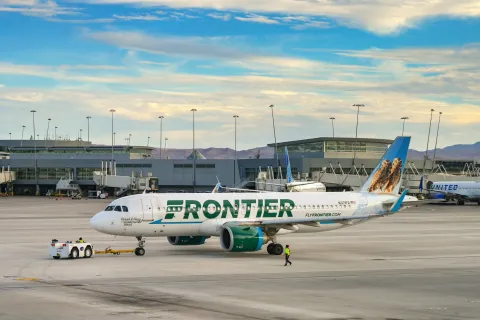
The planned cabin is intended for Frontier’s Airbus fleet, with introduction targeted for 2027; the cited reports do not establish a fleetwide completion date.
Qantas Project Sunrise Flights Expected in First Half of 2027
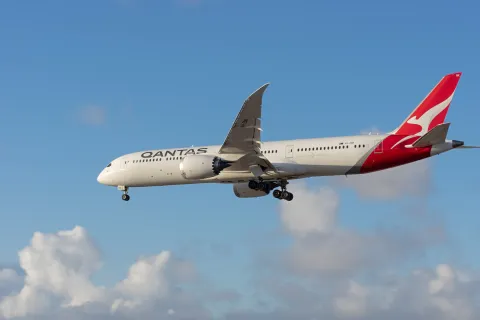
Commercial flights have not begun; Qantas plans nonstop Sydney routes to London and New York with 238-seat A350-1000ULRs, with service expected in the first half of 2027 but no confirmed date.
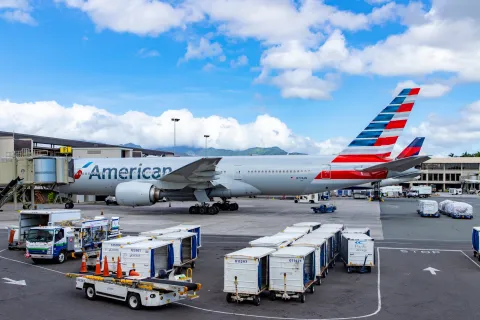
American Airlines Flew Uncertified Plane to Hawaii
LOS ANGELES, United States - A dispatch software failure sent the wrong A321 variant 3,000 km over the Pacific on Flight 31, prompting an FAA probe and emergency fixes to American's fleet-assignment system.
About the Author

Bob Vidra
Bob Vidra is News Editor at Jetsetter Guide, covering airlines, airports and the travel industry since 2023.