Stay current with our airline news coverage.
Jet fuel prices have doubled since January. That’s a significant cost shock for airlines, but it isn’t a formula for doubling your next airfare.
Aerospace analyst Bjorn Fehrm reported the increase Sept. 24 in Leeham News, linking the current price surge to the escalation of the Middle East conflict to the entrance of the Red Sea. An earlier peak in April followed the closure of the Strait of Hormuz, according to his report.
The distinction worth watching is between fuel prices and total airline operating costs. Fehrm’s analysis says the impact depends on how much of an airline’s operating costs comes from fuel, which in turn depends on the generation of aircraft it flies. Even newer airplanes don’t make the cost question simple.
Two stages of the jet fuel price surge
Leeham News describes two distinct points in the fuel market’s climb: the initial April peak attributed to the Strait of Hormuz closure, and the present increase driven by the conflict’s expansion to the Red Sea entrance. The report also says analysts believe prices might not have reached their peak. That’s a forecast, not a confirmed next step.
The price chart underpinning Fehrm’s report comes from the International Air Transport Association’s jet fuel price monitor, using S&P Global Energy Platts market data. It tracks average and regional jet fuel prices, providing the market context for Leeham’s examination of airline costs.
For historical perspective, Leeham News says jet fuel had consistently hovered around $90 to $100 per barrel following the last price spike in 2022. That earlier increase, driven by Russia’s invasion of Ukraine, pushed prices to a peak of $150 per barrel, according to the publication.
Those figures describe the earlier market backdrop; they aren’t a current per-barrel quote. The new finding in Fehrm’s September report is the doubling since January.
U.S. prices rise as Europe faces a supply deficit
Separate reporting shows how the pressure is appearing in regional markets. Bloomberg said jet fuel in parts of the United States had climbed back near its most expensive level since the U.S.-Iran war began, renewing cost concerns for airlines and travelers.
Gulf Coast jet fuel, which Bloomberg identified as the U.S. benchmark, was priced at $4.55 a gallon as of Thursday in that report. That was just over 20 cents below its wartime highs. New York jet fuel stood at $4.75 a gallon, Bloomberg reported.
Those regional readings add a concrete U.S. snapshot to Leeham’s broader account without substituting for its price series. Bloomberg’s comparison is with wartime highs in those markets, while Leeham’s doubling describes the change since January.
Europe faces a different, though related, concern: supply availability. A Sept. 21 Reuters report summary said Europe faces a fourth-quarter jet fuel deficit even as it turns to distant suppliers, including South Korea. Citing analysts and shipping data, Reuters said South Korea was set to increase jet fuel exports to Europe to a four-year high in September.
The expected increase in South Korean exports and the projected European deficit describe different parts of the supply picture. Exports from that supplier to Europe were set to rise in September, but Reuters still reported a shortfall ahead for Europe in the fourth quarter.
Why newer aircraft aren’t the whole answer
A more efficient airplane sounds like an obvious advantage when fuel gets expensive. Fehrm’s report adds an important wrinkle: fuel savings and overall operating savings aren’t interchangeable.
According to Leeham News, the latest generation of Airbus and Boeing narrowbody aircraft lowered nominal fuel costs by 15%. Higher engine maintenance costs, however, largely offset that reduction, narrowing the operating-cost gap between older generations and current variants.
That doesn’t erase the reported fuel savings. It means fuel is only one part of the cost comparison. An aircraft can have a lower fuel bill without delivering an equivalent reduction across its operating expenses.
Leeham’s stated approach is to use its Aircraft Performance and Cost Model to examine the cost structures of older and newer narrowbody and widebody fleets. It then compares those costs with typical passenger and cargo yields to assess the effect on ticket and cargo prices if the fuel increase persists. The analysis is about the full cost structure, not simply which airplane burns less fuel.
What the fuel increase means for fares
For travelers, the central question is how much of this pressure reaches ticket prices. The available excerpts do not quantify that fare impact. Fehrm’s framing makes both the duration of the increase and the makeup of aircraft operating costs central to assessing the effect.
The reported 15% fuel saving for newer narrowbodies illustrates why aircraft generation matters; the maintenance-cost offset shows why that figure alone cannot answer the broader cost question. The doubling in fuel prices is the documented change. Its effect on ticket and cargo prices is the question Leeham sets out to model if the higher fuel costs persist.
More travel news
Southwest, United seek older software on new 737 MAX jets
Southwest and United want earlier software on new 737 MAX deliveries as the FAA reviews a glitch that can block automated guidance after a missed approach if pilots alter the flight path.
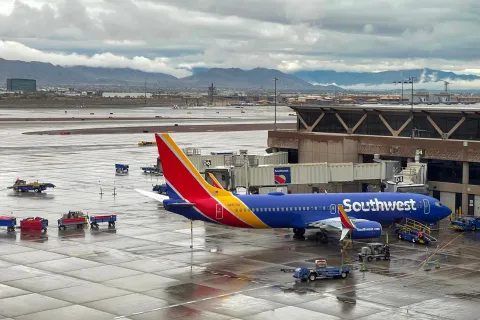
Certain Boeing 737 Max jets have missed-approach software glitch
Boeing is developing a fix for the glitch affecting in-service Max 8 and Max 9 jets running U.14; Southwest Airlines and United Airlines say their Max fleets la...
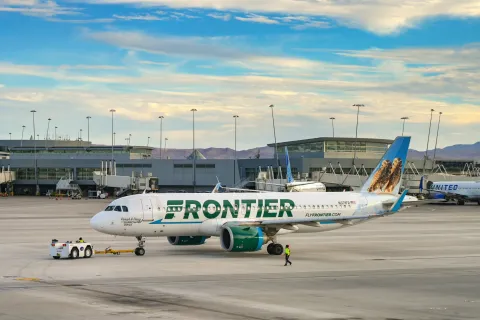
Frontier Plans 2027 First-Class Launch on Airbus Fleet
The planned cabin is intended for Frontier’s Airbus fleet, with introduction targeted for 2027; the cited reports do not establish a fleetwide completion date.
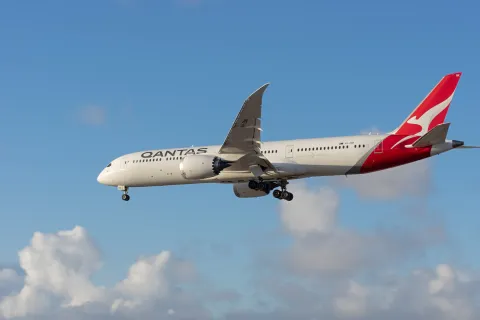
Qantas Project Sunrise Flights Expected in First Half of 2027
Commercial flights have not begun; Qantas plans nonstop Sydney routes to London and New York with 238-seat A350-1000ULRs, with service expected in the first half of 2027 but no confirmed date.
About the Author

Bob Vidra
Bob Vidra is News Editor at Jetsetter Guide, covering airlines, airports and the travel industry since 2023.