Stay current with our airline news coverage.
When American Airlines Flew the Wrong Plane to Hawaii
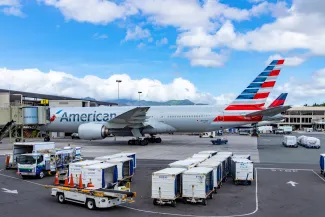
LOS ANGELES, United States - On August 31, 2015, American Airlines Flight 31 departed Los Angeles International Airport for Honolulu with a full load of passengers, a routine hop across the Pacific. Except the aircraft wasn't supposed to be there at all. The Airbus A321-200 with registration N137AA, configured as an A321S, lacked the extended operations certification required by the FAA for long overwater routes, according to One Mile at a Time. American had meant to dispatch an A321H, the ETOPS-certified variant, but a software mix-up sent the wrong tail number 2,500 miles over the Pacific instead. The mistake wasn't discovered until the flight was already over open water, roughly halfway to Hawaii, when an employee recognized N137AA's tail number and realized it lacked ETOPS authorization. The flight landed safely in Honolulu without incident, but the regulatory violation was immediate and unambiguous. American cancelled the return passenger flight, ferried the jet back to Los Angeles empty with minimal crew, and notified the FAA of the error. "When we realized what happened, we immediately notified the FAA and began a thorough review of our procedures. Already, we have revised our software to properly identify the correct aircraft are operating the correct routes," an American Airlines spokesperson told media outlets. It was a rare public admission of a compliance failure that should never have reached the gate, let alone cruising altitude over the Pacific.The ETOPS Problem Nobody Noticed
ETOPS stands for Extended Operations, the certification that allows twin-engine aircraft to fly routes that take them more than 60 minutes from a suitable diversion airport. For a route like LAX to HNL, covering roughly 3,000 kilometers of open ocean, ETOPS isn't optional. It's the regulatory framework that lets aircraft like the Airbus A321 or Boeing 787 cross oceans safely without staying within constant glide distance of land. The certification requires specific aircraft modifications: extra fire suppression, backup electrical systems, enhanced engine reliability protocols. American's A321H fleet had all of it. The A321S did not. "The Airbus A321 that was sent to Hawaii for Flight 31 did not have Etops certification, a requirement for all aircraft that will undertake the flight to Hawaii," Casey Norton, American Airlines spokesman, confirmed to media. The incident occurred just 12 days after American began flying A321s on the LAX-HNL route around August 18, 2015. The fleet was new to the operation, the subfleet distinctions were subtle, and somewhere in the scheduling software pipeline, the system failed to flag that N137AA was the wrong variant for a 2,500-mile overwater crossing. Sheffield School of Aeronautics later noted that the mix-up "severely violates the Federal Aviation Administration regulations," even though the physical flight completed without incident.How It Should Have Worked
American's A321 fleet at the time included two distinct configurations. The A321H variant was built and certified for Hawaii operations, equipped with ETOPS-rated systems and approved for extended overwater flights. The A321S was not. Both aircraft could physically fly the distance, but only one was legally allowed to do so under FAA rules. Dispatch systems are supposed to cross-check tail numbers, aircraft configurations, and route requirements before releasing a flight. Multiple manual and automated checkpoints exist precisely to prevent this kind of error. On August 31, 2015, every one of those checkpoints failed. The flight was boarded, cleared, pushed back, and sent 3,000 kilometers over the Pacific before anyone noticed. Once the mistake was discovered mid-flight, American had limited options. The aircraft was safe to continue; it wasn't structurally compromised or mechanically deficient. But it was operating outside its regulatory certification, and continuing to use it for passenger service would compound the violation. American chose to ferry it home empty, a visible acknowledgment that the error was serious enough to ground the jet immediately upon landing.What Broke Down and What Changed
The immediate question after the incident was how a major U.S. carrier with sophisticated dispatch software could confuse two variants of the same aircraft type on a route with clear ETOPS requirements. American blamed the mix-up on a fleet-assignment error, revised its scheduling software to properly identify certified aircraft for ETOPS routes, and conducted a thorough review of its procedures following FAA notification. The FAA opened an investigation, though details of any penalties or formal findings were not widely disclosed. What emerged publicly was a case study in operational risk: how small distinctions between aircraft subtypes, combined with software gaps and insufficient manual oversight, can lead to significant regulatory violations even when no one is hurt. For travelers, the practical reality is unsettling. Passengers on Flight 31 had no idea they were flying on a non-ETOPS aircraft until after the fact. The flight landed safely, the aircraft performed normally, and there was no in-flight emergency. But the regulatory safeguards designed to minimize risk on long overwater routes simply weren't there. The fire suppression, the backup electrical systems, the engine reliability protocols that ETOPS certification guarantees were absent for 2,500 miles of Pacific crossing. What this underscores is how much trust passengers place in airline dispatch and operational control systems. You assume the aircraft assigned to your flight is the right one, certified for the route, equipped for the conditions. The August 2015 incident revealed how easily that assumption can break when software fails and manual checks don't catch the error. American's post-incident software revisions suggest the carrier took the lapse seriously, but the fact that it happened at all on a route as operationally sensitive as a Pacific crossing raises uncomfortable questions about fleet management, dispatch oversight, and the reliability of systems designed to prevent exactly this kind of mistake. For anyone flying long overwater routes, especially on airlines operating mixed fleets with subtle subtype differences, the lesson is that certification isn't automatic and compliance isn't guaranteed. The right plane matters, even when the wrong one can still make the trip.More travel news
American Airlines may adjust capacity if fuel prices stay high
American Airlines says persistently high fuel prices may force further capacity changes, while United Airlines has cut capacity roughly 5% and Southwest Airlines has modified schedules.
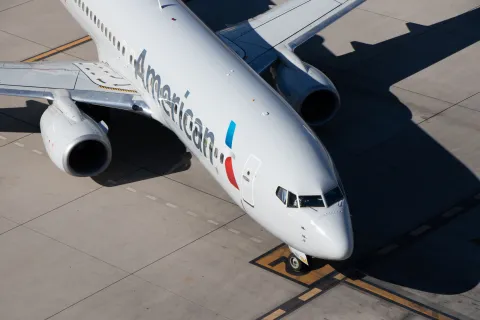
American Led Bag Mishandling Rates on Reportable Domestic Flights in Early 2026
For January through June 2026, the DOT data covers checked bags in airline custody on reportable domestic nonstop scheduled passenger flights; mishandled includes lost, delayed, damaged or pilfered bags.
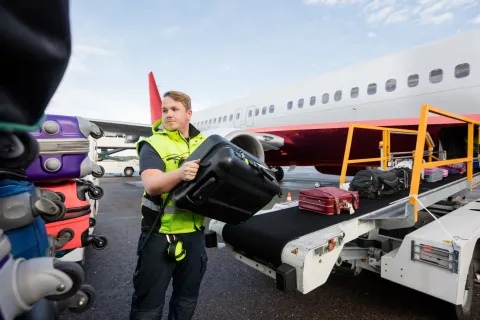
Jet Fuel Prices Have Doubled Since January
Jet fuel prices have doubled since January, and Leeham News is modeling potential ticket and cargo price effects if the increase persists.
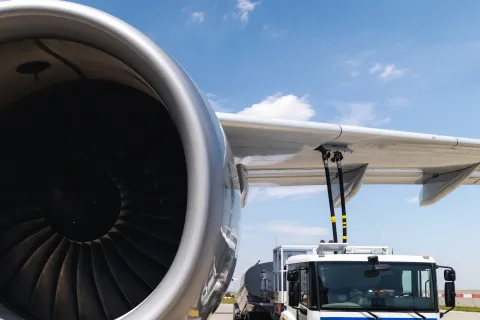
Frontier Plans 2027 First-Class Launch on Airbus Fleet
The planned cabin is intended for Frontier’s Airbus fleet, with introduction targeted for 2027; the cited reports do not establish a fleetwide completion date.
About the Author

Mariana Torres
Mariana Torres is South America Editor at Jetsetter Guide, covering backpacking and off-the-beaten-path travel in the Andes and the Amazon.