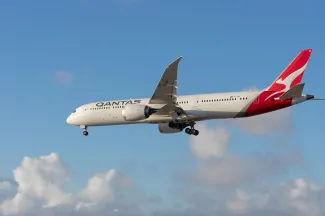
Stay current with our airline news coverage.
Twenty-two hours on one plane is a serious commitment. So is flying from Sydney to London without stopping for fuel. Qantas’ Project Sunrise is designed to make that journey possible, using specially modified Airbus A350-1000ULRs that carry more fuel and fewer passengers than a typical configuration.
The project is progressing, but this isn’t a route-launch announcement—or a new aircraft rollout. According to Simple Flying’s September 22 report, the first bespoke aircraft was spotted on the apron at Toulouse-Blagnac Airport in early April 2026, following completion of its airframe in November 2025. Commercial Project Sunrise flights have yet to begin. The publication expects services to start in the first half of 2027; an exact launch date remains unconfirmed.
Qantas plans to use the aircraft for nonstop flights from Sydney to London Heathrow and New York JFK, with journeys requiring up to 22 hours airborne, Simple Flying reported. For travelers, the appeal is straightforward: no intermediate landing. Making that work, though, involves much more than installing a bigger fuel tank.
Why Sydney-London needs a specially modified A350
Fuel is the starting point. According to Simple Flying, Airbus has added a rear-center tank holding 5,283 gallons, or 20,000 liters, to the Project Sunrise aircraft. That capacity needs to support more than simply reaching the destination; flight planning must also allow for diversions, delays and other emergencies.
Extra fuel brings extra weight. Simple Flying reported that a standard A350 couldn’t take off with the additional fuel load without exceeding its maximum takeoff weight. Airbus has increased that limit for the A350-1000ULR and reinforced the landing gear to accommodate the heavier aircraft.
The modifications also include structural reinforcements and fuel-balancing upgrades that help keep the aircraft’s center of gravity stable during takeoff and flight, according to Simple Flying. It’s a package of changes, rather than a standard passenger jet with a larger tank attached.
Power comes from two Rolls-Royce Trent XWB-97 engines, Simple Flying reported. Each has a maximum thrust rating of 97,000 pounds-force and a continuous thrust rating of 83,100 pounds-force. The publication describes them as the most powerful engines fitted to an Airbus aircraft.
Those engineering details explain the central challenge: carrying enough fuel to fly farther also means carrying the weight of that fuel. Project Sunrise tackles the problem on both sides, increasing the aircraft’s capabilities while reducing the passenger load.
Just 238 passengers, with comfort part of the design
Qantas’ Project Sunrise aircraft are planned to carry 238 passengers, according to Simple Flying. The publication compares that with 372 seats in a typical three-class A350-1000 and 480 in a high-capacity configuration. These aircraft aren’t being designed to squeeze in the largest possible crowd.
The lower capacity serves two purposes, Simple Flying reported: reducing weight so the aircraft can carry the necessary fuel, and making flights exceeding 20 hours more tolerable for passengers. That’s an important distinction. The smaller passenger count is part of the range calculation, not simply a cabin-design flourish.
Qantas has worked with Australian designer David Caon on the cabin, including maximizing space and developing a tailored lighting program intended to influence mood and sleep patterns, according to Simple Flying. The design and service approach aims to improve comfort and help minimize jet lag.
Intended is the useful word here. A cabin designed around sleep and well-being shouldn’t be read as a promise that passengers will step off a flight of this length feeling perfectly refreshed.
Simple Flying also reported that Qantas is counting on premium travelers willing to pay more for the nonstop journey. The commercial proposition is convenience as much as endurance: eliminating the stop is the attraction, even when the uninterrupted time aboard is substantial.
The crew and operating plan matter, too
A plane’s range is only one part of making an ultra-long flight workable. According to Simple Flying, Project Sunrise requires adaptations to crew working conditions and upgraded rest areas so pilots and cabin crew can maintain safe operations over the longer journey.
The larger fuel complement and upgraded rest areas both add weight, further limiting what the aircraft can carry in paying passengers and cargo, the publication reported. Passenger capacity, crew facilities and fuel therefore have to be considered together; none is an isolated decision.
Operational planning becomes more complicated over these distances, too. Simple Flying noted that delays and diversions can affect the aircraft’s ability to complete its intended route safely. The extra range also offers flexibility to avoid busy airspace and dangerous weather systems.
On the ground, Simple Flying reported that turnarounds may take longer because of the additional fuel and provisions to load, alongside preparations for a flight lasting almost a full day. Removing a stop from the passenger itinerary doesn’t remove the work needed to support the journey.
A new chapter for the Kangaroo Route
Sydney-London has already undergone a remarkable evolution. The Sydney Morning Herald, reporting on a Captain’s Choice itinerary inspired by the historic Kangaroo Route, traced Qantas’ original flight path to 1947, when the journey involved a series of shorter hops. Project Sunrise’s ambition is to dispense with intermediate stops altogether.
There’s an existing precedent for specially modified Airbus aircraft serving exceptionally long routes. According to Simple Flying, Singapore Airlines began Singapore-Newark A350-900ULR service in October 2018, with an average flight time of 18 hours and 45 minutes. Its aircraft use a modified fuel system and carry only business and premium economy passengers.
That comparison helps explain the design logic behind Project Sunrise: both approaches make deliberate choices about capacity to support unusually long nonstop flying.
Watch the launch schedule, not just the aircraft rollout
Simple Flying reported that Qantas expects to receive its first A350-1000ULR by the end of 2026. It also cautioned that at least three would likely be needed to sustain daily ultra-long-haul services. Having the first aircraft built and having a dependable flight schedule are different milestones.
For now, treat the first-half-2027 expectation as a planning horizon, not a confirmed departure date. The prospect is compelling: board in Sydney, land in London, skip the fuel stop. Whether that sounds wonderfully convenient or simply like a very long sit will remain a personal call.
More travel news
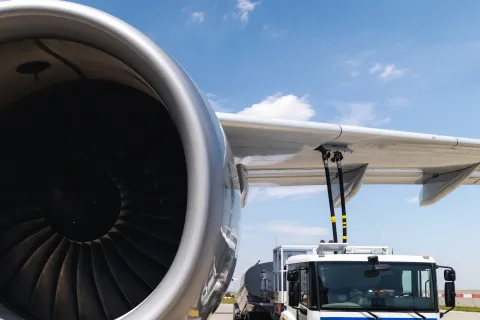
Jet Fuel Prices Have Doubled Since January
Jet fuel prices have doubled since January, and Leeham News is modeling potential ticket and cargo price effects if the increase persists.
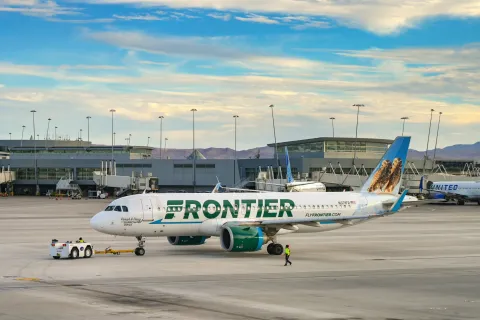
Frontier Plans 2027 First-Class Launch on Airbus Fleet
The planned cabin is intended for Frontier’s Airbus fleet, with introduction targeted for 2027; the cited reports do not establish a fleetwide completion date.
Qantas Lounge Dress Code Lists Uggs as Prohibited Sleepwear
Qantas classifies uggs as prohibited sleepwear at Qantas Clubs and select Qantas Business Lounges, where managers have discretion to apply the dress code.

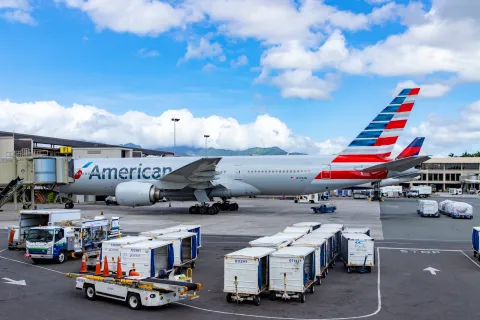
American Airlines Flew Uncertified Plane to Hawaii
LOS ANGELES, United States - A dispatch software failure sent the wrong A321 variant 3,000 km over the Pacific on Flight 31, prompting an FAA probe and emergency fixes to American's fleet-assignment system.
About the Author

Jeff Colhoun
Jeff Colhoun is a photographer and filmmaker whose work has appeared in The Wall Street Journal, the Los Angeles Times, Matador Network and Barron’s.