Stay current with our airline news coverage.
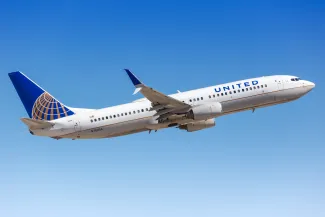
When you book a long-haul transpacific flight, you're signing up for maybe 12 hours of recycled air, questionable meal service, and the eternal hope that whoever's sitting next to you isn't going to spend the entire journey arguing with the flight attendants. On June 24, 2026, passengers aboard United Airlines flight UA858 from Shanghai to San Francisco got the nightmare version of that scenario, one that ended with a police escort, a fuel dump over the Pacific, and a nearly five-hour delay on the ground in Tokyo. TMZ reported that the Boeing 777-300ER, carrying 285 passengers and 16 crew members, diverted to Tokyo Narita after what United delicately described as "a disruptive passenger." According to social media reports, the incident began shortly after departure and escalated to the point where the captain decided that continuing to San Francisco with this person onboard was not an option. "United flight 858 from Shanghai to San Francisco diverted to Narita International Airport to address a disruptive passenger," United Airlines said, according to TMZ. "Law enforcement met the aircraft upon arrival and removed the passenger." The airline added that "Maintenance teams inspected the aircraft, and the flight later departed for San Francisco."
The Operational Fallout
Diversions like this aren't cheap, and they're not simple. Flight-tracking data shows the Boeing 777 left Narita at about 17:53 JST, roughly 4 hours and 40 minutes behind schedule. Before landing, the crew reportedly dumped fuel to meet landing-weight limits for the wide-body jet, a standard but expensive safety procedure that's required when you're bringing a fully loaded 777 down earlier than planned. Once on the ground, the aircraft underwent a maintenance inspection before being cleared to continue. That's protocol after any unscheduled landing, especially one that involves fuel dumping and an onboard incident serious enough to warrant law enforcement intervention. For the 285 passengers who'd already been airborne for hours, the delay meant missed connections, frayed nerves, and the kind of travel day that ends with stress-eating convenience store snacks in an airport terminal. I've been on enough long-haul flights to know how quickly cabin tension can escalate. You're trapped in a metal tube, there's nowhere to go, and if someone decides to make themselves everyone's problem, the crew has limited options. Flight attendants are trained in de-escalation, but when that fails and a passenger continues to disrupt operations or threaten safety, the captain has the authority to divert. And they do, because the alternative is risking the well-being of hundreds of people.
What This Costs Everyone
Passenger misconduct has real financial and logistical consequences. The fuel dump alone represents thousands of dollars in wasted jet fuel. The diversion itself adds airport fees, ground handling costs, and coordination with international law enforcement. United had to arrange for crew rest, rebooking for passengers with missed connections, and likely compensation claims for the delay. And all of that falls on the airline, not the disruptive passenger, unless United pursues civil or criminal penalties later. For travelers, the message is blunt: if you act out on a plane, you're not just inconveniencing yourself. You're derailing the plans of 284 other people, burning through the crew's duty-hour limits, and potentially leaving someone stranded in a city they didn't plan to visit. In this case, that city was Tokyo, which could be worse; current hotel rates in the city run from around $59 a night at budget spots like APA Hotel Asakusa Tawaramachi-Ekimae to about $101 at mid-range options like Koko Hotel Tsukiji Ginza, according to Google Hotels data. But if you're a backpacker or budget traveler trying to stretch every dollar, an unplanned overnight in Tokyo because someone couldn't behave on a plane is going to sting. The other reality here is that crew authority is not optional. When a flight attendant tells you to sit down, you sit down. When the captain decides you're leaving the aircraft, you're leaving. There's no negotiation, no appeal process in the moment. You comply, or you get escorted off by police in whatever country you happen to be flying over. That's how aviation safety works, and it's not up for debate at 35,000 feet.
The Bigger Question
What's driving the uptick in disruptive passenger incidents? Some of it is pandemic-era behavioral regression, some of it is alcohol and stress, and some of it is people who genuinely don't understand that once you're onboard an international flight, you're subject to a different set of rules. Flight crews don't have time for your personal drama. They're managing a complex operation in a high-stakes environment, and when someone becomes a liability, the safest move is to get them off the plane as quickly as possible. For the rest of us who just want to get from point A to point B without incident, the advice is simple: treat the flight like what it is, a shared public space where your behavior affects everyone around you. Save the drama for the ground. And if you can't, expect to be explaining yourself to law enforcement in whatever country the captain picks for your unscheduled exit.
More travel news
O’Hare Led U.S. Airports With 43 Delays Wednesday
Wednesday’s figures put O’Hare first among U.S. airports for delays and United first among U.S. carriers; they are not a live flight-status report.
United passenger says she was locked in Vancouver jet bridge
A disabled traveler expecting wheelchair assistance says she waited alone for 20 to 30 minutes after landing in Vancouver on Sept. 9; United says an agent checked frequently while an escort was arranged.
United Tests Gate Delivery for Select Newark Flights
Passengers notified by United before select flights departing from or connecting through nine designated Terminal C gates at Newark can order in the app; United charges no service fee.
United Resumes Twice-Daily Newark–Tel Aviv Flights
United’s Newark–Tel Aviv route is operating twice daily, and Delta’s JFK service has returned; United plans Chicago and Washington flights from October.

About the Author

Mariana Torres
Mariana is a 33-year-old travel writer and backpacker who specializes in finding the pulse of a place far beyond the tourist maps.