Stay current with our airline news coverage.
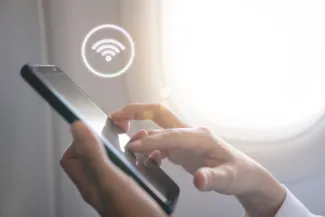
UNITED STATES - If you've been coasting on free Wi-Fi during United flights thanks to your T-Mobile plan, tomorrow is your last ride. July 13, 2026 marks the final day T-Mobile customers can tap into complimentary in-flight connectivity on United Airlines, closing the book on a partnership that's been a quiet lifeline for digital nomads, remote workers, and anyone who's ever needed to answer an urgent Slack message at 35,000 feet.
The perk, which offered eligible T-Mobile postpaid customers four full-flight Wi-Fi sessions per calendar year plus unlimited messaging on partner airlines, has been vanishing from United aircraft over recent months, according to Simple Flying. Reddit users and travel forums have noted the option disappearing from Wi-Fi portals on many United planes, with July 13, 2026 confirmed as the hard cutoff for remaining Thales and Viasat-equipped flights.
T-Mobile quietly scrubbed United Airlines (and earlier, American Airlines) from its "In-Flight Connection" materials, signaling the end of those tie-ins. When pressed, United issued a terse statement pointing the finger back at the telecom giant: "This change is due to an update T-Mobile made to its customer benefit program. We'd encourage you to reach out to T-Mobile directly for additional information," the airline told travel blog Live And Let's Fly.
What You're Losing
For T-Mobile customers on plans like Go5G and Magenta, this was more than a throwaway perk. Those four full-flight sessions, plus unlimited one-hour browsing windows and text messaging on supported airlines, added tangible value to a wireless plan, especially for anyone who flies United regularly. United's standard Wi-Fi pricing hovers around $8 to $15 per domestic flight; do the math across a year of travel, and you were looking at real savings.
The timing isn't arbitrary. United is deep into a fleet-wide rollout of Starlink-powered Wi-Fi, with plans to offer free connectivity on all flights by around 2027. The airline is also expanding complimentary Wi-Fi access to members of its MileagePlus frequent flyer program, a shift that makes third-party sponsorships like T-Mobile's redundant or, more likely, economically unappealing. Why split the connectivity pie with a telecom partner when you can use free Wi-Fi to drive enrollment in your own loyalty ecosystem?
T-Mobile, meanwhile, is repositioning. The carrier still sponsors free in-flight Wi-Fi via airline loyalty programs on Delta, Alaska, Hawaiian, and Southwest, a model that ties access to the airlines' frequent flyer accounts rather than directly to T-Mobile plans. It's a subtler play, less visible to the average subscriber scrolling their plan benefits, but it keeps T-Mobile's brand in the in-flight connectivity conversation without requiring the kind of direct partnership infrastructure that just ended with United and American.
The Connectivity Calculus Just Shifted
Here's the part that stings if you're a digital nomad or long-term traveler who's built routines around this perk: you're now facing a choice between enrolling in United's MileagePlus program (if you haven't already), paying for Wi-Fi out of pocket, or switching your flights to carriers where T-Mobile's sponsorship still works. For backpackers and budget travelers who've squeezed every drop of value out of wireless plan perks to offset travel costs, this is a real recalibration.
United's MileagePlus-based free Wi-Fi sounds like a clean substitute, but it's not quite apples to apples. You're now locked into United's ecosystem to get the benefit, whereas T-Mobile's old model let you carry the perk across multiple airlines. If you split your flights between carriers (Delta for certain routes, United for others, Southwest for quick hops), you've just lost flexibility. And if you're not a frequent United flyer, you might not see enough value in MileagePlus enrollment to bother, leaving you either offline or paying à la carte.
There's also the broader trend at play. Free in-flight Wi-Fi is becoming table stakes, but the path to accessing it is fragmenting. Airlines want to own the relationship and the data; telecoms want brand visibility and subscriber stickiness. What we're watching is the slow unwinding of cross-industry partnerships in favor of walled gardens. T-Mobile's pivot to sponsoring loyalty-based access on Delta and others is a hedge, a way to stay relevant in the connectivity arms race without surrendering control or bearing the full cost of infrastructure deals.
For travelers, the practical takeaway is simple: if you fly United and rely on T-Mobile's free Wi-Fi, use it one last time before midnight on July 13, 2026. After that, sign up for MileagePlus if staying connected in the air matters to you, or start budgeting for paid sessions. And if you're on T-Mobile and fly other carriers, double-check whether your airline's loyalty program unlocks sponsored Wi-Fi; it's not automatic, and the setup process varies.
The perk isn't dead; it's just moved. But that migration comes with friction, and for anyone who travels light and values simplicity, friction is the tax you didn't ask to pay.
More travel news
United flights from Rochester to Chicago delayed until Octob
ROCHESTER, Minnesota - The much-anticipated United Airlines service linking Rochester International Airport to Chicago O'Hare has been postponed for a third time, now pushed back to October 2027 due to extended FAA capacity restrictions.

United Airlines Grounds Humanoid Robots Starting 2026
United Airlines has joined Southwest Airlines in banning humanoid and animal-like robots from both cabin and checked baggage, effective July 23, 2026, citing battery safety concerns.
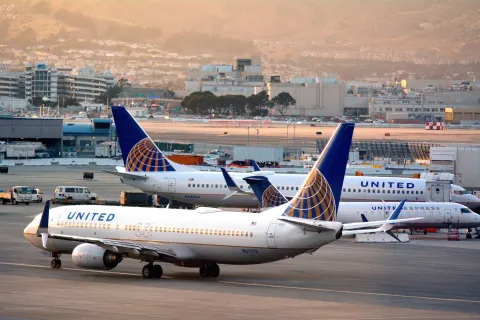
FAA Orders Seat Track Checks on 453 Boeing 737 MAXs
WASHINGTON, D.C. - Federal regulators target Boeing's MAX fleet again, this time over cabin seat installations that may not hold properly during flight.
Airlines Can Hide Baggage Fees Again After Court Ruling
WASHINGTON - A Fifth Circuit ruling has eliminated the requirement for airlines to show baggage and change fees upfront, reverting to 2011-era disclosure standards.
About the Author

Mariana Torres
Mariana is a 33-year-old travel writer and backpacker who specializes in finding the pulse of a place far beyond the tourist maps.