Stay current with our airline news coverage.
What United Claimed, and What the Court Found
United's defense hinged on two arguments: that "window seat" is merely a position descriptor for a seat adjacent to the cabin wall, not a promise of an actual window with a view; and that the Airline Deregulation Act preempts lawsuits challenging airline pricing or services. The carrier also pointed to its contract of carriage as shielding it from liability. Judge Donato disagreed. "The reservation screen used to buy the ticket made unequivocal representations 'at the time of booking' that United would provide a window seat. No more is needed at this stage for the breach claims to go forward," he wrote in his ruling, according to Reuters. The court characterized the dispute as a straightforward breach-of-contract claim rooted in the explicit promises displayed in United's booking interface, ticketing language and boarding passes. That specific representation, the judge concluded, distinguishes this case from general challenges to airline pricing structures or service levels, making the Airline Deregulation Act inapplicable at this stage of litigation.The Scale of the Claim
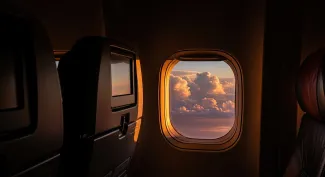
Plaintiffs allege that United sold over 1 million windowless window seats because the airline operates hundreds of Boeing 737 and Airbus A321 aircraft where certain rows are affected by fuselage design, according to Travel Weekly. The proposed class has more than 100 named members and targets a practice plaintiffs say persisted for years without disclosure on seat maps or reservation screens. According to Reuters, the complaint contends that "had the plaintiffs and the class members been aware that the seats they were purchasing were without windows, they would not have chosen them, let alone paid extra." Passengers framed the issue in terms of practical expectation: travelers pay for window seats to manage motion sickness, occupy children on long flights, enjoy natural light or simply take in the view during taxi and cruise. When those features are unavailable, the seat's value proposition collapses.Not an Isolated Issue
United is not the only carrier facing scrutiny over windowless window seats. Similar litigation has been filed against Delta Air Lines, and travelers have reported comparable seat configurations on aircraft operated by Alaska Airlines and American Airlines, according to Simple Flying. The structural quirks are the result of modern aircraft design, where air-conditioning ducts, wiring channels and structural reinforcements occasionally eliminate windows in specific fuselage sections. What varies is not the design itself but how carriers disclose those quirks to paying passengers at the point of sale.Where the Legal Calculus Goes Next
The ruling keeps the case alive and opens the door to discovery, a phase where plaintiffs can request internal airline communications, seat-pricing data and booking-system records. If the case survives summary judgment and proceeds to class certification, United could face liability extending across every affected passenger who paid a premium for a windowless window seat over a multi-year window. What makes this ruling notable is its narrow framing. Judge Donato did not wade into abstract debates about whether airlines have a general duty to provide windows in window seats or whether seat fees are too high. He focused exclusively on what United's own reservation screens, tickets and boarding passes told customers they were buying. That specificity gives the plaintiffs a clear contractual hook and limits United's ability to argue the case is preempted by federal aviation deregulation statutes. The practical implication for United and its competitors is straightforward: if your booking interface, boarding pass or seat map promises a window seat, and the seat in question has no window, you may be on the hook for breach of contract regardless of what your fine-print contract of carriage says. That shifts the burden back onto carriers to update digital seat maps, flag affected rows during the booking flow or adjust pricing to reflect the absence of a feature travelers reasonably expect. For passengers, the case underscores a broader truth about airline ancillary fees: the premium you pay for seat selection, early boarding or extra legroom is based on specific representations made at the point of sale. When those representations turn out to be incomplete or misleading, contract law still applies, even in a deregulated industry. This case is a test of that principle at scale.More travel news
United Airlines CEO Defends Fees for Window and Aisle Seats
Kirby said travelers who want a preferred seat should pay more. Charges vary with available seats, fares and status benefits; $70 was one non-frequent flyer's example.
United Airlines lowers economy food preorder threshold to 900 miles
United lowered its fresh-food preorder threshold from 1,190 to 900 miles, adding the option for economy passengers on 420 daily flights in North America and the Caribbean; orders close 24 hours before departure.
Boeing 737 MAX 10 FAA approval could come this week
FAA certification could come the week of Oct. 19, but some buyers reportedly will not accept 737 MAX 10s fitted with affected U14 or U14.1 software.
United Airlines launches Starlink flight tracker
Travelers can use United Airlines’ Starlink Tracker to check flight-level availability as the carrier works toward fleetwide installation by the end of 2027.
About the Author

Jeff Colhoun
Jeff Colhoun is a photographer and filmmaker whose work has appeared in The Wall Street Journal, the Los Angeles Times, Matador Network and Barron’s.