Stay current with our airline news coverage.
A non-frequent flyer faced a $70 charge to avoid a middle seat on United Airlines, according to a Nov. 1 report from Simple Flying, citing The New York Times. The example lands alongside broader evidence that United is charging passengers booking alone more than passengers booking together on some flights.
These are separate pricing issues, and travelers should not mistake one for the other. The $70 example concerns the cost of avoiding a middle seat. The solo-fare research concerns the ticket price itself, before the question of where to sit enters the calculation.
Both deserve scrutiny. But neither establishes that every solo United passenger pays more, or that every non-frequent flyer must pay $70 for an aisle or window seat.
What the $70 United seat charge establishes
Simple Flying reported that a New York Times reporter confronted United’s CEO about the charge. Its supplied account does not include the executive’s answer, identify the flight or fare type, or establish whether $70 was a standard charge rather than the price offered in that particular case.
That limits the conclusion travelers can draw. This is a reported seat-selection cost, not evidence of a newly announced, systemwide $70 fee. Nor does the reference to a non-frequent flyer establish a specific loyalty-status threshold or an exemption for everyone who flies United regularly.
The useful distinction is between buying transportation and securing a preferred seat. In the reported example, avoiding the middle seat carried an additional cost. Separately, the latest fare investigation found that simply searching for one passenger could produce a higher ticket price than searching for multiple passengers on the same flight.
Higher solo fares found on 10.6% of United flights sampled
Thrifty Traveler analyzed 5,000 flights across American, United, Delta, Alaska and Southwest. The sample included 1,000 nonstop domestic one-way flights per airline, on randomly selected routes departing over the next 11 months.
On United, the publication found higher fares for solo passengers on 10.6% of the flights examined. Among those flights, the average difference was just over $64. That is a finding about the sampled flights, not a measure of every ticket United sells.
One United example involved a Feb. 22 flight from Newark to Santa Ana. Thrifty Traveler found a main cabin economy fare of $404 when searching for one traveler. Adding a second passenger brought the per-person price down by more than $100 for the same fare.
The publication also found the practice on some domestic round-trip flights, although less frequently than on one-way itineraries. United declined to comment to Thrifty Traveler.
The comparison with other airlines matters because it shows this was not an unavoidable result across the entire market. Thrifty Traveler found no higher solo fares on any of the 1,000 flights it examined at each of Delta, Alaska and Southwest. American showed the practice more frequently than United, with higher solo fares on 33.5% of sampled flights and an average difference of more than $90.
Why adding a passenger can change the fare
Thrifty Traveler traced the pricing mechanism to fare rules, including accompaniment requirements attached to some cheaper tickets. Those requirements make the lower fare conditional on traveling with another adult in the same cabin throughout the itinerary.
That reverses the more familiar availability problem described in its investigation: A search for multiple travelers can ordinarily return a higher per-person price when too few seats remain at the cheapest fare. Here, the lower price becomes available because another passenger is added.
The publication also found the pricing difference more prevalent on routes where American or United had a monopoly than on routes with competition from two or more other airlines. It cautioned that the case against United was less clear-cut than against American; some United examples looked more like discounts for companions than penalties for solo travelers.
Thrifty Traveler’s explanation is customer segmentation, potentially aimed at business travelers assumed to be less price-sensitive because their employers pay. That remains an interpretation, not a confirmed explanation from United. A one-person reservation does not establish who is paying or why someone is traveling.
Seat selection is becoming a separate purchase in more cabins
United’s latest domestic first-class changes provide relevant context, but they should not be confused with either the $70 example or the solo-fare findings.
According to One Mile at a Time, United began selling restrictive domestic first-class Base fares on Oct. 28, 2026, in many markets. Searches can now display Base, Standard and Flexible options.
The publication reported that Base fares do not include complimentary seat selection. They are nonrefundable, carry a $199 change charge and earn no redeemable miles, although they earn Premier Qualifying Points based on spending. Those restrictions demonstrate why the cabin label alone no longer tells a traveler everything included in the price.
Compare the ticket and the seat separately
For a solo traveler, the booking check now has two parts: whether the ticket is priced higher for one passenger, and what it costs to select an acceptable seat. A two-passenger search can reveal a pricing difference, but it does not make an accompaniment-restricted fare valid for someone traveling alone.
Travelers genuinely flying together have a reason to compare a joint reservation with separate bookings. Those flying alone should treat the lower companion price as information, not a workaround.
The $70 seat example and Thrifty Traveler’s findings expose different layers of the purchase. Neither the first fare displayed nor the cabin name is enough to evaluate the offer. The meaningful comparison is the eligible fare, its restrictions and the cost of the seat the traveler actually wants.
More travel news
Major U.S. Airlines Favor Higher Fares Over Fuller Planes
Major U.S. carriers are prioritizing revenue per passenger over fuller planes as jet fuel costs rise; Thanksgiving fares are up about 30% from 2025.
United Airlines CEO Defends Fees for Window and Aisle Seats
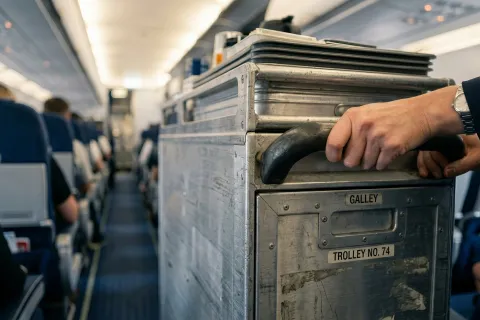
Kirby said travelers who want a preferred seat should pay more. Charges vary with available seats, fares and status benefits; $70 was one non-frequent flyer's example.
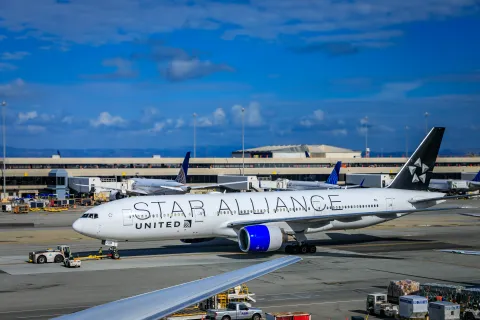
United Airlines lowers economy food preorder threshold to 900 miles
United lowered its fresh-food preorder threshold from 1,190 to 900 miles, adding the option for economy passengers on 420 daily flights in North America and the Caribbean; orders close 24 hours before departure.
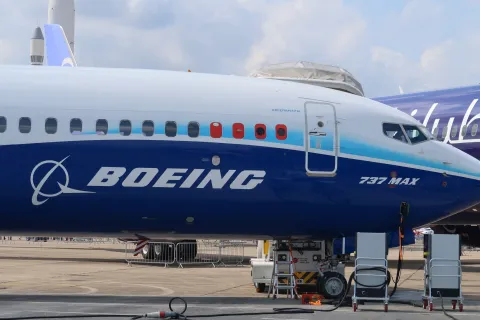
Boeing 737 MAX 10 FAA approval could come this week
FAA certification could come the week of Oct. 19, but some buyers reportedly will not accept 737 MAX 10s fitted with affected U14 or U14.1 software.
About the Author

Jeff Colhoun
Jeff Colhoun is a photographer and filmmaker whose work has appeared in The Wall Street Journal, the Los Angeles Times, Matador Network and Barron’s.