Stay current with our airline news coverage.
LONDON, United Kingdom - The summer holiday season collapsed into sustained disruption through late June 2026 as multiple crises converged across global travel networks: U.S. aviation entered its 76th consecutive day of significant operational failure, record-breaking European heat stressed airports and infrastructure, storms triggered chaos at UK terminals, and newly complex border and visa requirements added hours-long delays to journeys already unraveling.
What travelers confronted was not a single discrete meltdown but the cascading failure of systems under sustained pressure. U.S. aviation had been in crisis since April 1, 2026, according to AirHelp analysis. "That's how many consecutive days American aviation has been disrupted since April 1, 2026 — the longest unbroken streak of chaos since airline deregulation in 1978," the analysis noted.
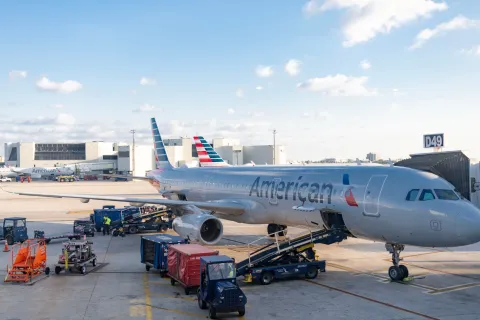
On June 15, 2026, airlines operating in the U.S. recorded 855 flight cancellations and 7,773 delays nationwide, with Dallas-Fort Worth alone reporting 180 cancellations and 882 delays, according to AirHelp. Major hubs including Atlanta and New York LaGuardia were repeatedly crippled by severe thunderstorms and FAA ground stops.
Europe Under Heat and Storm Pressure
Across the Atlantic, European travel infrastructure buckled under an unprecedented heatwave in late June. France and Germany experienced record temperatures that stressed transport operations and challenged tourism systems designed for moderate climates. At the same time, late-June storms battered the United Kingdom, triggering mass disruption at Heathrow and Gatwick.
Simple Flying reported over 900 flights disrupted at the two London airports as storms collided with the backdrop of a continent-wide heatwave. Passengers faced scenes of confusion as flight boards cycled through cancellations and multi-hour delays while temperatures inside terminals soared.
The combination of extreme weather events exposed the fragility of peak-season operations. Airports designed for predictable summer crowds found themselves managing heat-related health incidents, operational slowdowns tied to runway and equipment stress, and the knock-on effects of delayed or canceled inbound international services.
New Border Rules Add Complexity and Confusion
Compounding operational chaos, new and looming border-control measures introduced fresh friction for travelers attempting to leave home or enter Europe. The European Union's Entry/Exit System for non-EU nationals, including UK citizens, requires mandatory biometric registration at Schengen borders: fingerprints and facial images captured at each crossing.
Official warnings highlighted the risk of long queues and potential suspension of checks during peak periods, according to the BBC. The system, designed to tighten border security, collided with the reality of overwhelmed facilities and anxious holidaymakers unsure what documents or time buffers to prepare.
In the United States, a separate visa policy shift added financial and logistical pressure. Starting July 1, 2026, the State Department launched a pilot program allowing B-1/B-2 visitor visa applicants to pay an additional $750 fee for an interview within 10 business days, on top of the standard $185 application fee, bringing the total to $935 for expedited processing, according to Condé Nast Traveler. The program responded to severe backlogs but underscored the growing cost and complexity of international mobility.
Travelers Cancel and Delay Amid Rising Costs and Uncertainty
The cumulative effect of higher airfares, unpredictable operations, and bureaucratic hurdles drove some travelers to abandon or postpone plans altogether. "Higher airfares, long airport lines and global tensions are prompting some travelers to delay or cancel trips," USA Today reported in coverage of broader 2026 travel trends.
The phrase "Great Travel Meltdown of 2026" began circulating in industry and media coverage. The Atlantic noted that "The Great Travel Meltdown of 2026 started taking shape at the end of February," pointing to systemic failures across aviation staffing, air-traffic control, fleet capacity, and climate resilience that made even routine weather events cascade into operational collapse.
The meltdown also illustrated how fragile international connections had become. A canceled domestic U.S. flight could strand passengers booked on transatlantic services. A delayed arrival at Heathrow meant missed connections to southern Europe. New biometric border checks turned 20-minute crossings into hour-long bottlenecks.
The Systems That Failed Travelers
What happened in late June was the predictable outcome of stresses building over months. U.S. aviation's 76-day streak of disruption reflected chronic FAA air-traffic-controller shortages, airline staffing gaps, and aging infrastructure unable to absorb weather shocks. European heat and storms revealed tourism systems unprepared for climate extremes. UK airport chaos highlighted capacity limits and operational brittleness. And new border regimes, however justified on security grounds, added friction at exactly the moment networks were least capable of absorbing it.
For travelers caught in the convergence, the experience was one of compounding uncertainty: not knowing if a flight would depart, whether an airport would be functional, how long a border crossing would take, or what new fees or requirements might surface between booking and boarding.
Where This Leaves Holiday Travelers
The late-June convergence should force a harder conversation about what realistic expectations look like in a travel environment under this much structural stress. If you had plans departing between mid-June and early July 2026, the safest assumption was disruption, not smooth passage. That is not fearmongering; it is acknowledging what the data and operational reality were showing.
Travelers with summer bookings still on the calendar need to recalibrate. Build in buffer days before critical events or connections. Understand that travel insurance policies vary widely in what they cover when disruptions are weather-related or driven by systemic operational failure rather than carrier bankruptcy or named crises. Know that new border requirements, especially biometric registration at EU entry points, are not optional and will add time regardless of how early you arrive.
The meltdown also raises questions about whether peak-season travel to high-demand corridors remains worth the cost and stress. If your tolerance for multi-hour delays, cancellations, and chaotic rebooking is low, shoulder-season or off-peak travel is no longer just a budget tip; it is a risk-mitigation strategy. The systems that support mass mobility are showing clear signs of strain, and the convergence of climate extremes, staffing shortages, and new policy layers is not going away.
What matters now is honest assessment. The infrastructure that makes global holiday travel possible is fragile, and the margin for error is thinner than most travelers assume. Plan accordingly, expect friction, and accept that the era of predictable, friction-free summer departures may be behind us for the foreseeable future.
More travel news
Ski Resorts Become Summer Golf Havens Across US
TRAVERSE CITY, Mich. - Boyne Golf spotlights 14 U.S. ski resorts doubling as summer golf destinations, from Maine to Montana, with courses carved into terrain that hosts skiers in winter.

Airline Wi-Fi Crashes Under Surge in Passenger Use
Several major U.S. airlines' Wi-Fi provider has acknowledged sluggish service and outages on long-haul flights as passenger usage surges.
Trump's 50% Canada Tariff Threatens Travel Costs
WASHINGTON - Trump's sweeping 50% tariffs on Canadian imports spark fresh worries about rising costs for cross-border tourism, business travel, and the entire North American travel ecosystem.
Skip Lake Como Crowds for Tahoe's Alpine Shores
SOUTH LAKE TAHOE, Calif. – California's alpine jewel courts UK travelers with crystal-clear waters and uncrowded shores as an alternative to overtourism-strained European lake destinations.

About the Author

Jeff Colhoun
Jeff Colhoun is an acclaimed travel writer, photographer, and filmmaker, whose work is respected both in the United States and internationally.