Stay current with our airline news coverage.
More Glass, Better Views
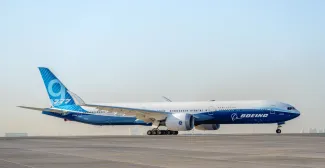
The numbers tell part of the story. According to Simple Flying, the 777X's windows are more than 15 percent larger than the competition's and sit higher on the fuselage. That extra height matters more than you might think; it means passengers in middle and aisle seats actually get a fighting chance at glimpsing something other than clouds and sky. Anyone who's ever craned their neck awkwardly from a center seat knows what a difference that could make. Boeing isn't reinventing the wheel here. The 787 Dreamliner proved that passengers genuinely care about windows, natural light, and maintaining some connection to the world outside that aluminum tube. The interior design incorporates elements from the 787 Dreamliner, which have proven popular with passengers and airlines alike, according to Simple Flying. If it worked once, why not double down on a plane twice the size?The Cabin Experience Gets An Upgrade
Windows are just the opening act. The 777X cabin takes a page from the 787's playbook in other ways too, addressing some of those subtle discomforts that accumulate over a transpacific flight. The cabin altitude sits at 6,000 feet, comparable to the 787 Dreamliner, according to Simple Flying. That's notably lower than the 8,000-foot equivalent you'll find on older aircraft, and your lungs, sinuses, and overall mood will thank you for it. Higher humidity levels round out the package. Combine that with quieter engines and improved air filtration, and you've got a recipe for arriving at your destination feeling slightly less like you've been tumble-dried for half a day. It's not going to make a 14-hour flight feel like a spa day, but incremental improvements add up when you're stuck in a seat that long.Flexibility For Airlines
Boeing designed the 777X cabin to be more adaptable than its predecessor, giving airlines room to configure the interior based on their specific needs and market positioning. One carrier might opt for more premium seating with extra legroom and fewer rows; another might maximize capacity for high-demand routes. That flexibility matters in an industry where one-size-fits-all rarely works, especially when you're competing on everything from business class lie-flat beds to economy legroom. The aircraft's scale allows for creative layouts. We're talking about a plane designed to seat well over 400 passengers in typical two-class configurations, with range exceeding 7,000 nautical miles. That combination of capacity and reach puts it squarely in the sweet spot for long-haul international routes, trunk routes between major hubs, and high-traffic leisure markets where airlines need to move a lot of people efficiently.Why It Matters For Passengers
Let's be honest: most of us don't pick flights based on window size. We look at price, schedule, loyalty program, and maybe seat pitch if we're feeling optimistic. But these cabin enhancements matter more than you might expect, especially on ultra-long-haul flights where every small comfort stacks with the others. Natural light affects circadian rhythms, mood, and how quickly you adjust to new time zones. A pressurization altitude closer to sea level reduces fatigue and dehydration. Better humidity keeps your skin and throat from feeling like sandpaper six hours into the flight. None of these things alone will transform your travel experience, but together? They might actually make that Singapore to New York nonstop feel slightly less punishing.The Bottom Line
Boeing's decision to outfit the 777X with massive, 787-inspired windows isn't just a design flourish; it's a calculated bet that passengers notice and value these details, even if subconsciously. Airlines have certainly noticed. The 787's cabin features consistently rank among its most praised attributes, and Boeing is smart to leverage that success on its next-generation wide-body. Whether you end up on a 777X anytime soon depends on which airlines you fly and where you're headed. But when you do find yourself booking a ticket on one, take the window seat if you can. After all, what's the point of those oversized windows if you're staring at the seatback in front of you?More travel news
Global Travel Crisis Strands Millions Across Continents
LONDON, United Kingdom - A convergence of severe flight disruptions, record heat across Europe, UK airport chaos, and tightening visa regulations created a sustained travel crisis through late June 2026, upending summer holiday plans.
Quark Unveils 70-Plus Polar Expeditions for 2028
SEATTLE, Washington - Quark Expeditions has begun accepting reservations for polar voyages departing in 2028 and 2028-29, the earliest program launch in the expedition operator's history.

US Passport Rule Triggers Global Summer Travel Chaos
WASHINGTON - Widespread traveler confusion erupted in late June 2026 over passport blank page requirements, as summer tourists faced unexpected boarding denials despite no actual regulatory change.

TSA Uncovers Smoke Grenade Stashed in Peanut Butter
Indianapolis, United States - Security officers intercept live explosive devices in checked luggage, including one concealed inside a jar of peanut butter, raising fresh questions about traveler awareness of hazardous-material bans.

About the Author

Bob Vidra
Bob Vidra, based in scenic Tahoe, is an esteemed tech editor known for his deep understanding of the dynamic intersection of technology, travel, and the outdoors.