
Stay current with our airline news coverage.
What Actually Exists: Blank Page Requirements by Country
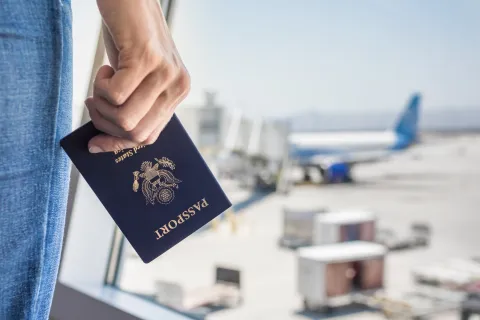
Many foreign countries have required at least one or two blank visa pages in passports for years, according to long-standing entry regulations. These are destination-specific rules, not a uniform global standard imposed by Washington. The U.S. Department of State explicitly warns on its website that "some countries require that your passport have two to four blank pages and some airlines will not allow you to board if you do not meet this requirement," according to Consular Affairs social media guidance. China specifically requires a minimum of 2 blank pages for entry, as stated in the China Travel Advisory published by the State Department. China also does not accept the 12-page U.S. emergency passport for visa-free entry, a detail that caught multiple travelers off guard in recent weeks. These are not new rules. They existed last summer, the summer before, and in many cases for decades. The June 28 date that triggered widespread panic appears to be the result of a misinterpreted advisory or social media post amplified during peak travel season, not the implementation of any formal regulation change.Why Airlines Are the Enforcement Chokepoint
Airlines face fines and repatriation costs when they board passengers who lack required documentation, including sufficient blank passport pages. Carriers use databases such as IATA Timatic to verify destination entry requirements at check-in. If a passenger is denied entry abroad due to insufficient blank pages, the airline that transported them is financially liable for the return flight and associated penalties. This creates powerful incentives for gate agents to err on the side of caution. A passport with one or two pages already stamped may be rejected even if technically compliant, because the agent is reading the most conservative interpretation of a foreign country's rules and applying it in real time under boarding pressure. Travelers with valid, non-expired passports who simply ran out of blank pages have been turned away at check-in counters in recent weeks, often with no clear recourse and no immediate ability to renew documentation. For families departing on long-planned international vacations, the experience felt sudden and punitive, even though the underlying requirement was always there.The Security Context That Amplified the Panic
The passport page confusion did not happen in a vacuum. Early 2026 saw a drumbeat of heightened travel warnings from the State Department. A Worldwide Caution alert stated, "The Department of State advises Americans worldwide to exercise increased caution... Periodic airspace closures may cause travel disruptions," according to language published on travel.state.gov in February and March. These advisories referenced security risks related to Iran, airspace disruptions across 14 Middle Eastern countries, and enhanced health screening for travelers arriving from specified African countries within 21 days of U.S. entry. The cumulative effect was a travel environment already on edge, where any new guidance or social media post about documentation could be misread as an emergency restriction. When a strongly worded reminder about passport blank pages circulated in late June, it landed in an information ecosystem primed for alarm. Travelers, journalists, and travel forums interpreted the guidance as a new rule rather than a renewed emphasis on compliance with existing foreign entry requirements.State Department Travel Advisories Span Four Levels
State Department Travel Advisories range across 4 levels, from Level 1 ("Exercise normal precautions") to Level 4 ("Do not travel"). This tiered system is designed to communicate nuanced risk, but in practice, the distinction between a security caution and a documentation reminder often gets lost when both are published under the same official letterhead and shared widely online. The result: travelers began treating passport blank page guidance with the same urgency as a security alert, even though the two issues are fundamentally different in nature and enforcement.How This Unfolded Is as Important as What Happened
I've watched this dynamic play out in developing regions and polar expedition zones where infrastructure is fragile and official guidance is sparse. Travelers arrive prepared for one set of risks, only to be blindsided by documentation or entry requirements that were always on the books but poorly communicated. The June 2026 passport panic is a version of that same disconnect, transplanted into mainstream summer tourism. The frustration is understandable. If you hold a valid passport with eight months of validity remaining, you reasonably expect to board your flight. Discovering at check-in that a foreign country counts only blank pages, not total pages, feels like a gotcha. It's not a new rule, but it's new information for most travelers, and that gap is where the chaos lives. Airlines are not making this up. They are enforcing requirements imposed by foreign governments, filtered through liability concerns and database lookups at the gate. The State Department is not imposing a travel ban. It is reminding Americans that other countries set their own entry rules, and that U.S. passport validity alone does not guarantee admission abroad. What's missing is proactive, plain-language disclosure at the point of booking. Most travelers book flights and hotels months in advance. If a destination requires two blank pages, that fact should appear in bold text during the booking process, not in fine print on a consular website that most people will never visit until they've already been denied boarding.What Travelers Should Do Now
Check your passport today, not the week before departure. Count blank pages, not just expiration dates. Some countries require 2 to 4 blank pages, according to U.S. Consular Affairs, and those requirements are non-negotiable at the gate. If you have fewer than four blank pages remaining and international travel planned in the next six months, apply for a passport renewal now. Processing times vary, and you cannot count on expedited service during peak travel periods. Verify entry requirements for every destination on your itinerary using the State Department's country-specific travel advisories, not general travel blogs or forum posts. The official source is tedious to read, but it is also legally definitive. If you are denied boarding due to blank page requirements, ask the gate agent to document the specific rule and country source they are citing. Airlines occasionally misapply requirements, and having that documentation gives you leverage for rebooking or refund claims. This is not a travel ban. It is a documentation enforcement issue that became a viral panic because official guidance, airline liability, and peak travel season collided in the worst possible way. The rules were always there. The surprise is that so many travelers are only learning about them now, at the gate, with their vacation on the line.More travel news
Mainland China advisory restores wrongful detention alert
The Oct. 19 update reinstates the D risk indicator for Americans visiting mainland China; the overall Level 2 advisory is unchanged.

U.S. Plans Online First-Time Passport Applications by End of 2027
The planned America.gov service would let Americans seeking a first passport apply online, submit a qualifying photo and see an estimated delivery date by the end of 2027.

U.S. Customs and Border Protection to End Routine Passport Stamps
CBP announced routine passport stamping will end during primary inspection, with limited exceptions; foreign visitors can access admission and authorized-stay details through I-94 or CBP Link.

U.S. passport redesign set for 2028 drops 50-page option
Online first-time passport applications are also planned through America.gov in 2027, with access targeted to the vast majority of Americans by year-end.
About the Author

Jeff Colhoun
Jeff Colhoun is a photographer and filmmaker whose work has appeared in The Wall Street Journal, the Los Angeles Times, Matador Network and Barron’s.