Stay current with our airline news coverage.
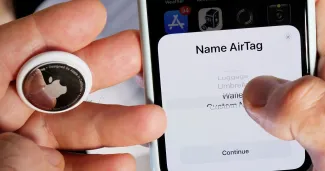
Airlines worldwide have reduced permanently lost bags by 90% in just one year by connecting Apple AirTag data directly into SITA's WorldTracer baggage recovery platform.
SITA's 2026 Baggage IT Insights report reveals that the single greatest improvement in baggage handling didn't come from better conveyor belts or faster sorting machines; it came from bridging the gap between the $29 tracker passengers were already tossing into their suitcases and the industry's decades-old baggage recovery systems, according to Travel Weekly.Consumer Tech Meets Airline Infrastructure
The breakthrough sits at the intersection of two worlds that rarely talk to each other: Apple's Find My network and SITA's WorldTracer, the IATA-developed system airlines have used to track and recover mishandled bags for years. By integrating Apple AirTag and Find My "Share Item Location" data directly into WorldTracer, SITA enabled airlines to see precisely where lost bags were sitting, often before passengers even filed a claim. The integration launched in late 2024 across the first 29 airlines that opted in. SITA's analysis of the first year shows that connecting these two systems essentially eliminated the small but costly category of bags that used to vanish completely, according to Simple Flying. It's worth clarifying what that 90% figure actually means. This isn't about all mishandled bags; most delayed or misdirected luggage eventually makes it back to passengers. The 90% reduction applies specifically to bags that were never recovered, the ones that used to become permanent write-offs. Those cases carried disproportionate costs in compensation, replacement claims, and reputational damage.The Economics of a Missing Suitcase
Mishandled baggage still costs airlines about $6.3 billion annually, or roughly 15% of the airline industry's $41 billion profit in 2025, according to SITA's report. Each mishandled bag averages $260 in total operational and compensation costs, and SITA's new benchmark shows a lost bag costs 2.6 times more than a delayed one, driven mainly by compensation rather than operations. So while overall mishandling rates have been trending down steadily year over year, the permanently lost category remained stubbornly expensive and embarrassing for carriers. Cutting that subset by 90% addresses one of the most visible and costly failure modes in baggage handling. The broader mishandling picture has improved, too. Global mishandling rates fell 23% year over year in 2025, and total mishandled bag volumes declined 19%, reaching their lowest levels outside the pandemic period, according to Travel Weekly. Airlines invested heavily in automation, RFID, AI-powered analytics, and predictive baggage tools mandated under IATA Resolution 753. But none of those investments delivered the outsized, single-year gains that came from plugging AirTags into WorldTracer.What Changed on the Ground
Before the integration, airlines and passengers operated in parallel universes. A traveler knew exactly where their bag was sitting thanks to the AirTag's location ping, but the airline's recovery team had no visibility into that data. Passengers would arrive at the baggage counter insisting their suitcase was in a specific terminal or warehouse, only to be told the system showed nothing. The airline might eventually locate the bag through manual searches or WorldTracer queries, but by then hours or days had passed. Now, when a passenger shares their AirTag location through Find My, that data flows directly into WorldTracer. Airlines can see the same pin on the map the passenger sees, triangulate with their own tracking systems, and dispatch recovery teams to the right spot immediately. The result is faster reunions and far fewer bags that slip through the cracks entirely.Technology Stacking Up
The AirTag integration didn't replace existing baggage technology; it layered on top of it. Airlines have been rolling out RFID tags, computer vision systems, automated sorting and transfer lines, and AI-powered predictive models for years. IATA Resolution 753 requires carriers to track bags at key handoff points throughout the journey, creating a baseline of visibility that didn't exist a decade ago. What AirTags added was the last-mile precision that institutional systems often miss, especially during irregular operations, complex international transfers, or manual handling exceptions. Consumer tracking tools filled gaps that enterprise IT couldn't economically close on its own.Why This Matters for Your Next Trip
If you've been debating whether to toss an AirTag into your checked bag, the case just got a lot stronger. Airlines are no longer ignoring that data; they're actively using it to find your luggage faster. The 90% reduction in permanently lost bags means your odds of never seeing your suitcase again have dropped dramatically, at least at the 29 carriers that opted into the SITA integration so far. That said, the broader $6.3 billion problem hasn't disappeared. Bags still get delayed, misdirected, and sent to the wrong carousel. The 90% improvement applies to a narrow slice of incidents, the ones that used to end in "we never found it." For everything else, traditional headaches remain: waiting at the carousel, filing claims, chasing reimbursements. The real shift here is transparency. AirTags and similar trackers give you visibility and leverage. When you can show an airline exactly where your bag is, recovery times shrink and accountability improves. That turns baggage handling from a black box into something you can actively monitor and influence, which aligns with how travelers already expect tracking to work after years of following DoorDash drivers and Amazon vans in real time.What to Watch Next
The SITA report covers the first 29 airlines to integrate AirTag data, but plenty of carriers haven't opted in yet. Adoption will likely expand as the business case becomes clearer; cutting permanently lost bags by 90% directly impacts the bottom line and customer satisfaction scores. Look for more airlines to announce AirTag compatibility and for competing tracking ecosystems, like Tile or Samsung SmartTag, to push for similar integrations. Also worth noting: this is one of the first high-profile cases of a consumer tech company and a legacy aviation IT provider collaborating at scale. If it works this well for baggage, expect similar partnerships to pop up in other pain points across the travel experience. For now, the takeaway is straightforward. If you fly with one of the participating airlines and you're checking a bag, an AirTag just became one of the better $29 investments you can make. And if your carrier hasn't signed on yet, it's probably only a matter of time.More travel news
United Resumes Twice-Daily Newark–Tel Aviv Flights
United’s Newark–Tel Aviv route is operating twice daily, and Delta’s JFK service has returned; United plans Chicago and Washington flights from October.

DOT rule reclassifies 10 causes of flight disruptions
Starting Oct. 19, U.S. air carriers reportedly will not have to provide hotels or meals when delays or cancellations result from 10 specified causes, including unscheduled maintenance.

UK Flight Delays Continue After NATS Fixes System Fault
More than 2,000 flights were canceled, with delays affecting 15 UK airports and beyond; Heathrow said to travel only if a flight was confirmed operating.

United tests gate pickup ordering at Newark Terminal C
The limited trial lets eligible customers who receive an app notification or email order food, drinks and travel essentials for pickup at nine Newark Terminal C gates in the C125–C138 range.
About the Author

Bob Vidra
Bob Vidra, based in scenic Tahoe, is an esteemed tech editor known for his deep understanding of the dynamic intersection of technology, travel, and the outdoors.