Stay current with our hotel news coverage.
Why Your Snacks Get the X-Ray Treatment
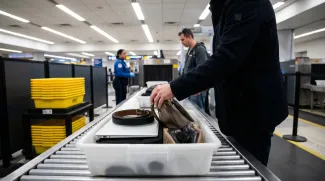
TSA publicly reminded travelers that explosive and incendiary devices, including smoke grenades and items resembling grenades, are prohibited in both carry-on and checked bags. That summary of TSA's public guidance following the discovery shouldn't need to exist, but here we are. The fact that one grenade was concealed inside a single jar of peanut butter makes this notable not just for the sheer absurdity, but for what it says about how people think airport security works. Dense foods can, in theory, challenge screening technology. Peanut butter is opaque on an X-ray; so are blocks of cheese, jars of Nutella, even thick nut butters. But TSA tech is built precisely to flag anomalies inside organic matter, which is why your overnight oats sometimes get the extra swab. This isn't the first time someone's tried to move prohibited items through a jar of something spreadable, and it won't be the last. What stands out here is the combination of confidence and miscalculation. Smoke grenades are live pyrotechnic devices. They're not inert. They're not decorative. They contain chemicals that ignite and release thick clouds of colored smoke, and in an enclosed space like a cargo hold or cabin, that's a nightmare scenario. The TSA incident is evidence of effective screening, yes, but it's also a window into how badly the average traveler underestimates what security can see.What Happens When You Pack Like a Movie Villain
If you're reading this while packing for a trip, here's the checklist: no explosives, no incendiary devices, no fireworks, no flares, no grenades, real or fake or "just for Instagram." Items resembling explosives, including inert grenades, are strictly banned from both checked and carry-on, according to TSA's public guidance. That last part trips people up. Even if your smoke grenade keychain is totally non-functional, even if it's a souvenir from a military surplus store, it's not getting on the plane. TSA doesn't have time to disassemble every grenade-shaped object to confirm it's harmless, so the rule is: if it looks like it could blow up, it's not flying. For those of us who've spent years in and out of airports, this feels obvious. But I've watched grown adults argue with security over pepper spray ("but it's for safety!"), lighters shaped like bullets, and once, memorably, a jar of homemade hot sauce so thick the scanner flagged it as a potential liquid explosive. The guy was furious. The TSA agent was unbothered. The hot sauce stayed behind. Travel is full of these micro-confrontations between what we think should be allowed and what the rules actually say, and the rules usually win.Rethinking What You Really Need to Bring
I've lived out of a 40-liter pack for months at a time, and the thing I've learned is this: if you're not sure whether something is allowed, it probably isn't, and you definitely don't need it. Smoke grenades fall comfortably into that category. So do most things that require creative concealment. If your packing strategy involves the phrase "they'll never check inside the peanut butter," you've already lost. The Indianapolis interception is a reminder that security screening works, even when passengers get inventive. But it's also a signal that a lot of travelers still don't understand the rules around hazardous materials, or they think the rules don't apply to them, or they're getting advice from friends who learned everything they know about airport security from action movies. None of those scenarios end well. The grenades got pulled. The bag didn't fly. And somewhere out there, a jar of peanut butter became evidence in a very strange case file. For the rest of us, the takeaway is simpler: pack smart, skip the pyrotechnics, and maybe double-check the TSA website before you stuff your checked bag with anything that could, theoretically, explode. Your fellow passengers will thank you.More travel news
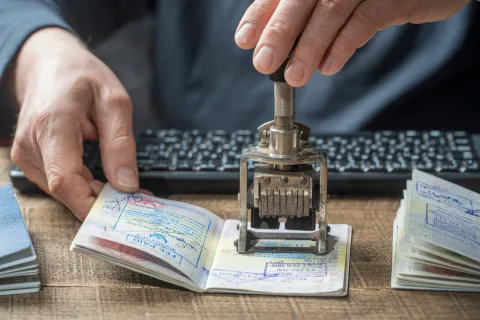
U.S. Customs and Border Protection to End Routine Passport Stamps
CBP announced routine passport stamping will end during primary inspection, with limited exceptions; foreign visitors can access admission and authorized-stay details through I-94 or CBP Link.
Packed Expandable Carry-Ons May Not Fit TSA CT Scanners
At TSA checkpoints with CT scanners, fully packed expandable carry-ons that cannot fit the tunnel may be hand-inspected, redirected to older equipment if available or checked with the airline.

TSA Considers Water Exception for Some PreCheck Passengers
The proposed exception would apply to PreCheck passengers at airports with suitable CT screening technology; initial participating airports were not identified.

United Flight Attendants Can Refuse ICE Questions
Washington, United States - United flight attendants were told they may remain silent when ICE asks about passengers or coworkers as airport arrests increase nationwide.
About the Author

Mariana Torres
Mariana Torres is South America Editor at Jetsetter Guide, covering backpacking and off-the-beaten-path travel in the Andes and the Amazon.