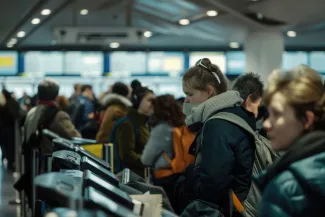
TSA Wait Times Reach Breaking Point
On the domestic front, travelers are encountering TSA lines stretching nearly three hours at some major airports, according to Travel. That's not a minor inconvenience during peak travel windows. It's the difference between making a flight and missing it entirely, between starting a vacation and spending the day rebooking connections from an airport terminal. Three-hour waits don't happen in isolation. They reflect a mismatch between staffing levels and passenger volume that becomes acute during holiday surges. Spring break compounds the usual friction points: families traveling with children, students unfamiliar with screening protocols, and a compressed departure schedule that funnels thousands of passengers into narrow time windows. For anyone flying out during the next few weeks, the math is straightforward. Arrive earlier than you think you need to. Factor in processing delays. Understand that missing a flight due to security lines offers no recourse, no compensation, and no sympathy from airlines already operating at capacity.Middle East Conflict Strands Travelers
The Iran war introduced a different category of risk entirely. When conflict erupted last month, travelers found themselves stranded at hotels and on cruise ships across the Middle East. Airspace closures, flight cancellations, and overwhelmed consular services left people in holding patterns with no clear exit timeline. This isn't about avoiding a region indefinitely. It's about recognizing that active conflict disrupts the infrastructure travelers depend on: open airports, functioning embassies, predictable transportation corridors. When those systems collapse or become unpredictable, even well-planned trips turn into evacuation scenarios. The fallout continues. Airlines rerouted around contested airspace. Cruise lines adjusted itineraries mid-voyage. Travelers who booked months in advance faced cancellations, rebookings, and in some cases, financial losses from non-refundable deposits.Cartel Violence Erupts in Puerto Vallarta
Closer to home, Mexico's Pacific coast saw unrest erupt in Puerto Vallarta and surrounding areas in early February. The catalyst was Nemesio Rubén Oseguera Cervantes, known as El Mencho, who led the Cartel de Jalisco Nueva Generación. Details of the incident remain under investigation, but the impact on tourism was immediate. Puerto Vallarta has long been a spring break staple: accessible, affordable, and developed enough to feel familiar to North American travelers. But cartel activity doesn't respect tourism corridors. When violence flares, it creates uncertainty that extends beyond the immediate incident. Travelers question whether their hotel zone is insulated from risk. Tour operators reassess ground transportation routes. Cruise lines reconsider port calls. I've covered developing-world travel realities long enough to separate signal from noise. Cartel violence in Mexico is neither new nor uniformly distributed. But when it surfaces in a destination marketed heavily to college students and families, it shifts the risk calculus in ways that deserve honest assessment.What Travelers Should Know Now
This convergence of factors doesn't mean canceling spring break outright. It means approaching travel with a clearer understanding of current conditions and realistic contingency planning. For domestic travel, long TSA lines are a certainty. Build buffer time into your airport arrival. Enroll in TSA PreCheck or Clear if you haven't already. Monitor your airline's app for gate changes and delays. Understand that peak travel periods offer little flexibility once disruptions begin. For international destinations, particularly the Middle East and Mexico, track real-time developments. State Department travel advisories exist for a reason; they're imperfect, but they aggregate consular intelligence most travelers don't have access to independently. If you're heading to a region experiencing active conflict or civil unrest, know your embassy's location, have contingency funds accessible, and maintain communication with someone stateside who can assist if conditions deteriorate. Photography assignments and expedition travel have taught me that risk is manageable when it's understood. The travelers who navigate volatile environments successfully are the ones who plan for disruption, stay informed, and recognize when conditions have shifted beyond acceptable thresholds. This spring break season demands that level of awareness. The crowds will be there. The TSA lines will be long. And in certain regions, the geopolitical backdrop will be unstable. Plan accordingly.More travel news
Middle East Tourism Collapses Amid Regional Conflict
DUBAI, United Arab Emirates - Iran joins Israel, Saudi Arabia, UAE, Qatar, Iraq, Bahrain, Jordan, Syria, Egypt, and neighboring countries in an unprecedented tourism collapse, losing $600 million daily as conflict reshapes the region's travel landscape.

DHS Threatens Airport Shutdowns in Sanctuary Cities
WASHINGTON - DHS Secretary revives proposal to withdraw customs officers from major airports in sanctuary jurisdictions, sparking alarm from airlines and travelers.
Budget Carrier Collapses as Oil Crisis Grounds Fleets
MIAMI, USA - Viral reports of Spirit Airlines shutting down and Magnicharters filing for bankruptcy due to a U.S.–Iran oil crisis do not align with verifiable airline industry timelines or real-world events.

Boeing's 30 Grounded 777X Jets Face Years of Repairs
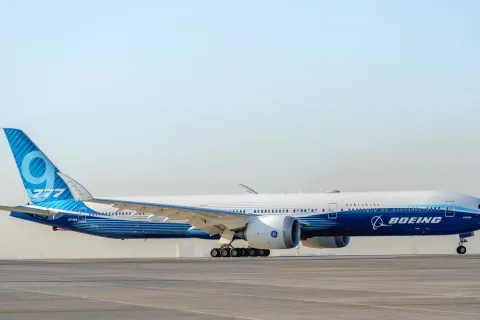
EVERETT, Wash. - Boeing faces a multi-year rework campaign for 30 stored 777X jets built to outdated standards, as airlines reject heavily modified early frames and regulators tighten oversight.
About the Author

Jeff Colhoun
Jeff Colhoun is an acclaimed travel writer, photographer, and filmmaker, whose work is respected both in the United States and internationally.