Stay current with our travel industry news coverage.
What Changed on the Ground
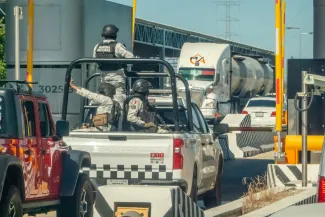
Cartel turf wars over migrant smuggling routes drove much of the violence. The southwest border recorded more than 2.5 million migrant encounters in fiscal year 2025, fueling competition among criminal organizations in cities like Nuevo Laredo and Matamoros. Mexico deployed 10,000 National Guard troops to the region in February 2026, but the State Department's updated restrictions for U.S. government employees signal official skepticism about security improvements. Those employees now face strict travel limits in high-risk zones. In Puerto Penasco, Sonora, for example, personnel can only use Federal Highway 8 during daylight hours and are barred from taxis and buses. Night travel between border cities and interior Mexico remains prohibited for government staff, except on limited routes like Highway 15D. The restrictions mirror those applied in active conflict zones and represent some of the tightest travel controls the department has imposed on civilian federal workers in the Western Hemisphere. The advisory lists armed robbery, carjacking, express kidnappings, and highway violence as primary threats. The department advises U.S. citizens against driving between border crossings and interior destinations, except on designated toll highways, and warns that local police in many areas lack the capacity or willingness to respond effectively to violent crime.Tourism Took an Immediate Hit
Border area tourism dropped 15 percent in the first quarter of 2026 compared to the same period in 2025, according to State Department figures. Cities like Nuevo Laredo and Reynosa, once popular for day trips and medical tourism, saw sharp declines in cross-border traffic. The warnings also complicated travel planning for U.S. citizens with family ties in northern Mexico or business operations in border manufacturing hubs. Level 4 zones now include all of Tamaulipas, significant portions of Coahuila, and the southeastern edges of Chiapas from the Guatemala border to Ocosingo. Other border states like Chihuahua, Sonora, and parts of Baja California remain at Level 3, "Reconsider Travel," but share many of the same risks. The advisories note that U.S. government assistance in these areas is limited, particularly outside major cities, and that emergency response times can stretch into hours or days.The Risk Calculus for Travelers Right Now
The practical question for anyone considering travel near these zones is straightforward: is the trip worth the documented, measurable risk? The State Department doesn't issue Level 4 warnings lightly. These designations are reserved for environments where violent crime is routine, kidnappings target foreign nationals, and infrastructure for emergency response is either absent or compromised. The 50 kidnappings in Matamoros during a single quarter, the 12 deaths in a highway ambush, and the 45 percent year-over-year increase in abductions are not background noise. They represent a security environment that has deteriorated beyond what adaptive travel practices can realistically mitigate. For travelers with business, family, or other compelling reasons to visit border regions, the restrictions imposed on U.S. government employees offer a practical baseline. If federal workers are prohibited from using taxis, traveling at night, or deviating from specific highways, civilian travelers should apply those same constraints, at minimum. But even with those precautions, the advisories make clear that no route or time of day guarantees safety in Level 4 zones. The cartels operating in these areas don't respect schedules or toll booths. The broader trend is also worth noting. Mexico, Pakistan, India, Iran, and Afghanistan all issued similar border warnings in 2026, according to TravelPulse. That suggests a global pattern of border volatility tied to migration flows, organized crime, and weakened state control in frontier areas. For travelers accustomed to crossing into Mexico for short trips or tourism, the 2026 landscape represents a break from the past. What was once manageable risk in many border cities has shifted into something closer to active conflict zone conditions in the areas flagged by the State Department. Anyone with existing plans should review the specific county or municipality listed in the advisory, cross-reference it with the State Department's interactive map, and consider postponing non-essential travel until conditions improve. For those who must go, pre-arranged transportation through vetted operators, daylight-only movement, and avoiding all non-essential stops are baseline precautions. But even those steps come with no guarantees.More travel news
U.S. Customs and Border Protection to End Routine Passport Stamps
CBP announced routine passport stamping will end during primary inspection, with limited exceptions; foreign visitors can access admission and authorized-stay details through I-94 or CBP Link.

United Flight Attendants Can Refuse ICE Questions
Washington, United States - United flight attendants were told they may remain silent when ICE asks about passengers or coworkers as airport arrests increase nationwide.
Airlines Put Elite Status on a Higher Price Tag
NEW YORK, United States - Delta, United and other major airlines are raising elite status hurdles, leaving frequent flyers on discounted fares with less credit.

Carnival Rewards Sets Sail With Spending Based Status
Carnival Rewards ties cruise status to eligible spending while keeping separate recognition for lifetime sailing days.

About the Author

Jeff Colhoun
Jeff Colhoun is a photographer and filmmaker whose work has appeared in The Wall Street Journal, the Los Angeles Times, Matador Network and Barron’s.