Stay current with our travel industry news coverage.
On March 19, 2026, the U.S. State Department quietly downgraded Venezuela from Level 4 (Do Not Travel) to Level 3 (Reconsider Travel), removing the 'wrongful detention' indicator and the catch-all 'other' category that had kept the country in the highest-risk tier since October 2024. The change went largely unnoticed in mainstream travel media, but for those of us who've been watching Venezuela's natural treasures sit locked behind years of instability, it raised an immediate question: has anything actually changed on the ground, or is this just a shift in diplomatic risk calculus?
Venezuela holds some of South America's most spectacular landscapes: Angel Falls, the world's tallest waterfall; the pristine Los Roques archipelago; the soaring Andes; and the otherworldly tepuis of the Gran Sabana. For years, these assets have been functionally unreachable for most independent travelers, buried under advisories warning of violent crime, kidnapping, political volatility, and collapsing infrastructure. The advisory downgrade doesn't erase those realities. What it does is shift the conversation from "absolutely prohibited" to "proceed with extreme caution and full awareness of what you're walking into." That's a meaningful distinction, but it's not an invitation to treat Venezuela like Ecuador or Colombia.
What Actually Changed (And What Didn't)
The March 2026 advisory removed three specific risk indicators: wrongful detention (D), civil unrest (U), and the vague 'other' category (O). What remains tells the real story: crime (C), kidnapping (K), terrorism (T), and health infrastructure concerns (H). The State Department's June 27, 2026 update is blunt: "Violent crimes such as homicide, armed robbery, and kidnapping occur, including in major cities." The embassy still warns travelers to avoid nighttime road travel between Maiquetía airport and Caracas, a 21-kilometer corridor that should theoretically be one of the safest stretches in the country. Water contamination is widespread outside major cities, and medical care is described as being in a "state of severe crisis."
Context matters here. The advisory improvement reflects incremental gains in urban security, particularly in Caracas and Maracay, where organized crime and street violence have reportedly declined compared to 2023-2024 levels. But "better than it was" is not the same as "safe by regional standards." Canada and Australia still maintain full Do Not Travel advisories, a reminder that risk tolerance varies and that Venezuela's baseline conditions remain severe enough that many governments see no reason to soften their stance.
January 2026 saw military strikes in Caracas and surrounding states, disrupting infrastructure and emergency services. Then, on June 24, 2026, two major earthquakes struck northern Venezuela, closing Simón Bolívar International Airport indefinitely due to severe runway damage and further destabilizing utilities and ground transport. These aren't distant historical events; they're part of the current operating environment travelers face in mid-2026.
The Geography of Risk: Where You Can (and Absolutely Cannot) Go
Venezuela's advisory isn't a blanket assessment. The State Department explicitly designates several regions as Do Not Travel zones, and these restrictions remain unchanged despite the overall downgrade. The entire Colombia border corridor, defined as any area within 20 miles of the frontier, is off-limits due to terrorism and organized crime. Amazonas, Apure, and Táchira states carry the same prohibition. Aragua state outside Maracay and rural Bolívar state are flagged for crime and kidnapping risk. Guárico state rounds out the list.
The cruel irony for travelers is geographic. Angel Falls sits in Bolívar state, parts of which remain high-risk. The Gran Sabana, home to Mount Roraima and stunning tepui landscapes, lies in the same problematic zone. Access to these natural icons isn't technically impossible, but it requires flying directly into controlled tourism bubbles (such as Canaima's airstrip) and staying within tightly managed lodge-to-site itineraries with no independent movement. Los Roques archipelago and Isla Margarita represent the most viable coastal destinations, with relatively lower crime risk and established tourism infrastructure, though "lower risk" is a comparative term, not an absolute guarantee.
Caracas and Maracay are urban centers where experienced travelers can operate with heightened awareness and local knowledge, but street crime, including armed robbery, remains common. The Maiquetía airport transfer, despite being a short distance, is flagged as risky after dark, a telling indicator of how localized threats shape even routine logistics.
The Practical Realities: Infrastructure, Health, and Money
Venezuela's healthcare system cannot be relied upon for anything beyond the most basic care, and even that is uncertain. Public hospitals, which cover roughly 70% of the population, face chronic shortages of water, electricity, medicines, and functioning diagnostic equipment. An estimated 56% of hospital beds are inoperable, and laboratory capacity has fallen to about 10% of former levels. For travelers, this means planning to avoid needing medical care entirely. The State Department recommends pre-travel health checks and carrying all necessary medications in original packaging with printed prescriptions. If you have a chronic condition, require specialty medication, or might need emergency surgery or imaging, Venezuela is a high-risk destination from a medical planning standpoint.
Water contamination is widespread outside major cities, making gastrointestinal illness a near-certainty for travelers who don't take strict precautions. Bottled water, careful food choices, and acceptance that even minor illness may be difficult to treat locally are non-negotiable parts of the calculus.
Currency and payments add another layer of complexity. Venezuela operates as a dual-currency economy: the bolívar is official, but the U.S. dollar is widely used for most transactions. Travelers should carry clean, low-denomination USD bills (ones, fives, and tens) because change is often difficult to obtain and card acceptance, while improving in some urban businesses, is far from universal. Cash remains king for day-to-day expenses, tipping, and services. Digital payment methods such as Zelle are used by some local businesses, but they're not reliable enough to depend on exclusively.
Fuel shortages, power cuts, and transportation unpredictability are routine. Planning buffer time isn't optional; it's the baseline assumption. Communication infrastructure is spotty, and consular support is limited. The U.S. Embassy operates with reduced capacity, and Canada closed its embassy in 2019. If something goes wrong, you're largely on your own.
Who Should (and Shouldn't) Consider Venezuela Right Now
The advisory downgrade does not make Venezuela appropriate for most travelers. The viable audience is narrow: fluent Spanish speakers with extensive developing-world travel experience, comfort operating in uncertain and low-infrastructure environments, and the ability to accept elevated security and health risks without panic or unrealistic expectations. This isn't a destination for first-timers to South America, families with children, or solo travelers without significant field experience.
Organized tour operators with deep local expertise represent the only realistic path for most people interested in Angel Falls or Mount Roraima treks. Reputable agencies control logistics end-to-end, arrange direct flights into tourism zones such as Canaima, provide local guides, and manage accommodations within closed-loop systems that minimize exposure to broader security risks. Independent travel is technically possible in select areas (Los Roques, Margarita, parts of Caracas), but it requires significant risk acceptance, preparation, and the understanding that you're navigating a fragile environment where infrastructure can collapse without notice.
Solo female travelers without extensive experience in unstable regions, business travelers without established security protocols, and anyone with health vulnerabilities should avoid Venezuela for now. Travel insurance must be verified explicitly; expect exclusions or limitations, and understand that evacuation coverage is critical if you proceed.
The Bottom Line: Venezuela Isn't Ready for Most Travelers (Yet)
The March 2026 advisory downgrade reflects incremental improvement, not transformation. Conditions in Venezuela remain challenging, and the recent earthquakes have further destabilized infrastructure and emergency services. The country's natural assets are genuine and spectacular; Angel Falls, Los Roques, and the tepuis deserve to be on serious adventure travelers' radars. But accessibility and safety haven't caught up to the advisory change.
For the small subset of experienced adventure travelers with appropriate risk tolerance, language skills, and preparation, selective areas are technically accessible through carefully managed itineraries. For the vast majority of travelers, the risk-reward calculation still tilts toward waiting or choosing safer alternatives in Colombia, Ecuador, or Peru, where similar landscapes and adventure opportunities come with functional infrastructure and predictable security environments.
The monitoring approach is the right one: watch for continued stability, measurable infrastructure recovery, alignment of other governments' advisories with the U.S. position, and further concrete improvements in health services and ground transport before booking. Venezuela holds world-class natural treasures, and when conditions genuinely improve to the point where independent travel is broadly viable, they'll be worth the wait. We're not there yet.
More travel news
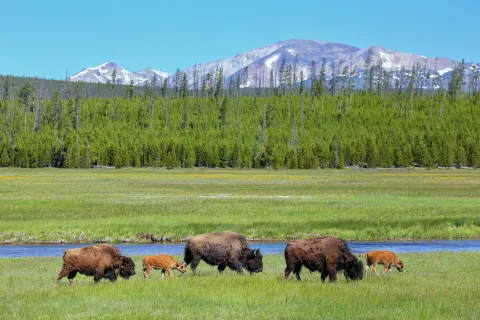
Yellowstone Tops Rocky Mountain Parks With 4.76M Visitors
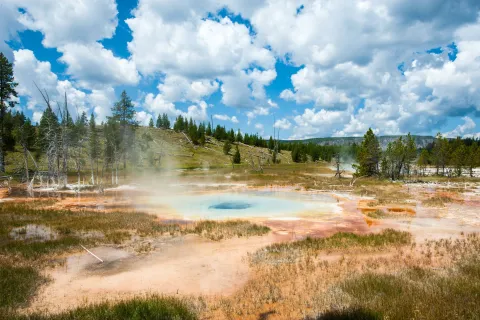
ROCKY MOUNTAINS, North America - Five iconic parks along the 3,000-mile mountain chain welcomed record crowds in 2025, from Wyoming's thermal features to Alberta's alpine wilderness.
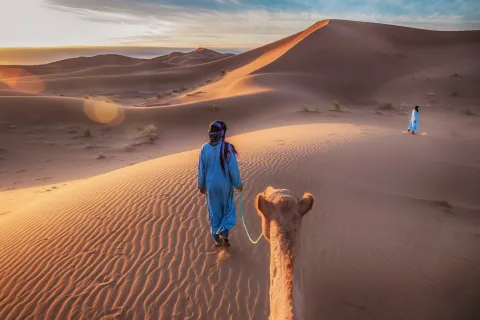
Morocco Eases Visa Rules as Tourism Surges in 2026
RABAT, Morocco - Morocco updates its visa and e-visa system on July 18, 2026, making entry smoother for international travelers as tourism numbers climb past 8.8 million visitors.
Europe Unveils Biometric Travel App for Faster Borders
LISBON, Portugal - Portugal joins Sweden in full digital border adoption as the EU's Travel to Europe app rolls out across Schengen states, promising faster entry checks amid operational challenges.

How to Stay Safe in National Parks After Heat Deaths
GRAND CANYON, Arizona - Three heat-related deaths in mid-June prompt urgent safety warnings as Inner Canyon temperatures exceed 109 degrees.
About the Author
Jeff Colhoun
Jeff Colhoun is an acclaimed travel writer, photographer, and filmmaker, whose work is respected both in the United States and internationally.