Stay current with our travel events coverage.
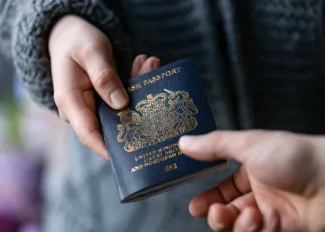
LONDON, United Kingdom — The UK Foreign, Commonwealth & Development Office has placed significant portions of 18 countries under "all but essential" travel restrictions, a designation that carries weight far beyond advisory language. For British travelers, this means insurance complications, consular support limitations, and the reality that moving through these areas puts you outside the protective umbrella most assume comes with a UK passport. These aren't blanket country bans. The FCDO rarely issues those. Instead, these are surgical restrictions targeting specific provinces, border zones, and regions where risks have crossed a threshold the government won't ignore. The distinction matters because it means some parts of these countries remain accessible while others are effectively off limits for anyone not traveling with essential purpose.
What "All But Essential" Actually Means
This phrasing isn't bureaucratic hedging. It's a technical classification that triggers real consequences. Most UK travel insurance policies won't cover you in areas under this advisory unless your trip qualifies as essential work, family emergency, or similarly unavoidable business. If something goes wrong, evacuation, medical treatment, theft, or cancellation costs land entirely on you. Consular assistance doesn't disappear, but it contracts significantly. Embassy staff won't come extract you from a region they've already flagged as too dangerous for discretionary travel. You're working without a net, and the FCDO is making that clear up front. For photographers, journalists, and expedition professionals who routinely work in marginal environments, this level of advisory is familiar territory. You assess, you mitigate, you proceed with full knowledge of what support exists and what doesn't. For leisure travelers accustomed to predictable infrastructure and reliable backup systems, it's a different equation entirely.
Border Zones and Regional Volatility
The pattern across these 18 countries reflects consistent risk factors: border instability, armed conflict spillover, territorial disputes, and areas where central government authority frays or vanishes entirely. One specific restriction cited covers regions within 20 kilometers of the land border with Cambodia, according to Travel EIN News. That kind of precision indicates localized threat assessments driven by cross-border movement, smuggling routes, or insurgent activity that doesn't respect arbitrary political lines. Border zones are inherently unstable. They're where law enforcement thins out, where competing jurisdictions create gaps, and where travelers become exposed to risks that don't exist 50 kilometers inland. The FCDO's focus on these corridors signals awareness of patterns most casual travelers never consider.
The Developing World Reality
Many of these 18 nations sit squarely in regions I've covered extensively: places where infrastructure is fragile, where political stability shifts with elections or coups, where weather events can sever access for weeks. The FCDO isn't reacting to hypothetical danger. These advisories follow incident data, intelligence assessments, and often, consular cases that required significant resources to resolve. Travelers heading into developing regions need to understand that conditions change faster than guidebooks update. A border crossing that was routine six months ago may now sit inside a conflict zone. A province that hosted tourists last season might be dealing with ethnic violence, criminal gang activity, or government crackdowns that make presence there untenable for foreigners.
Impact on Holiday Planning
For UK tourists planning trips that touch any of these 18 countries, this advisory forces immediate recalibration. According to Travel EIN News, the restrictions represent a blow to freedom of movement and holiday plans. That's not hyperbole if your itinerary included trekking near restricted borders, visiting cultural sites in now-flagged provinces, or transiting through regions the FCDO has red-lined. Package tour operators will reroute. Adventure travel companies will adjust itineraries or cancel departures entirely. Independent travelers face harder choices: accept the insurance gap and consular limitations, or redesign trips around accessible areas.
What Travelers Should Do Now
Check the FCDO's country-specific pages for exact geographic boundaries of restricted zones. These advisories include maps and detailed descriptions of what areas fall under which classification. Don't assume. A capital city might be fine while a border province 200 kilometers away is under essential travel restrictions. Contact your insurer directly. Ask explicitly whether your policy covers the specific regions you plan to visit. Get confirmation in writing. Generic assurances won't help when you're filing a claim from a hospital in a restricted zone. Register with the FCDO's travel notification system if you're proceeding into marginal areas. It won't change the risk, but it ensures someone knows you're there if extraction becomes necessary.
The Broader Context
Eighteen countries carrying partial essential travel restrictions isn't unusual in the current global security environment, but it's also not background noise. It reflects ongoing conflicts, persistent instability in specific regions, and the FCDO's calculation that British nationals face unacceptable risk without compelling reason to be there. For travelers who prioritize access over comfort, who work in these environments professionally, or who understand how to operate in low-resource settings, these advisories are data points that inform planning but don't necessarily stop movement. For everyone else, they're hard stops that require serious reconsideration of where you're going and why. The FCDO doesn't issue these lightly. When they tell you to stay out unless it's essential, that assessment comes from ground truth you likely don't have access to. Listen.
More travel news
Airlines Extend Middle East Flight Suspensions to 2027
LONDON, England - Virgin Atlantic has suspended Dubai flights until October 2027 as global carriers reroute, delay returns and cautiously rebuild Middle East service.
Gatwick Airport runs dry amid peak travel chaos
LONDON, United Kingdom - A power failure at a water treatment plant left Gatwick Airport virtually dry on a Sunday in peak travel season, shutting toilets and food outlets as thousands of holiday travelers waited in sweltering terminals.
Skip Lake Como Crowds for Tahoe's Alpine Shores
SOUTH LAKE TAHOE, Calif. – California's alpine jewel courts UK travelers with crystal-clear waters and uncrowded shores as an alternative to overtourism-strained European lake destinations.
UK Expands Portugal Safety Alert for Summer 2026
LONDON, United Kingdom - UK government sharpens safety guidance for British travelers heading to Portugal this summer, covering festivals, swimming pools, beaches and island journeys as wildfire season intensifies.

About the Author

Wilson Montgomery
Wilson Montgomery is a Travel Writer at Jetsetter Guide covering Africa and safari travel.