Stay current with our cruise news coverage.
India Bets Big on Medical Tourism With Five Regional Healthcare Hubs
NEW DELHI, India — When I think about what draws travelers deeper into a destination, it's rarely just the sights. It's the stories, the sensory details, the layers of culture that reveal themselves slowly, often over a meal or a moment of quiet reflection. India has always offered that kind of depth, but now the government is making a substantial wager that the country's healing traditions and modern medical capabilities can become a defining reason to visit. On February 1, 2026, Union Finance Minister Nirmala Sitharaman stood before Parliament and proposed something quietly ambitious: a scheme to establish five regional medical tourism hubs across India. "To promote India as a medical tourism hub, I propose a scheme to support states to set up five regional hubs in the country," Sitharaman said, according to ANI. The announcement landed within a broader Union Budget 2026-27 that allocated Rs 1,06,530.42 crore to the health ministry, marking a 10 percent increase from the previous year. But beyond the numbers, what strikes me about this initiative is how it seeks to weave together India's ancient wellness systems with cutting-edge healthcare infrastructure, creating something that feels distinctly suited to today's globally minded traveler.More Than Hospitals: Integrated Healthcare Complexes
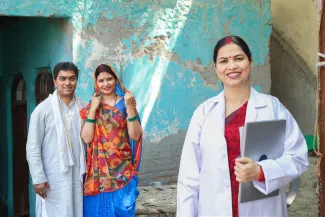
These aren't just going to be medical facilities in the conventional sense. According to the budget proposal details, each regional hub will integrate AYUSH centres (Ayurveda, Yoga and Naturopathy, Unani, Siddha, and Homeopathy), medical value tourism facilitation services, advanced diagnostics, post-treatment care, and rehabilitation facilities all under one roof or within coordinated complexes. For those of us who have spent years navigating Asia's healthcare and wellness landscapes, this kind of holistic setup makes immediate sense. The most compelling health travel experiences I've encountered rarely involve a single procedure or treatment in isolation. They're about continuity of care, cultural context, and the space to recover properly. A tourist arriving for a planned surgery might spend their recovery period receiving Ayurvedic therapies, learning meditation techniques, or working with rehabilitative specialists trained in both modern physiotherapy and traditional bodywork. The government is also planning to establish three new All India Institutes of Ayurveda to meet rising global demand for traditional medicine education and research. The existing WHO Traditional Medicine Centre in Jamnagar, Gujarat, will receive an upgrade as part of this push.Building the Workforce Behind the Vision
What gives this initiative real substance is the parallel investment in human capital. The budget allocates Rs 1,000 crore specifically to train 100,000 allied health professionals over the next five years across 10 disciplines. Additionally, 1.5 lakh caregivers will receive training in the coming year, developing skills in wellness practices, yoga instruction, and the use of assistive devices. This workforce development piece matters tremendously. I've visited brilliant healthcare facilities across Southeast Asia and the Middle East where the quality of care hinged entirely on the skill and cultural sensitivity of nurses, technicians, therapists, and support staff. India's medical tourism reputation has historically leaned on its doctors and surgeons, but creating an ecosystem of well-trained allied professionals will elevate the entire patient experience. For young Indians looking at career pathways, this represents genuine opportunity. Healthcare jobs rooted in both modern and traditional systems, with international patient exposure, could become attractive alternatives to the typical migration patterns we see among medical professionals.Competing in a Crowded Field
India isn't entering an empty market. Thailand has spent decades cultivating medical tourism infrastructure with JCI-accredited hospitals and seamless hospitality integration. The UAE, particularly Dubai and Abu Dhabi, has positioned itself as a premium healthcare destination with state-of-the-art facilities and strategic geographic positioning. Singapore commands the high-end market with exceptional clinical outcomes and efficiency. What India brings to the table is affordability without compromising quality, combined with something harder to replicate: millennia-old healing traditions that increasingly resonate with wellness-focused travelers. "Ancient Indian yoga, already respected around the world, achieved widespread global recognition when the Prime Minister presented it at the United Nations," Sitharaman noted during her budget speech, according to ANI. The industry response has been cautiously optimistic. "The announcement of five regional medical tourism hubs is a strong and timely step that will enhance India's position as a global medical value travel destination," said Shaaz Mehmood, Founder of Medijourn Solutions, a medical tourism facilitation company, in remarks reported by industry publications.What This Means for Travelers
The practical impact won't be immediate. Building integrated healthcare complexes, training tens of thousands of professionals, and establishing smooth coordination between public and private partners takes time. The budget proposal emphasizes partnerships with states and the private sector, which suggests varied implementation timelines depending on local political will and existing infrastructure. But for travelers planning healthcare journeys to India in the coming years, this signals a meaningful shift. The concentration of services within regional hubs should reduce the logistical friction that sometimes accompanies medical travel. Rather than coordinating between disparate clinics, hotels, and wellness centers scattered across sprawling cities, patients may find comprehensive ecosystems designed specifically for their needs. The expansion beyond traditional medical tourism strongholds like Delhi, Chennai, Mumbai, Hyderabad, and Bengaluru could also open up compelling regional options. I'm curious to see which states step forward with proposals and what unique offerings they develop based on local medical specialties or wellness traditions. For food and culture travelers who've always been drawn to India's depth and complexity, these hubs might eventually offer another lens through which to experience the country. Healing, after all, has always been deeply intertwined with how communities eat, move, and care for one another. That integration, when done thoughtfully, creates experiences that resonate far beyond the clinical.More travel news
Canada warns against India travel amid rising tensions
NEW DELHI, India — Canada reaffirms Level 3 warning for northeastern Manipur state as ethnic violence continues, complicating travel planning for visitors to one of Asia's fastest-growing tourism markets.
US Vlogger's Kochi Visit Shatters India Dirty Myths
KOCHI, India — American travel creator pushes back against generalizations about India's hygiene after experiencing Kerala's coastal capital firsthand.

Airlines cut UAE flights as tensions rise
NEW DELHI, India — Multiple airlines cut India-UAE flights Sunday due to operational restrictions tied to West Asia tensions, as DGCA grants Air India temporary pilot duty extensions for longer routes avoiding conflict airspace.
Multi-Country Visas Beyond Schengen Now Open to Indians
NEW DELHI, India — Multi-destination visas are cutting costs and paperwork for Indian travelers, with Brazil extending bilateral visas to 10 years and the Gulf preparing a regional visa launch.

About the Author

Andy Wang
As our Asia Editor and a first-generation American, Andy Wang brings a unique dual perspective to Jetsetter Guide.