Stay current with our cruise news coverage.
What Makes Cruise Ship Pollution Different
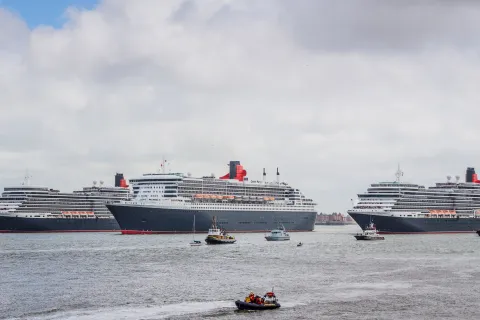
The research team, led by Matthew Loxham, Professor of Respiratory Biology and Toxicology, identified what they're calling an air pollution "signature" from cruise ships. When these massive vessels sit in port with engines running, they emit ultrafine particulate matter loaded with heavy metals like vanadium, nickel, and cobalt. "In this research we've identified a clear air pollution 'signature' coming from cruise ships burning fuel in ports," Loxham said. Here's the kicker: those ultrafine particles are tiny enough to slip deep into your lungs, and possibly even enter your bloodstream. Yet despite that, they're essentially unregulated and rarely monitored. "The ultrafine particles contained in these ships' emissions can penetrate deeper into the lungs than larger sizes of particulate matter, and may be able to enter the bloodstream, but particles of this size are essentially unregulated, and generally not monitored," Loxham explained. The scientists didn't stop at measuring what's in the air. They tested these particles on human lung cells in the lab and found something alarming: exposure ramped up inflammatory gene expression and dialed down antiviral response genes. Translation? Your lung cells become more inflamed and less equipped to stop viruses from replicating. "We found that exposure of cells to these particles, and vanadium – the most enriched element in the particles – was both pro-inflammatory and facilitated the replication of viruses," Loxham said.The Numbers Behind the Smoke
If you think this is a minor issue affecting a handful of ships, think again. According to analysis by Transport & Environment, in 2022 alone, 214 cruise ships operating around European ports belched out 509 tonnes of sulfur oxide, 19,125 tonnes of nitrogen oxide, and 448 tonnes of PM2.5, the fine particulate matter linked to a host of health problems. The concentration of this pollution is even worse than those raw numbers suggest. Previous studies have shown that cruise ships account for somewhere between 8% and 96% of toxic sulfur oxide pollution at the UK's busiest cruise terminals. That's a staggering range, reflecting how dominant ships can be in a given port's air quality picture. And because nearly 70% of global ship emissions occur within 250 miles of shore, this pollution doesn't just stay at the docks; it travels inland, affecting communities far from the waterfront. In the UK alone, the health costs tied to shipping's contribution to PM2.5 pollution have been pegged at £1.5 billion per year in 2017 prices. To put a finer point on it, modeling of cruise ship emissions in La Paz, Mexico found that ships could contribute as much as 13.66 micrograms per cubic meter of NO2 and 15.71 micrograms per cubic meter of SO2 in affected neighborhoods. Those aren't abstract figures; they're concentrations that public health researchers link to respiratory and cardiovascular problems.What Passengers Can Actually Do
So should you cancel that Mediterranean cruise or Alaska itinerary? Not necessarily, but you can be smarter about it. First, consider the itinerary. Ships that spend more time at sea and less time idling in crowded ports will generally expose you to cleaner air. Look for cruises that emphasize fewer, longer port calls or that visit terminals equipped with shore power, which allows ships to plug into the local electrical grid and shut down their engines. (Though be warned: shore power infrastructure is still rare, and not all ships are equipped to use it even when it's available.) Second, think about where you spend your time onboard. Cabins and common areas with good ventilation and fresh air exchange will be better than stuffy interior spaces. If you have a balcony, use it; if you're booking, splurging on outside space might be worth more than you realize. Third, don't skip basic respiratory health measures. Staying up to date on vaccinations, especially for Covid-19 and flu, is table stakes. In crowded indoor spaces, particularly during embarkation or in terminals, masking up isn't paranoid; it's practical. And if you have underlying respiratory conditions like asthma or COPD, talk to your doctor before booking. The added exposure to ultrafine particulates could tip the scales from a minor annoyance to a real problem.The Pressure Is on Industry and Regulators
This study adds fuel (pardon the pun) to a growing push for cruise lines and policymakers to clean up their act. Environmental and public health advocates have been hammering away at the industry for years, but the new link to viral susceptibility makes the case more urgent. Experts are calling for a mix of solutions: cleaner fuels, shore power from renewable energy sources, better emissions-control technology, and most importantly, monitoring and regulation of those ultrafine particles that are currently flying under the radar. Some cruise companies have begun investing in liquefied natural gas engines and hybrid propulsion systems, but the rollout is slow and far from universal. And while the industry likes to highlight its sustainability efforts, independent data on SOx, NOx, and ultrafine particle emissions often tell a less flattering story. For travelers, the bottom line is this: cruise ships are not just floating hotels; they're major industrial polluters, and that pollution has real health consequences. Until the industry and regulators close the gap on ultrafine particle standards and enforcement, the best defense is information and a few sensible precautions. Your vacation shouldn't come with a side of weakened lungs.More travel news
Oceania Plans Shipwide Gluten-Free Menus for 2028 Cruise
The planned roundtrip Southampton sailing will visit England, Ireland and Scotland, with every onboard dining venue aboard Oceania Vista set to offer entirely gluten-free menus.

Airlines Extend Middle East Flight Suspensions to 2027
LONDON, England - Virgin Atlantic has suspended Dubai flights until October 2027 as global carriers reroute, delay returns and cautiously rebuild Middle East service.
Celebrity Unveils Biggest Europe Season for 2028
SOUTHAMPTON, England - Celebrity Cruises is planning its largest European season yet, with eight ships, rare port calls and four Edge-class vessels sailing at once.
AI Travel Risks: Wrong City Bookings Loom Large
LONDON, England - A simple query about Birmingham could land a traveler in Alabama instead of the UK, Travelport's chief technology officer warned last week, underscoring the gap between AI hype and booking reality.

About the Author

Wilson Montgomery
Wilson Montgomery is a Travel Writer at Jetsetter Guide covering Africa and safari travel.