Stay current with our cruise news coverage.
AUGUSTA, Maine - Maine is betting that the sound of its forests, lakes, and shorelines can reach travelers before they ever pack a suitcase. The Maine Office of Tourism recently announced a national partnership with Calm, the mental health company behind the leading sleep and meditation app, to create a suite of immersive digital experiences that position the state's natural landscapes as tools for stress relief and mindfulness.
The collaboration, announced in mid-July 2026, delivers Maine-inspired audio content directly to Calm's global user base, essentially exporting the state's woods and waters as wellness experiences in digital form. For travelers increasingly focused on mental restoration and escape, the campaign offers a preview of Maine's quiet character while extending the state's tourism brand into the growing intersection of wellness and travel.
Soundscapes as Marketing Strategy
According to CNN, "The Maine Office of Tourism has partnered with Calm, the mental health company with the #1 app to help you sleep more, stress less and live mindfully, to create a suite of immersive experiences showcasing the restorative power of Maine's woods and waters." The initiative leverages Maine's natural soundscapes, from rustling pines to lapping waves, as content designed to inspire users to visit in person.
The campaign directly targets wellness-oriented travelers who prioritize relaxation and mental health when choosing destinations. The timing reflects both rising demand for nature-based escapes and Maine's own visitor data. The Maine Office of Tourism reported that "more than 50% of fall visitors shared that their top motivator for visiting Maine was for escape, relaxation, and a chance to take a break from everyday stress," according to CNN.
That statistic, drawn from fall 2025 trip motivations, underpins the strategic rationale for the Calm partnership. By aligning its marketing with what visitors already seek, Maine is positioning itself not just as a scenic destination but as a restorative environment with measurable benefits for mental well-being.
Maine's Woods and Waters as Wellness Infrastructure
The collaboration frames Maine's forests, coastline, and inland waters as more than postcard views; they become functional elements of a wellness experience. Through Calm, users can access immersive audio that replicates the sensory environment of Maine's natural spaces, offering a taste of the state's quietude to anyone with a smartphone.
This approach is consistent with the mission of the Maine Office of Tourism, a state agency within the Department of Economic and Community Development. The agency's stated purpose is to market the state while preserving and celebrating Maine's authentic character and fostering economic vitality. By translating that authenticity into guided meditation and sleep content, the campaign reaches beyond traditional advertising channels into the daily routines of potential visitors.
The partnership also reflects Maine's willingness to adopt digital tools while maintaining its brand as a place of natural calm. Recent initiatives include integrating AI-powered trip planning via Mindtrip into VisitMaine.com and expanding marketing grants to local organizations. The Calm collaboration sits within this broader strategy of innovation paired with a commitment to the state's core identity.
Why This Approach Could Shift How Families Plan Getaways
From a family travel perspective, this partnership introduces a useful preview mechanism. Parents planning multi-generational trips or vacations with children of varying ages can use the Calm content to gauge whether Maine's pace and environment align with their family's needs. A meditative soundscape featuring a lake at dawn or a forest trail in autumn offers a sensory test drive that traditional photos and itineraries cannot.
The emphasis on escape and stress relief also speaks to families seeking quieter alternatives to theme parks or activity-heavy resorts. Maine's appeal lies in its capacity for unstructured time, a quality that can be difficult to communicate through standard marketing but becomes tangible through immersive audio. For families with teens or older relatives, the promise of restoration rather than constant stimulation may be particularly resonant.
However, the campaign raises practical questions that families should consider. Digital content can inspire, but it cannot fully convey the logistical realities of traveling in Maine: seasonal weather variability, rural distances between attractions, limited public transit, and the need for careful planning around lodging and dining in small towns. Wellness marketing tends to emphasize atmosphere over infrastructure, so travelers drawn by the Calm partnership should balance the evocative soundscapes with detailed research on accessibility, amenities, and season-specific conditions.
Maine's tourism industry is substantial, and campaigns like this one carry economic weight. The sector already generates significant employment and wages statewide, making strategic initiatives aimed at high-value wellness travelers a matter of both brand development and fiscal policy.
Reaching Travelers Where They Already Seek Calm
What distinguishes this campaign is its distribution strategy. Rather than relying solely on travel media or destination websites, Maine is embedding itself into the wellness routines of millions of Calm users worldwide. The state is meeting travelers at a moment when they are already focused on stress reduction and mindfulness, priming them to associate Maine with those outcomes.
For luxury and wellness-focused travelers, the campaign signals that Maine understands the motivations behind their trip choices. It positions the state not as a rugged adventure destination, though it offers that, but as a refuge where natural environments actively support mental and emotional health. That framing aligns with broader trends in wellness tourism, where travelers increasingly seek destinations that promise rejuvenation as a core benefit rather than a side feature.
The collaboration also invites scrutiny. Promoting woods and waters as restorative spaces without overclaiming clinical mental health benefits requires careful messaging. Destinations that lean into wellness marketing must balance aspirational content with responsible communication about what a visit can and cannot provide. Maine appears to be threading that needle by focusing on the sensory and experiential qualities of its natural assets rather than making explicit therapeutic claims.
The Calm partnership ultimately represents a strategic evolution for Maine's tourism office: using digital wellness content to reach travelers who value quiet, nature immersion, and mental restoration. For families and luxury travelers seeking destinations that offer more than itineraries, Maine is making its case one soundscape at a time.
More travel news
9 National Parks Where Fall Colors Steal the Show
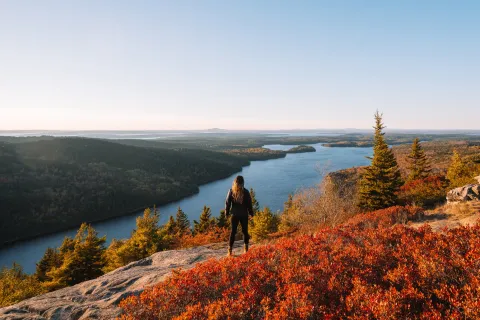
MOUNT DESERT ISLAND, Maine - Nine national parks are drawing autumn travelers with vivid foliage, scenic drives and trails that are generally quieter than in summer.
Ski Resorts Become Summer Golf Havens Across US
TRAVERSE CITY, Mich. - Boyne Golf spotlights 14 U.S. ski resorts doubling as summer golf destinations, from Maine to Montana, with courses carved into terrain that hosts skiers in winter.

Heatwave fuels surge in Maine tourism
Portland, Maine tourism rebounds as July heatwave sends travelers north, lifting Acadia National Park attendance, Jetport flights and Maine Turnpike traffic.

Silversea reveals 103 new voyages for 2028-29
Silversea's announced collection spans 219 destinations in 56 countries, with overnight calls, culinary sailings and a 75-night South America voyage.

About the Author

Jennifer Wilmington
Jennifer Wilmington is Family Travel Editor at Jetsetter Guide, covering family and luxury travel from her base in Charleston, South Carolina.