Stay current with our airline news coverage.
European Transportation Gridlock
For anyone who's worked travel logistics in volatile conditions, this advisory reads as straightforward operational intelligence. Flight disruptions of this scale don't just inconvenience leisure travelers; they strand business travelers, delay cargo, and create cascading rebooking chaos across hub airports from Madrid to Frankfurt. The advisory's timing matters because late January sits at the intersection of corporate travel schedules ramping back up post-holidays and winter weather systems that meteorologists now track with increasing precision. The practical takeaway for travelers: monitor airline communications obsessively, build buffer days into tight itineraries, and understand that coastal Spain in late winter can deliver North Atlantic storm systems with little advance notice. If your routing touches Iberian Peninsula hubs during weather alerts, expect equipment delays, crew scheduling failures, and the kind of airport limbo that no amount of lounge access can fix.West Africa Security Deterioration
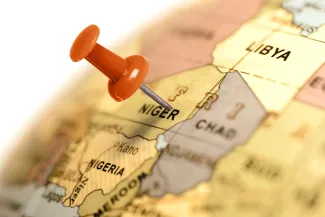
Running parallel to Europe's weather chaos, the State Department also updated "Do Not Travel" advisories for regions in Africa experiencing ongoing security tensions. While the advisory referenced areas close to generally safe destinations in Africa, the pattern fits what field operators have tracked for months: creeping instability in the Sahel that bleeds into neighboring countries with otherwise functional tourism infrastructure. Niger sits at the center of this deterioration. The U.S. maintains a Level 4 advisory for the country due to terrorism, kidnapping risks, and armed conflict that shows no signs of abating. This isn't abstract geopolitical posturing. American citizens have been detained, consular access remains severely limited outside the capital, and the 2023 military coup fractured what little security cooperation existed between Washington and Niamey. For travelers planning West African itineraries, the calculus has shifted. Countries sharing borders with Niger, Mali, and Burkina Faso now carry elevated risk profiles even if their tourism boards push optimistic narratives. Jihadist groups don't respect political boundaries, and kidnapping operations target Westerners precisely because they generate ransom leverage and media attention.Monkeypox Outbreak Adds Health Layer
Layered into these advisories, the U.S. government also issued warnings about a monkeypox outbreak affecting travelers. The advisory didn't specify containment zones or transmission rates, but the inclusion signals that health screening protocols could tighten at entry points, particularly for travelers arriving from regions with confirmed cases. This matters less for the immediate threat, monkeypox spreads through prolonged close contact, not casual airport exposure, and more for what it reveals about how quickly travel restrictions can layer atop one another. A weather delay in Madrid becomes a missed connection in Paris, which triggers a rebooking through a city with monkeypox screening delays, which costs you two days and a hotel night you didn't budget for. These aren't hypothetical scenarios; they're the compounding realities that separate experienced travelers from those who assume itineraries hold firm.What This Means for Travelers
The State Department's advisory activity in January 2026 reflects a broader truth about contemporary travel: conditions change faster than most travelers refresh their news feeds. Weather systems intensify with less predictability. Security situations in fragile regions deteriorate without diplomatic off-ramps. Health threats emerge in populations with limited surveillance infrastructure, and by the time advisories reach your inbox, you're already mid-itinerary. For travelers heading to Europe over the next several months, the lesson from late January is clear: winter weather along the Atlantic coast and Mediterranean can ground fleets with startling speed. Build contingency plans, purchase trip interruption coverage that actually covers weather delays, and accept that coastal Spain in storm season is not the same operational environment as August beach season. For anyone considering West African travel, the Niger advisory and surrounding regional tensions demand honest risk assessment. If your itinerary touches border regions, passes through areas with limited government control, or relies on overland transport through the Sahel, you're operating in an environment where kidnapping, armed conflict, and terrorism are documented, ongoing threats. Consular assistance in these zones is minimal at best, nonexistent at worst. The monkeypox alert, while less disruptive in practical terms, serves as a placeholder for the kind of health-related travel interruptions that have become normalized since 2020. Screening protocols, testing requirements, and quarantine policies can activate with minimal warning, particularly in countries with fragile public health infrastructure. January 2026's advisory cascade won't be the last. Travelers who treat State Department alerts as optional reading rather than operational intelligence will continue to get caught flat-footed. Those who integrate advisories into pre-departure planning, adjust itineraries based on real-time conditions, and maintain flexibility when ground truth shifts will navigate these disruptions with far less stress and cost. The advisories are there. Whether travelers use them is a different question entirely.More travel news
U.S. Plans Online First-Time Passport Applications by End of 2027
The planned America.gov service would let Americans seeking a first passport apply online, submit a qualifying photo and see an estimated delivery date by the end of 2027.

Southwest Airlines weighs Boeing 787s for Europe flights
The carrier is exploring its first widebody order and ways to obtain jets sooner, but no aircraft order, European route, cabin design or start date is confirmed.
U.S. Customs and Border Protection to End Routine Passport Stamps
CBP announced routine passport stamping will end during primary inspection, with limited exceptions; foreign visitors can access admission and authorized-stay details through I-94 or CBP Link.

U.S. passport redesign set for 2028 drops 50-page option
Online first-time passport applications are also planned through America.gov in 2027, with access targeted to the vast majority of Americans by year-end.
About the Author

Jeff Colhoun
Jeff Colhoun is a photographer and filmmaker whose work has appeared in The Wall Street Journal, the Los Angeles Times, Matador Network and Barron’s.