Stay current with our airline news coverage.
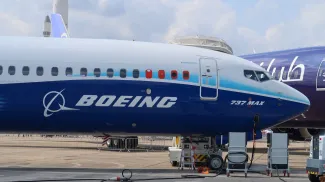
Boeing’s 737 MAX 10 could clear its biggest regulatory hurdle this week without clearing every airline’s acceptance test. The FAA is expected to consider certification despite an unresolved flight-management software issue, while some buyers reportedly won’t accept aircraft carrying the affected software.
That’s the tension behind a Saturday report by Simple Flying, covered by The Jerusalem Post on October 18. A successful final type certification board meeting has brought approval closer, the publications reported, but the software problem remains. For travelers, an important distinction follows: permission to deliver an airplane isn’t the same as an airline agreeing to take it.
FAA certification could come the week of October 19
The timing is more specific than another open-ended Boeing forecast. According to Airways, Reuters reported on October 16 that certification could come as soon as the week of October 19, following completion of the Type Certification Board review. The FAA had not announced approval in that reporting; the agency told Reuters that safety determines the schedule.
There are still steps between a successful review and a signed certificate. Simple Flying, citing The Air Current, reported that Boeing is expected to submit a project statement of completion before the FAA formally signs. AVweb, citing Reuters, also reported that a final FAA management meeting remains before the approval decision.
The aircraft has already completed a substantial testing program. AVweb reported that its final planned certification flight took place in July, after 976 flights and more than 2,060 flight hours. Testing covered landing gear, braking systems, engine anti-ice modifications and an enhanced angle-of-attack system. System safety assessments and other documentation continued after the flying finished.
What the MAX 10 software problem does
The issue involves a go-around, when pilots discontinue a landing and climb away for another approach, as The Jerusalem Post explained. Its account described a flaw that could disrupt autopilot guidance during that maneuver and require pilots to intervene.
Simple Flying provided a more detailed description: versions U14 and U14.1 of the flight management computer software can, under certain go-around conditions, cause the autopilot to stop following its programmed vertical navigation path, known as VNAV. The system switches to another mode, leaving pilots to manage altitude and speed restrictions themselves.
That distinction matters. The reported problem concerns how automated guidance behaves during particular conditions, rather than pilots losing control of the airplane. According to Simple Flying, the FAA concluded that pilots retain control and receive clear indications of the system’s behavior. The regulator therefore determined that the flaw did not pose a safety concern requiring a fix before certification.
Instead, Simple Flying reported, the FAA issued a nonmandatory Special Airworthiness Information Bulletin covering both 737 MAX and 737 Next Generation aircraft with affected software versions. Airways dates the software safety determination to October 2, separate from the broader certification review completed later in the month.
The disclosure timeline is another part of the story. The Jerusalem Post, citing Simple Flying, reported that WestJet alerted Boeing after a November 2024 test flight, but Boeing did not inform other customers for nearly two years.
Why airlines may still reject deliveries
Regulatory approval and customer acceptance are different decisions, and the software versions help explain the gap. According to Simple Flying, U13, introduced when the original MAX was certified in 2017, remains available for the MAX 8 and MAX 9. The MAX 7 and MAX 10, however, depend on newer versions; the MAX 10 used U14.1 throughout certification flight testing.
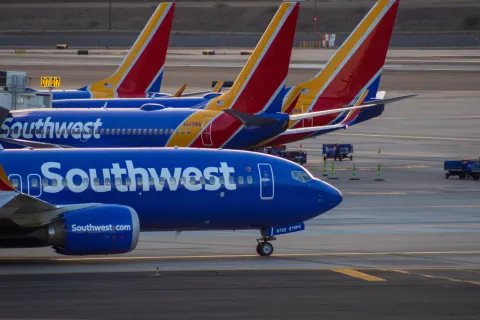
Simple Flying reported that Alaska Airlines, American Airlines, Southwest Airlines and United Airlines confirmed that none of their in-service MAX aircraft use U14 or U14.1. The publication, citing The Air Current, said U.S. carriers had avoided U14 for years because of several separate software problems.
United’s position is particularly consequential. The Jerusalem Post reported that the airline told Simple Flying in September it wasn’t accepting new aircraft equipped with U14. United is the MAX 10’s largest customer, with 167 firm orders, according to The Jerusalem Post. Its refusal to accept that software configuration is not the same as canceling those orders, but it creates an acceptance obstacle that certification alone would not resolve.
The Jerusalem Post also reported that several buyers had told Boeing they would refuse aircraft fitted with the affected software. That leaves Boeing facing two distinct tasks: obtaining the regulator’s signature and satisfying customers’ requirements.
Boeing is trying to move the fix forward
The repair schedule remains important to those delivery discussions. The Jerusalem Post reported an expected software fix in 2028. Simple Flying added that Boeing had initially paired that timetable with updated pilot guidance in November, but subsequently said it was working to bring both forward.
According to Simple Flying, Boeing is also working with airlines on a procedure that would let pilots re-engage VNAV if the problem occurs. The reporting does not establish a revised completion date for the permanent update. An effort to accelerate the fix, in other words, isn’t yet a firm replacement timetable.
Passenger flights are still a separate milestone
For anyone hoping to book the MAX 10, the relevant schedules remain in 2027. Airways reported that Boeing’s July results forecast certification in 2026 and first deliveries in 2027. Approval this week would not automatically bring those handovers forward.
Simple Flying reported that launch customer WestJet plans the first passenger flights in early 2027, contingent on progress with Transport Canada’s certification. Alaska expects its first aircraft in spring 2027 and hopes to begin passenger service by mid-May. Ryanair expects its first 15 examples in spring 2027, while United CEO Scott Kirby said in August that his airline expected its first MAX 10 around July 2027, according to Simple Flying.
Those are delivery expectations and service targets, not the result of an FAA signature. The useful milestone for passengers will be an airline accepting its aircraft and confirming passenger service. This week’s possible approval would be substantial progress; the software dispute explains why it may not be the final hurdle.
More travel news
United Airlines lowers economy food preorder threshold to 900 miles
United lowered its fresh-food preorder threshold from 1,190 to 900 miles, adding the option for economy passengers on 420 daily flights in North America and the Caribbean; orders close 24 hours before departure.
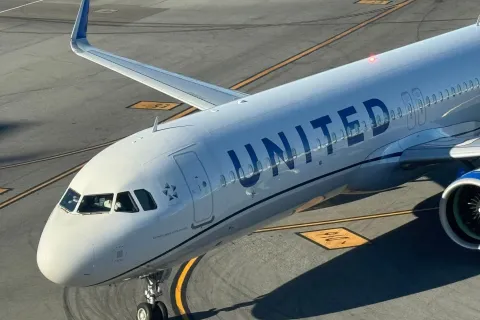
United Airlines launches Starlink flight tracker
Travelers can use United Airlines’ Starlink Tracker to check flight-level availability as the carrier works toward fleetwide installation by the end of 2027.
United Airlines has Starlink on just under 600 aircraft
United Airlines’ installed total spans regional and mainline aircraft; American Airlines plans to begin equipping more than 1,000 mainline aircraft in early 2027.

United Airlines plans two winter San Francisco-Barcelona round trips
Two planned Boeing 777-300ER round trips will operate Feb. 27-28 and March 3-4, 2027, around Mobile World Congress; they do not extend the route through winter.

About the Author

Dana Lockwood
Dana Lockwood is a Travel Writer at Jetsetter Guide covering budget solo travel from her base in Denver, Colorado.