Stay current with our airline news coverage.
Alaska Airlines is expanding its premium cabins and rolling out Starlink Wi-Fi as it integrates with Hawaiian Airlines, with a larger change still ahead: lie-flat Aurora Suites on selected Boeing 737 MAX 10 aircraft starting in 2028. An Oct. 29 report from Simple Flying details an investment that stretches from domestic recliners to a more ambitious premium product.
For travelers, this is not one upgrade arriving everywhere at once. More premium seats, faster connectivity and future suites are separate projects with different timelines. Simple Flying reports that many Boeing 737s still use older Wi-Fi systems, while the MAX 10 suites remain a future offering. Buying first class today does not buy the cabin Alaska plans to introduce in 2028.
More first-class seats now, lie-flat suites later
Alaska’s Boeing 737-800s are gaining four first-class seats, increasing that cabin from 12 to 16 seats, according to Simple Flying. Boeing 737-900ER and 737 MAX 9 aircraft will receive six additional Premium Class seats. Together, the seating program is designed to add approximately 1.3 million premium seats annually.
Those changes should not be treated as interchangeable. The 737-800 expansion adds first-class capacity; the other aircraft receive additional seats in the separately branded Premium Class cabin. Simple Flying describes the program as creating more seats to purchase and more opportunities for complimentary upgrades, though neither guarantees an upgrade on a particular departure.
The existing first-class improvements are still built around recliner seats. According to Simple Flying, Alaska claims up to 41 inches of seat pitch, while its newer seats include calf rests, adjustable headrests, device holders and USB-C charging. These are useful changes, but they are not lie-flat accommodations.
The next step is more substantial. Simple Flying reports that Alaska expects its first Boeing 737 MAX 10 delivery in the second quarter of 2027. Starting in 2028, at least 25 MAX 10s are planned to carry 12 Aurora Suites with lie-flat seats, direct aisle access, 19-inch 4K screens and wireless charging. The report does not identify the routes that will receive those suites.
Starlink is a membership benefit, not a first-class exclusive
More than 40% of the combined Alaska-Hawaiian fleet had Starlink by fall 2026, according to Simple Flying. Its rollout summary lists installations as complete across the Embraer E175 regional fleet and Hawaiian’s Airbus A330 and A321neo aircraft.
Access is complimentary for Atmos Rewards members on equipped aircraft, regardless of cabin, Simple Flying reports. That distinction matters when comparing fares: first class is not required to use the new connectivity. Membership and an equipped aircraft are the relevant conditions.
Starlink’s low-Earth-orbit satellite network offers lower latency than traditional geostationary systems, supporting smoother streaming, gaming and browsing, according to Simple Flying. But the publication also notes that many Alaska 737s retain older systems. Its assessment that Alaska is well positioned to offer fleetwide high-speed connectivity by the end of 2027 is not a confirmed completion deadline.
Lounge access depends on how you obtained the seat
Alaska includes complimentary lounge access on qualifying paid or award first-class itineraries containing a flight of at least 2,000 miles, according to Simple Flying. The threshold applies to a flight within the itinerary, not simply the combined mileage of several shorter segments.
The important exception is upgrades. Passengers upgraded to first class, whether through a complimentary upgrade or a paid one, do not automatically receive lounge access, Simple Flying reports. Eligible first-class passengers on shorter flights can generally purchase a discounted single-entry pass for $35, subject to availability.
That makes the ticket type part of the value calculation. A qualifying first-class award ticket can include lounge access; paying to upgrade an existing ticket does not automatically produce the same benefit. The seat and the ground experience are separate considerations.
The lounge network is also expanding. Simple Flying reports plans for a late-2027 Seattle facility containing a 500-seat Alaska Airlines Lounge and a separate 200-seat Aurora Lounge within a nearly 41,000-square-foot complex. New lounges in San Diego and Honolulu are planned for early 2028. Those facilities remain future additions, not amenities available to current passengers.
Atmos Rewards connects the premium strategy
The loyalty program is another part of the Hawaiian integration. Atmos Rewards, introduced alongside Hawaiian Airlines in 2025, will let members earn points and status based on distance flown, ticket spending or flight segments beginning in January 2027. Members can select their preferred method starting in October 2026, according to Simple Flying.
All four elite tiers qualify for space-available first-class upgrades on eligible Alaska flights, with benefits extending to Hawaiian’s North American network, the publication reports. More premium seats can create additional upgrade opportunities, but availability remains the limit. Travelers who need a particular cabin should not treat elite eligibility as a confirmed seat.
Dining improvements come with route limits
Alaska’s premium investment also includes its Chef’s (tray) Table initiative, introduced in 2025, and regional food and beverage partnerships. Simple Flying reports that the program began with Seattle chef Brady Ishiwata Williams and builds on an earlier collaboration with San Francisco chef Brandon Jew.
First-class passengers can preorder meals between two weeks and 20 hours before departure, with meal options on eligible flights as short as 670 miles, according to Simple Flying. Availability depends on route and departure time. The most elaborate chef-designed dishes are concentrated on selected routes; shorter flights receive simpler service.
An international route does not guarantee a lie-flat seat
Alaska’s expansion into new markets makes aircraft selection especially important. According to The Points Guy, its planned Anchorage-Tokyo Narita service will operate daily from May 13, 2027, through Sept. 7, 2027, before resuming three times weekly in January 2028.
That service is scheduled for the Boeing 737 MAX 8, not the future suite-equipped MAX 10. The Points Guy reports that the aircraft has 16 domestic first-class recliners, with no true long-haul business-class product. The publication connects Alaska’s Japan expansion to Hawaiian’s established strength in that market following their 2024 merger.
Read the aircraft and cabin details before paying for the premium label. Alaska’s investment is substantial, but its products remain distinct: domestic recliners, membership-based Starlink access and future lie-flat suites. The booking decision should rest on what the specific flight includes, not what the broader fleet is scheduled to become.
More travel news
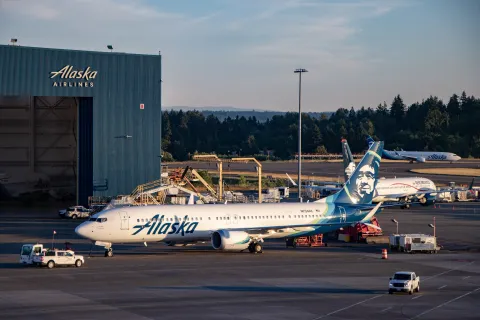
Alaska Airlines Opens Anchorage–Tokyo Flights for Booking
The new seasonal nonstop is bookable from $999 round trip. Daily service runs May 13–Sept. 7, 2027, with domestic-style first-class recliners rather than flat beds.
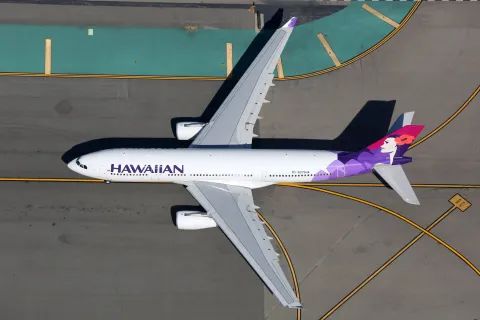
Hawaiian Airlines Plans Seattle Nonstops to Osaka, Tahiti
The planned routes will run four times weekly to Osaka and three times weekly to Papeete on Hawaiian Airlines Airbus A330-200s; neither will operate daily.
United Airlines launches Starlink flight tracker
Travelers can use United Airlines’ Starlink Tracker to check flight-level availability as the carrier works toward fleetwide installation by the end of 2027.
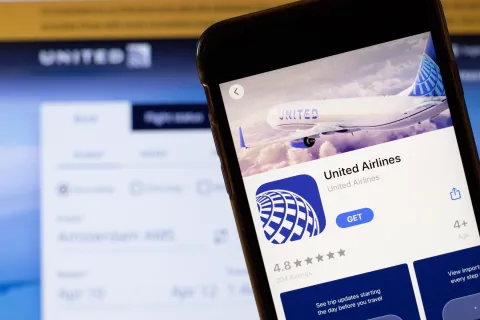
United Airlines has Starlink on just under 600 aircraft
United Airlines’ installed total spans regional and mainline aircraft; American Airlines plans to begin equipping more than 1,000 mainline aircraft in early 2027.
About the Author

Jeff Colhoun
Jeff Colhoun is a photographer and filmmaker whose work has appeared in The Wall Street Journal, the Los Angeles Times, Matador Network and Barron’s.