Stay current with our airline news coverage.
What TSA Gold+ Actually Is
TSA Gold+ isn't a program you can sign up for or pay into. It's an internal framework that significantly expands the agency's existing Screening Partnership Program (SPP), which already allows airports to contract private companies to handle passenger and baggage screening instead of using TSA employees directly. Right now, TSA's Screening Partnership Program operates at 20 U.S. airports, according to One Mile at a Time. Under SPP, these private contractors manage the screening workforce but still follow TSA guidelines and standards. TSA retains oversight to ensure security protocols are met. TSA Gold+ appears designed to take this model much further. While the agency's announcement was light on details, it's clear that the initiative is being positioned as a response to what TSA describes as "rising travel volumes, evolving threats, and funding challenges" as the agency approaches its 25th anniversary.A Major Expansion Is Already in the Works
The White House's fiscal year 2027 budget proposal would require approximately 250 of the nation's smallest airports to enroll in the program, according to One Mile at a Time. That's more than ten times the current footprint of the Screening Partnership Program. This isn't a voluntary opt-in for those airports; the language suggests mandated participation for smaller facilities that may lack the resources or passenger volume to justify a full TSA-staffed checkpoint operation. Presumably, TSA sees privatization as a way to maintain security standards while controlling costs at these lower-traffic locations. But the scale of the shift is notable. Going from 20 airports to more than 270 in one budget cycle is a big leap, and it fundamentally changes how a significant portion of the traveling public will interact with airport security.What Travelers Will (and Won't) Notice
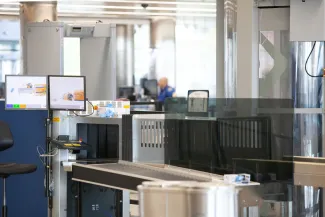
From a passenger perspective, the checkpoint experience shouldn't change much on the surface. You'll still remove your shoes (unless you have PreCheck), still pull out laptops, and still shuffle through the same screening equipment. Private contractors operating under SPP are required to follow the same TSA protocols and security standards as TSA employees. The difference is who's actually staffing the checkpoint. Instead of a federal TSA officer, you might be screened by an employee of a private security firm contracted by your airport. The screener's uniform might look different, but the rules, procedures, and technology remain under TSA's control. Where things could get interesting is in the long-term implications for staffing, accountability, and cost. Private contractors may offer more flexibility in hiring and scheduling, which could theoretically lead to shorter wait times at some airports. But they may also operate under different labor agreements, pay structures, and training pipelines than federal employees, which raises questions about consistency and workforce stability.This Fits a Broader Privatization Push
TSA Gold+ didn't come out of nowhere. Privatizing more of the agency's airport screening operations has been a talking point in certain policy circles for years, especially among those who view TSA as bloated or inefficient. The idea is that private companies, driven by competition and performance incentives, can deliver the same security outcomes at lower cost with greater operational flexibility. Industry sources have noted that TSA has been discussing an expanded privatization concept, sometimes called "Gold Plus," with large airports for roughly the past six months. That concept, which appears aligned with this week's announcement, would go even further than the current SPP model by having contractors manage not just the workforce but also the screening technology itself; procurement, deployment, and equipment lifecycle management. TSA would still set the standards and maintain regulatory oversight, but airports and vendors would gain significant control over checkpoint design and operations. The goal, at least as pitched to airports, is to create "long-term investable partnerships" where private operators have a stake in innovation and efficiency improvements. The timing also aligns with broader political momentum. Project 2025, a conservative policy blueprint, identifies privatizing TSA airport screening while keeping federal oversight as a core goal. TSA Gold+ could be the vehicle to advance that agenda incrementally, starting with smaller airports and potentially expanding to major hubs over time.Should Travelers Adjust Anything?
Probably not right away. If you're flying through one of the 250 smaller airports slated for the program under the 2027 budget, you may eventually see different uniforms at the checkpoint, but the actual screening process should remain familiar. TSA PreCheck, CLEAR, and other trusted traveler programs will continue to work the same way regardless of who's staffing the lanes. The real question is whether this shift will improve the checkpoint experience or simply shift costs and accountability around without meaningful change. Private contractors could bring operational improvements, faster hiring, and better customer service if incentives are structured correctly. But they could just as easily cut corners on staffing or training if profit margins get tight, especially at low-traffic airports where oversight may be less visible. For now, TSA Gold+ is more about infrastructure and budget mechanics than anything travelers need to plan around. But it's worth watching, especially if the program proves successful at smaller airports and starts creeping into larger hubs. The way we move through security in the U.S. might look quite different a few years from now; and whether that's better, worse, or just different remains to be seen.More travel news
Donate Miles to Help Preserve US National Parks
FORT WORTH, Texas - American Airlines asks loyalty members to turn miles into conservation currency as the country approaches its 250th birthday, directing donations to national park preservation through its first official partnership with the National Park Foundation.

Global Travel Crisis Strands Millions Across Continents
LONDON, United Kingdom - A convergence of severe flight disruptions, record heat across Europe, UK airport chaos, and tightening visa regulations created a sustained travel crisis through late June 2026, upending summer holiday plans.

US Passport Rule Triggers Global Summer Travel Chaos
WASHINGTON - Widespread traveler confusion erupted in late June 2026 over passport blank page requirements, as summer tourists faced unexpected boarding denials despite no actual regulatory change.

TSA Uncovers Smoke Grenade Stashed in Peanut Butter
Indianapolis, United States - Security officers intercept live explosive devices in checked luggage, including one concealed inside a jar of peanut butter, raising fresh questions about traveler awareness of hazardous-material bans.
About the Author

Bob Vidra
Bob Vidra, based in scenic Tahoe, is an esteemed tech editor known for his deep understanding of the dynamic intersection of technology, travel, and the outdoors.