Stay current with our airline news coverage.
How Spirit's Shutdown Unfolded
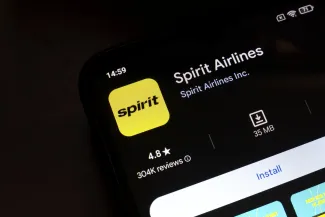
The ultra-low-cost carrier posted a notice on its website early Saturday announcing it had "started an orderly wind-down of our operations" after flying for 34 years, according to Bloomberg. The shutdown came after failed negotiations for a $500 million federal bailout from the Trump administration, which had shown initial enthusiasm but ultimately couldn't overcome bondholder opposition. This marks Spirit's second bankruptcy in less than a year; the airline had emerged from its first bankruptcy just months earlier in February. The collapse wasn't exactly a surprise to industry watchers. Spirit had been battling a perfect storm of financial troubles: soaring jet fuel prices driven by the Iran war, over 70 planes grounded due to Pratt & Whitney engine issues, lingering pandemic losses, and the wreckage of a failed merger attempt with JetBlue. The immediate human cost? Some 277 flights canceled nationwide, leaving passengers scrambling for alternatives. And 17,000 employees suddenly found themselves out of work.What Happens to Your Booking
The refund situation is messy, and that's putting it kindly. If you booked directly with Spirit using a credit or debit card, automatic refunds are supposed to be coming your way. But if you booked through a third-party site, you'll need to go through that provider to sort things out. Here's the uncomfortable part: "Bankruptcy proceedings are complex, and they can potentially impact what compensation consumers were entitled to," the U.S. Department of Transportation noted, according to Bloomberg. Translation? You might not get everything back, and it probably won't happen quickly. The airline is in its second bankruptcy proceeding, which means creditors are circling and passengers are standing in a very long line behind them.The Political Fallout
Saturday's press conference kicked off what Bloomberg described as a "political and business blame game" over who's responsible for Spirit's demise. On one side, you've got government officials dealing with stranded passengers and employee displacement. On the other, business interests pointing fingers at failed bailout negotiations and market forces beyond any single actor's control. The Trump administration had shown interest in the $500 million bailout package, but bondholders balked at the terms. Now everyone's left to sort out the mess without that safety net.The Ripple Effect on Airfares
Spirit's shutdown doesn't just hurt Spirit passengers. When a major carrier disappears, it takes capacity with it. "Any time you have a reduction in capacity and demand increases, airfares have nowhere to go but up," said Peter Greenberg, CBS News travel editor, according to research. And he's not wrong. When Spirit exited routes in the past, average fares jumped 23%, roughly $60 more per round-trip ticket. Multiply that across hundreds of routes and millions of passengers, and you're looking at a meaningful hit to travelers' wallets. Budget carriers like Frontier and Allegiant will likely pick up some of the slack, but don't expect them to match Spirit's rock-bottom pricing on every route. JetBlue, ironically the airline that tried to acquire Spirit before regulators blocked the deal, stands to benefit from reduced competition.Where This Leaves Budget Travelers
Spirit's collapse is a wake-up call about the fragility of ultra-low-cost carriers. These airlines operate on razor-thin margins, which means they're vulnerable when multiple things go wrong at once. Fuel spikes, mechanical issues, demand shifts; any one of these can be manageable, but stack them up and you get what we're seeing now. If you're a frequent Spirit flyer, it's time to recalibrate. The remaining ultra-low-cost carriers will absorb some routes, but expect higher fares overall. Competition kept prices in check, and that competitive pressure just evaporated overnight. For immediate travel plans, check what other carriers are offering on your route. Some airlines historically offer "rescue fares" when a competitor shuts down, though those aren't guaranteed and they're rarely as cheap as what Spirit was charging. Book sooner rather than later; fares will climb as seats fill up. And here's an uncomfortable truth: if you've been sitting on Free Spirit points or credits, those are likely worth pennies on the dollar now, if anything. Unsecured creditors rarely fare well in bankruptcy liquidations, and loyalty program members are about as unsecured as it gets. The broader lesson? Diversify your airline options. Booking the absolute cheapest fare every time feels smart until that carrier ceases operations at 3 a.m. on a Saturday. Sometimes paying a bit more for a ticket on a financially stable airline is the real bargain.More travel news
Trump Plans Air Traffic Control Software Announcement
The planned announcement is part of the FAA’s broader air traffic control modernization effort, which aims to reduce delays but is not expected to be completed until 2028.
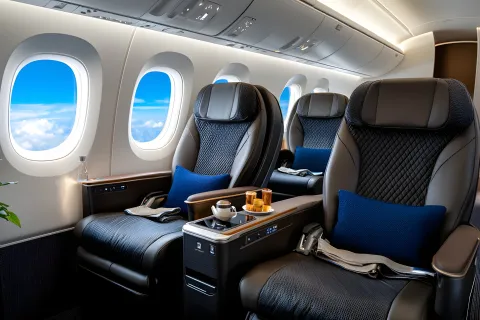
FAA Rule Clears First Class Cups Before Pushback
Washington, United States - Stricter FAA enforcement means airline-provided cups must disappear before pushback, complicating a familiar premium-cabin perk.
Study Debunks Radiation Cancer Claims About Aircrews
WASHINGTON, United States - Gary Leff challenges viral claims about flight crew cancer deaths, arguing that new mortality data show association without proving radiation caused the cancers.
Frontier Goes Upmarket After Spirit Shutdown
DENVER, United States - Frontier Airlines is pairing low fares with first-class seats, faster Wi-Fi and loyalty perks after Spirit Airlines exited the market.
About the Author

Dana Lockwood
Dana Lockwood is a rising journalist who specializes in budget-friendly solo travel.