Stay current with our airline news coverage.
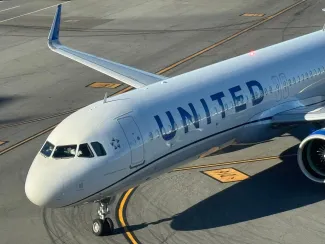
WASHINGTON, United States - United Airlines flight attendants have been told they are not required to answer Immigration and Customs Enforcement questions about passengers, coworkers or personal legal status, drawing a clearer boundary between aviation security duties and immigration enforcement at U.S. airports.
The guidance came from the Association of Flight Attendants-CWA, which represents crew members at United Airlines, Frontier Airlines and Alaska Airlines. According to TheTravel, represented flight attendants may remain silent when ICE agents seek information about passengers or coworkers. They also cannot be required to help agents arrest or detain someone.
The guidance followed a sharp increase in ICE activity during July 2026. There were 49,571 ICE arrests that month, according to Associated Press data analyzed and cited by TheTravel. The Department of Homeland Security said ICE makes between 20 and 40 airport arrests per day nationwide.
Those arrests are not limited to a single hub or region. ICE arrests have occurred at airports in Denver, Nashville, Las Vegas and Phoenix, according to TheTravel. The union guidance also followed controversies involving United operations or personnel at San Francisco International Airport and Phoenix Sky Harbor International Airport.
Flight Attendants Are Drawing a Line Around Their Role
The distinction matters because flight attendants hold a federally regulated safety position, but they are not immigration officers. Union guidance emphasizes that their primary legal responsibility is aircraft safety and security during boarding, flight and deplaning. Crew members are expected to cooperate fully with Transportation Security Administration procedures, but unions say they are not obligated to provide information about a passenger’s immigration status when questions fall outside routine security protocols.
The AFA-CWA guidance also says crew members have the right to film law enforcement in airport areas and in the cockpit. That instruction places documentation alongside silence as an available response when an encounter moves beyond normal airport security procedures.
If agents continue requesting information, airline and union instructions generally direct flight attendants to refer the matter to station management or the airline’s legal department rather than answer on the spot. This removes a high-pressure decision from an employee whose immediate job is managing the cabin, not evaluating the legal basis for an immigration inquiry.
The Association of Professional Flight Attendants has issued similar concerns for American Airlines crews. APFA represents more than 36,000 American Airlines crew members, according to TheTravel. The union has warned that airport enforcement activity can put both crews and passengers in difficult and sometimes dangerous situations.
Simple Flying reported that APFA advised crews against answering nonroutine ICE or law enforcement questions without a judicial warrant or an immediate safety need. The guidance also stresses that flight attendants should continue complying with standard TSA security requirements.
Why Airport ICE Encounters Create Operational Risk
An airport is a controlled transportation environment, but it is also a public-facing space where thousands of people move through security checkpoints, gates and boarding lines under tight schedules. Questioning or detention in those areas can quickly affect more than the person being approached. Crew attention can be diverted, boarding can become more complicated, and nearby travelers may not understand whether an encounter involves immigration enforcement, TSA screening or an immediate aviation security threat.
Airlines also face legal and reputational exposure if frontline employees become involved in identifying passengers or sharing personal information. Union concerns include the possibility of discriminatory profiling, particularly when a request falls outside established TSA procedures. Clearer instructions help prevent individual crew members from making improvised decisions about immigration status or law enforcement authority.
ICE and law enforcement supporters take a different view. They argue that cooperation from airline employees can help locate individuals subject to lawful arrest or removal orders and that enforcement activity in public transportation spaces falls within normal agency work. The disagreement is not over whether flight attendants must follow aviation security rules. It concerns where those obligations end when an immigration officer asks for information unrelated to an immediate onboard threat.
The Airport Security Line Is Now a Legal Boundary
In my assessment, travelers should read this policy narrowly. It does not mean flight attendants can ignore TSA requirements, disrupt law enforcement or interfere with an arrest. It means the person checking the cabin, closing the aircraft door or managing an evacuation is not automatically an extension of ICE.
That boundary is sensible. Flight attendants already operate in a difficult chain of command involving the captain, dispatchers, gate personnel, TSA officers and airport police. Adding informal immigration questioning creates another layer of responsibility without making the cabin safer. Referring agents to station management or airline counsel is a more controlled response than asking a crew member to decide what information must be disclosed.
For passengers, the immediate lesson is to distinguish routine TSA screening from ICE questioning. Travelers should continue following normal security and boarding instructions. They should not assume, however, that a flight attendant will answer questions about another passenger’s identity, personal information or legal status. A crew member who remains silent or calls a supervisor is following guidance, not necessarily obstructing airport operations.
Anyone facing direct immigration questioning needs advice specific to their legal circumstances, not an answer from airline staff. United’s crew guidance, mirrored by positions taken at other carriers, is ultimately about keeping that distinction intact. Airport security remains part of the job; acting as an immigration enforcement intermediary does not.
More travel news
United Airlines has Starlink on just under 600 aircraft
United Airlines’ installed total spans regional and mainline aircraft; American Airlines plans to begin equipping more than 1,000 mainline aircraft in early 2027.

United Airlines plans two winter San Francisco-Barcelona round trips
Two planned Boeing 777-300ER round trips will operate Feb. 27-28 and March 3-4, 2027, around Mobile World Congress; they do not extend the route through winter.

U.S. Customs and Border Protection to End Routine Passport Stamps
CBP announced routine passport stamping will end during primary inspection, with limited exceptions; foreign visitors can access admission and authorized-stay details through I-94 or CBP Link.

United Airlines Plans Base Fares for Domestic First, Short-Haul Business
United Airlines plans Base tiers for domestic first class and eligible non-Polaris short-haul international business, with paid seat selection, one free bag and no changes; Business Base excludes United Club access.
About the Author

Dana Lockwood
Dana Lockwood is a Travel Writer at Jetsetter Guide covering budget solo travel from her base in Denver, Colorado.