Stay current with our airline news coverage.
DALLAS, Texas - Southwest Airlines spent years proving that an airline could keep things simple. Now, investors are betting that a little more complexity might help restore its profits.
Sound Shore Fund highlighted Southwest in its Q2 2026 investor letter, pointing to the carrier’s premium offerings and new checked-bag fees as tools that could strengthen pricing and move returns closer to historical levels, according to Simple Flying.
That’s an important shift for a carrier historically associated with a single-class cabin, open seating, no change fees and two free checked bags per passenger. Those policies weren’t merely operational choices. They were central to Southwest’s identity, particularly for travelers who didn’t want to decode a fare chart before buying a ticket.
The investor argument is straightforward: Southwest may be able to earn more from travelers willing to pay for comfort, seat location or added benefits, while using baggage allowances more selectively. The passenger argument is less tidy. How much simplicity can Southwest remove before it starts looking like every other airline?
Southwest Adds Assigned and Premium Seating
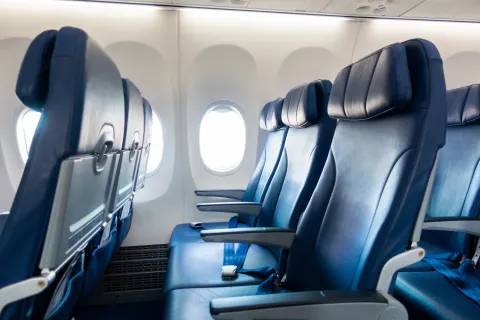
Southwest launched assigned and premium seating in July 2026, Simple Flying reported. The strategy includes extra-legroom seats, preferred seating and assigned seating, giving the airline more opportunities to separate customers by what they value and what they’re willing to spend.
Fare bundles and evolving loyalty benefits are also central to the revenue strategy. Rather than selling essentially the same onboard experience to everyone, Southwest can package seats, baggage and other benefits into distinct products.
That approach is common across the airline industry, but it marks a substantial departure from Southwest’s historically uniform model. In the mid-2020s, airlines have faced pressure from higher fuel costs, rising labor expenses tied to new pilot and crew contracts, and frequent operational disruptions. When base fares are constrained, bag charges and seat upgrades become especially attractive ways to raise revenue.
Southwest’s changes also fit a wider trend among low-cost carriers. Airlines once defined primarily by stripped-down service are exploring premium products and, in some cases, airport lounge partnerships. The industry’s boundaries between low-cost, hybrid and traditional network carriers are getting blurrier by the year.
Checked-Bag Fees Carry Extra Brand Risk
Premium seats are one thing. Checked-bag fees touch a particularly sensitive part of Southwest’s history.
The airline’s longstanding policy allowed two free checked bags per passenger, making baggage a clear point of differentiation from competitors. Southwest has now introduced new checked-bag fees as part of its effort to improve margins, according to Simple Flying.
The developing structure appears more selective than the airline’s old universal benefit. One reported Southwest “extra seat” option in 2026 included two checked bags, while a “preferred seat” option on the same flight included zero checked bags, Simple Flying reported. The example involved a flight from Kansas City International Airport to New York City.
A TikTok video calling attention to confusion surrounding Southwest’s extra-legroom seat booking received more than 112,000 views. Social media engagement doesn’t settle whether the strategy will work, of course, but it does show that passengers are paying attention to the details.
For Southwest, the challenge isn’t simply collecting more fee revenue. It’s making the new choices understandable. A premium-sounding seat that lacks a benefit included with another product can leave travelers wondering whether they’ve misunderstood the booking screen. Confusion is rarely a premium experience.
The Investor Case for Higher Southwest Earnings
Sound Shore Fund views the product overhaul as a possible turning point. Better segmentation could allow Southwest to charge more accurately for different levels of service, increase ancillary revenue and improve return on capital when ticket prices alone aren’t doing enough of the work.
The financial expectations are ambitious. Southwest’s internally estimated earnings power is approximately $6.00 per share, according to Simple Flying. The investment narrative projects $35.7 billion in revenue and $2.4 billion in earnings by 2029.
That forecast produces a fair-value estimate of $51.79 per share, representing 27% upside to the current price. Some lower analyst estimates assume earnings of approximately $2.3 billion by 2029, Simple Flying reported.
Still, the case depends on Southwest increasing revenue without damaging its value-oriented reputation. Risks include uncertain demand, customer reaction, booking softness and cost pressures. Fuel-price volatility, macroeconomic demand and the timing of Boeing aircraft deliveries add more uncertainty. The new initiatives put a sharper spotlight on demand, but Simple Flying noted that they don’t fundamentally remove that risk.
The Booking Calculus Just Got More Complicated
From a traveler’s perspective, the old shortcut for evaluating Southwest is fading. It was once relatively easy to look at the fare, remember the two-bag allowance and make a quick comparison. With assigned seats, premium categories, fare bundles and selective baggage benefits, shoppers need to compare the total package instead.
My advice is simple: don’t assume the seat with the more appealing label includes the most useful benefits. Check the baggage allowance attached to the specific product, then compare the final trip cost with competing airlines. For some travelers, an extra-legroom or preferred seat may be worth paying for. For others, checked bags will matter far more than seat location.
Loyalty members should also watch how evolving benefits connect with the new fare hierarchy. The source material doesn’t provide the full mechanics, so it’s too early to declare winners and losers. Still, any change that moves a familiar benefit behind a fare or status threshold can alter the value of staying loyal.
Investors may be right that Southwest needs more ways to monetize its product in a high-cost environment. Yet the airline’s real advantage was never just free bags or open seating. It was the feeling that booking didn’t require homework. If Southwest can improve earnings while preserving that sense of fairness, the strategy has a credible path. If passengers leave the checkout page confused, those extra revenue levers may come with a cost that’s harder to measure.
More travel news
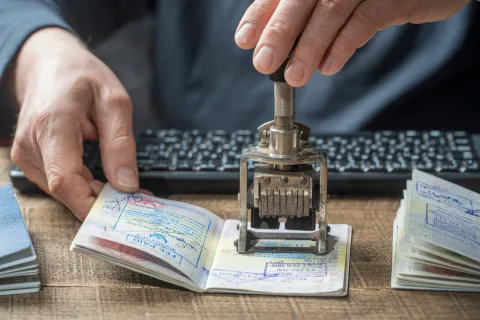
U.S. Customs and Border Protection to End Routine Passport Stamps
CBP announced routine passport stamping will end during primary inspection, with limited exceptions; foreign visitors can access admission and authorized-stay details through I-94 or CBP Link.
American Airlines may adjust capacity if fuel prices stay high
American Airlines says persistently high fuel prices may force further capacity changes, while United Airlines has cut capacity roughly 5% and Southwest Airlines has modified schedules.
Southwest, United seek older software on new 737 MAX jets
Southwest and United want earlier software on new 737 MAX deliveries as the FAA reviews a glitch that can block automated guidance after a missed approach if pilots alter the flight path.
Southwest Plans Lounges at Four Airports From Late 2027
Southwest plans lounges at AUS, BWI, HNL and BNA from late 2027, with access included for holders of a new premium Southwest Rapid Rewards card launching in 2027.

About the Author

Bob Vidra
Bob Vidra is News Editor at Jetsetter Guide, covering airlines, airports and the travel industry since 2023.