Stay current with our airline news coverage.
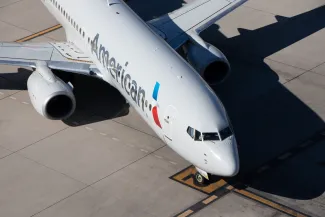
American Airlines is warning that persistently high fuel prices could force further capacity adjustments, while United Airlines and Southwest Airlines have already modified their schedules. The pressure is reaching travelers through reduced flying and higher prices, even as passenger demand continues to grow, according to Simple Flying’s Sept. 29 report.
This is an ongoing response to the 2026 fuel shock, not a single coordinated announcement of new cuts. American’s warning concerns what could come next; United has already reduced capacity, and Southwest has adjusted its schedule and lowered its earnings expectations. Those distinctions matter when assessing whether an airline’s financial warning represents an actual change to available flights.
American’s warning, United’s cuts and Southwest’s rising costs
American expects its fourth-quarter fuel bill to be around $1 billion higher than previously assumed, according to Simple Flying. CEO Robert Isom has warned that sustained high prices could require further capacity adjustments. That is a conditional warning, rather than confirmation of a specific new round of route cancellations.
The carrier also lowered its full-year earnings outlook to between an adjusted loss of $0.65 per share and a profit of $0.65 per share. Its previous range ran from a $0.40 loss to a $1.10 profit. Simple Flying reported that the revised forecast assumes an average fuel price of approximately $3.75 per gallon.
United’s response has moved beyond a warning. Simple Flying reported that the airline reduced capacity by roughly 5%, targeting weaker flying that becomes harder to justify at higher fuel prices. The carrier could face close to $6 billion in additional fuel expense this year, according to the publication. That figure remains a potential expense, not a finalized annual result.
Southwest reported that its second-quarter fuel expense increased by almost $900 million year over year and subsequently lowered its 2026 earnings expectations, Simple Flying reported. The publication also identified Southwest among the airlines modifying schedules.
The report does not provide a route-by-route implementation calendar for these three carriers. Their announcements therefore establish financial pressure and differing stages of capacity adjustment, not a complete list of affected passenger itineraries.
Why demand is not enough to keep every flight
The cuts are not simply a response to empty seats. According to Simple Flying, demand is still growing, but higher fuel costs are changing the profitability threshold for individual routes and frequencies. A flight that made financial sense at a lower fuel price may no longer cover its costs at today’s price.
Simple Flying identifies thin-margin routes, longer sectors, low-fare services and flights using less efficient aircraft as particularly exposed. Airlines can respond by raising fares, deploying more efficient aircraft or reducing routes and frequencies. The publication also notes that reducing capacity can support higher fares when demand remains strong.
For travelers, that makes passenger demand an incomplete guide to schedule stability. A busy service is not automatically insulated from cuts. The relevant question for the airline is whether the revenue that flight produces can justify its operating costs, not simply how many seats it fills.
The fuel problem extends beyond crude oil
Simple Flying traced the fuel shock to the closure of the Strait of Hormuz and the resulting disruption to crude oil and refined-product supplies. The publication also reported that Chinese restrictions on refined-fuel exports added pressure by removing supply from the international market.
That distinction between crude oil and finished jet fuel helps explain why airlines are facing more than an ordinary rise in oil prices. According to AP News, jet fuel has risen faster than oil during the Iran war, reflecting both higher crude prices and tight supplies of refined fuel.
The path has also been uneven. AP reported that the Argus U.S. Jet Fuel Index fell from an early April peak of $4.88 a gallon to a wartime low of $2.70 in June. It then climbed to $4.53 a gallon on Sept. 17. The summer rebound matters because airlines must make schedule decisions before they know exactly what fuel will cost when those flights operate.
Lower fuel prices have not delivered lower fares
AP’s reporting shows that fares stayed elevated even during the spring fuel-price retreat. According to Bureau of Transportation Statistics figures cited by AP, the average fare rose from $405 in the last three months of 2025 to $428 in the first quarter of 2026, then reached $436 in the April-June period.
Those averages exclude optional charges such as checked baggage and seat selection. AP also reported that carriers raised fares and baggage fees while cutting some less profitable flights. Higher passenger revenue initially covered only part of major U.S. airlines’ increased fuel costs.
Timing explains part of the disconnect. Brett House, an economist who teaches at Columbia Business School, told AP that airlines typically decide several months ahead how many flights and seats to offer, while ticket sales begin even earlier. Airlines cannot charge more for seats already sold when fuel suddenly becomes more expensive, he explained.
By August, U.S. airfares were 23% higher than a year earlier, according to Labor Department figures reported by AP. Waiting for cheaper oil is therefore not a reliable basis for assuming a cheaper holiday ticket; the reported fare data already show that the two prices do not move together.
A global adjustment, with different consequences
The same pressure is changing international schedules, but not every adjustment means an outright service cut. Simple Flying reported that Air Canada suspended flights from Toronto and Montreal to New York JFK, citing fuel economics. Air France-KLM, by contrast, reduced its capacity-growth forecast from 3–5% to 2–4%. Slower planned growth is different from withdrawing an existing route.
Exposure also varies. According to Simple Flying, U.S. airlines have largely moved away from fuel hedging, leaving them more directly exposed to current prices. Other carriers have locked in part of their fuel costs, providing temporary protection rather than eliminating the problem.
For anyone evaluating a booking, the important distinction is between a warning, a capacity reduction and a named service suspension. American’s warning does not establish that a particular flight will disappear. United’s reported reduction is already a capacity action. Across both, the direction is clear: airlines are reassessing which flying pays, while the fare data offer little evidence that passengers have benefited from earlier fuel-price declines.
More travel news
United Airlines CEO Defends Fees for Window and Aisle Seats
Kirby said travelers who want a preferred seat should pay more. Charges vary with available seats, fares and status benefits; $70 was one non-frequent flyer's example.
United Airlines lowers economy food preorder threshold to 900 miles
United lowered its fresh-food preorder threshold from 1,190 to 900 miles, adding the option for economy passengers on 420 daily flights in North America and the Caribbean; orders close 24 hours before departure.
Boeing 737 MAX 10 FAA approval could come this week
FAA certification could come the week of Oct. 19, but some buyers reportedly will not accept 737 MAX 10s fitted with affected U14 or U14.1 software.
Southwest Airlines Will Stop Counting Welcome Bonuses for Companion Pass in 2027
Starting Jan. 1, 2027, Southwest Airlines will exclude credit card welcome bonuses from Companion Pass qualification, while current passes remain valid for their full term.
About the Author

Jeff Colhoun
Jeff Colhoun is a photographer and filmmaker whose work has appeared in The Wall Street Journal, the Los Angeles Times, Matador Network and Barron’s.