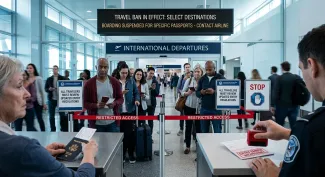
Stay current with our airline news coverage.
SOS International Issues Expanded Travel Warning Amid Middle East Escalation
GLOBAL — Security experts from SOS International have issued warnings against travel to 16 countries as conflict continues to escalate across the Middle East amid ongoing US-Israeli operations against Iran. The advisory represents one of the most comprehensive regional travel alerts issued by the international security and health services company, which has already evacuated more than 830 people via land and air routes while thousands more remain stranded in affected locations. The expanded warning comes as both sides in the widening conflict struck new targets, pushing instability beyond traditional flashpoints into neighboring regions and prompting security analysts to reassess risk profiles across a broad geographic corridor.Regional Conflict Pushes Beyond Traditional Boundaries
The current phase of Middle East escalation differs from previous cycles in scope and reach. Operations involving US and Israeli forces against Iranian positions have triggered retaliatory strikes and proxy engagements that extend the conflict zone well beyond core battlegrounds. For travelers, this translates to unpredictable airspace closures, ground transportation disruptions, and rapidly shifting security conditions that can isolate entire regions without warning. SOS International's decision to classify 16 nations under "do not travel" advisories reflects the operational reality on the ground: even countries not directly engaged in hostilities face spillover effects including border closures, suspension of commercial air service, and infrastructure breakdowns that leave visitors with limited exit options. The company's evacuation operations, which have moved more than 830 individuals to date, underscore the scope of the disruption. Land and air corridors remain active but constrained, with security protocols adding hours or days to departure timelines. Thousands of additional travelers remain in affected zones, many awaiting clearance or transportation capacity to exit through increasingly limited channels.What Travelers Need to Understand About Current Conditions
This is not a theoretical risk assessment. The evacuation numbers tell the story: people are getting stuck, exit routes are narrowing, and the window for safe departure contracts with each new round of strikes. If you're holding reservations in or through the broader Middle East region, the calculus has changed. The 16-country advisory list signals that security analysts view the conflict as both geographically expansive and temporally unpredictable. In practical terms, this means travelers cannot rely on historical patterns or assume that certain areas will remain insulated from hostilities. Conflict zones shift. Airspace restrictions expand without notice. Ground routes close based on real-time threat assessments. For those currently in the region, monitoring official channels and maintaining contact with your embassy or consulate is no longer optional. Commercial carriers have already suspended or rerouted flights across multiple corridors. Hotel infrastructure in some areas faces supply chain interruptions. Ground transportation networks operate under security protocols that can halt movement for hours.Insurance and Documentation Realities
Standard travel insurance policies often exclude coverage in active conflict zones or regions under government "do not travel" advisories. If you proceed against official warnings, you may forfeit not only insurance protections but also access to government-assisted evacuations should conditions deteriorate further. This is particularly relevant for adventure travelers, photographers, and journalists who may operate on tighter risk margins than leisure visitors. Passport validity, visa status, and proof of onward travel become critical in fluid border environments. Neighboring countries absorbing evacuees or transit traffic often implement temporary entry restrictions or documentation requirements with minimal advance notice. Carry physical copies of all travel documents, emergency contact information, and proof of insurance.Implications for Expedition and Regional Travel Planning
The ripple effects extend beyond the 16 countries flagged in the SOS International advisory. Regional instability affects flight pricing, routing, and availability across North Africa, the Eastern Mediterranean, the Arabian Peninsula, and Central Asia. Travelers planning expeditions to adjacent regions including the Red Sea corridor, East Africa, or South Asia should anticipate longer transit times, limited rebooking options, and increased security screening. Tour operators and expedition cruise lines serving adjacent waters or overland routes are already adjusting itineraries. If your travel involves transiting through Middle Eastern hubs, confirm with carriers that routing remains viable and that contingency plans exist for rapid rerouting.The Stranded Traveler Reality
Thousands remain stranded in locations across the affected region, according to SOS International. These are not just tourists; they include business travelers, expatriates, aid workers, and journalists. The evacuation infrastructure, while functional, cannot move everyone simultaneously. Priority typically goes to medical emergencies, families with children, and individuals in zones facing imminent threat escalation. If you find yourself in a stranded scenario, reduce movement, conserve resources, and maintain communications with your embassy. Evacuation timelines shift based on security windows, transportation availability, and diplomatic negotiations that operate outside normal travel logistics.Current Operational Guidance
Do not travel to the 16 countries identified in the SOS International advisory. If you hold bookings, cancel or defer. If you're currently in the region and not performing essential work, begin exit planning immediately. If departure is not feasible, establish secure accommodations away from government buildings, military installations, transportation hubs, and crowded public spaces. This is field reality, not speculation. The conflict shows no signs of de-escalation, and both sides continue striking new targets. That pattern keeps security analysts updating risk maps in real time, and it keeps evacuation teams moving people out of zones that were stable days earlier. Travel to conflict-adjacent regions requires heightened situational awareness, backup planning, and acceptance that conditions may force rapid itinerary changes. If those constraints don't align with your travel objectives or risk tolerance, postpone until the security environment stabilizes.More travel news
Airlines Can Hide Baggage Fees Again After Court Ruling
WASHINGTON - A Fifth Circuit ruling has eliminated the requirement for airlines to show baggage and change fees upfront, reverting to 2011-era disclosure standards.
Ski Resorts Become Summer Golf Havens Across US
TRAVERSE CITY, Mich. - Boyne Golf spotlights 14 U.S. ski resorts doubling as summer golf destinations, from Maine to Montana, with courses carved into terrain that hosts skiers in winter.

Airline Wi-Fi Crashes Under Surge in Passenger Use
Several major U.S. airlines' Wi-Fi provider has acknowledged sluggish service and outages on long-haul flights as passenger usage surges.

Trump's 50% Canada Tariff Threatens Travel Costs
WASHINGTON - Trump's sweeping 50% tariffs on Canadian imports spark fresh worries about rising costs for cross-border tourism, business travel, and the entire North American travel ecosystem.

About the Author

Jeff Colhoun
Jeff Colhoun is an acclaimed travel writer, photographer, and filmmaker, whose work is respected both in the United States and internationally.