Stay current with our airline news coverage.
What Happened to MH370?
Let's back up for a second. If you've managed to forget the details over the past decade (and honestly, who could blame you), here's the short version: Flight 370 took off just after midnight, climbed to cruising altitude, and then... nothing. The aircraft went silent. No distress call. No warning. Just gone. What followed was unprecedented. Malaysia, China, and Australia coordinated the largest underwater search operation ever attempted, scouring roughly 46,000 square miles of ocean floor off the west coast of Australia. Think about that for a moment; that's an area larger than the state of Ohio, in some of the deepest and most remote waters on the planet. Despite years of effort, cutting-edge technology, and millions of dollars spent, searchers came up empty. A few pieces of debris eventually washed up on distant shores, confirmed to be from the aircraft, but the main wreckage? Still missing.Why Resume Now?
So what's changed? Why restart the search after all this time? The decision comes down to a mix of new technology, renewed political will, and the simple fact that families have never stopped asking questions. Ocean Infinity, a marine robotics company that conducted an unsuccessful search in 2018, has reportedly offered Malaysia a new proposal using more advanced autonomous underwater vehicles. The company operates on a "no find, no fee" basis, which means Malaysia only pays if the wreckage is actually located. That's a pretty compelling pitch when you're talking about the potential cost of a deep-sea search operation. There's also the matter of closure. For more than a decade, families have lived in limbo, unable to properly grieve or move forward. Every few years, a new piece of debris surfaces or a new theory emerges, reopening old wounds. A successful search could finally provide some measure of peace, even if it doesn't answer every question about what went wrong that night.The Scale of the Challenge
Let's be realistic here: finding MH370 is still a monumental task. The Indian Ocean is vast, deep, and unforgiving. Previous searches have already covered what experts considered the most likely crash zones, based on satellite data and drift analysis of recovered debris. If the plane were in an obvious location, it probably would have been found by now. But technology has improved significantly since the last major search effort wrapped up. Underwater mapping equipment is more precise, battery life on autonomous vehicles has extended, and data processing capabilities have advanced. Ocean Infinity's newer fleet of submersibles can cover more ground, dive deeper, and operate more efficiently than the equipment used in earlier searches. Still, there are no guarantees. The wreckage could be buried under sediment, obscured by underwater terrain, or located in an area that hasn't been prioritized yet. The ocean doesn't give up its secrets easily.What This Means for Aviation Safety
Beyond the human tragedy, MH370's disappearance exposed glaring gaps in aviation tracking and communication systems. How could a massive commercial aircraft simply vanish in 2014, an era when we can track a lost iPhone across continents? The aviation industry has since implemented some changes. Real-time tracking requirements have been strengthened, and airlines are now required to have systems that can transmit aircraft location data more frequently. But MH370 remains a cautionary tale about the limits of our technology and the importance of continuous improvement in safety systems. Finding the plane wouldn't just bring closure to families; it would allow investigators to examine the flight data recorders (the so-called black boxes) and potentially determine what actually happened. Was it mechanical failure? Pilot error? Something more sinister? Right now, we're still speculating.A Long Shot Worth Taking
Is this renewed search likely to succeed where others failed? Honestly, it's hard to say. The odds aren't great, but they're not zero either. And for the families who've spent 12 years in the dark, even a small chance is better than none. The resumption of the search is less about certain success and more about not giving up. It's about acknowledging that 239 people deserve to be found, that families deserve answers, and that one of aviation's greatest mysteries shouldn't simply be filed away and forgotten. Whether this latest effort yields results or not, it's a reminder that some questions are worth pursuing, even when the answers seem impossibly distant.More travel news
Malaysia Probes Airport Security After Pilot Arrest
Kuala Lumpur, Malaysia - Civil aviation regulators launch inquiry into screening procedures following pilot's arrest with 70,000 drug capsules at Jakarta airport.

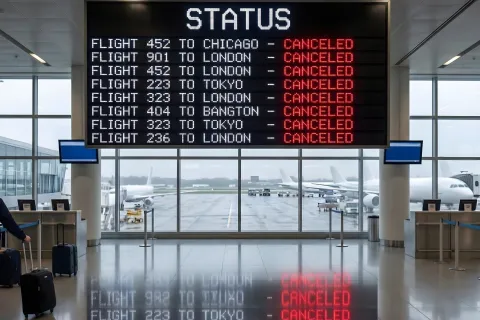
Over 200 Asian Flights Canceled Across 3 Countries
JAKARTA, Indonesia - Garuda, AirAsia, Malaysia Airlines, Lion Air, and Batik Air face over 200 flight cancellations across Indonesia, Malaysia, and Hong Kong, stranding travelers on domestic and international routes.
China Mandates New Digital Arrival Card for All Visitors
BEIJING, China — The National Immigration Administration debuts a mandatory digital arrival system requiring online submission up to 72 hours before entry, streamlining mainland China's border control.

Sabah Tourism Faces Value Crisis as Prices Soar
KOTA KINABALU, Malaysia — Escalating visitor dissatisfaction with "five-star prices for three-star service" exposes systemic weaknesses across Sabah's tourism industry, prompting urgent calls for coordinated action.

About the Author

Bob Vidra
Bob Vidra, based in scenic Tahoe, is an esteemed tech editor known for his deep understanding of the dynamic intersection of technology, travel, and the outdoors.