Stay current with our airline news coverage.
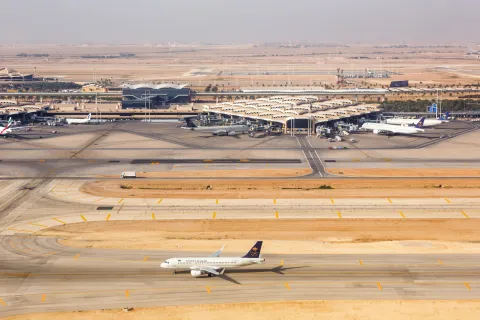
DUBAI, United Arab Emirates - The ceasefire is over, or at least over enough that airlines are pulling the emergency brake on Gulf routes. Air Astana announced it's suspending flights to the United Arab Emirates after the US and Iran resumed military operations on July 7, marking the latest in a series of abrupt pivots that have defined Middle East travel since the Iran war kicked off on February 28.
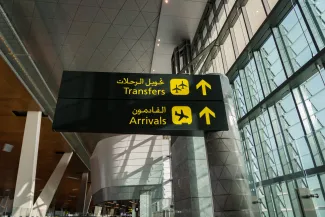
"Due to the ongoing escalation of the situation in the Middle East, Air Astana is suspending flights to the United Arab Emirates," the airline stated, according to Reuters. Services such as Almaty to Dubai and Astana to Dubai were affected around mid-July, with passengers offered refunds or free rebooking.
At the same time, Jazeera Airways issued a travel advisory as the regional security picture shifted from fragile peace to active hostility. Both sides are accusing each other of breaching the ceasefire, and for travelers, that translates to flight suspensions, rebooking chaos, and the kind of operational uncertainty that makes even booking a one-way ticket feel like a gamble.
What Collapsed and When
On July 7, Iran attacked three commercial vessels in Omani territorial waters near the Strait of Hormuz, triggering a major US military response. The US launched extensive airstrikes on Iran, hitting around 80 targets on Tuesday and about 90 more the following day, including coastal air defenses, anti-ship missile sites, and inland locations north of Tehran.
Iran's Revolutionary Guards retaliated by targeting US military positions in Bahrain and Kuwait, claiming strikes on 85 US sites and prompting air-raid sirens and missile and drone warnings in both countries. "President Trump has declared the ceasefire is over," noted an operational aviation briefing summarizing the US political stance on renewed strikes against Iran.
In tandem with the strikes, the US revoked a waiver that had allowed Iran to sell oil globally, reimposing sanctions on Iranian crude, petrochemicals, and petroleum products previously authorized until August 21. The Strait of Hormuz, through which one-fifth of the world's oil exports traditionally passes, became the focal point for both military confrontation and economic pressure. Brent crude oil prices rose by more than 3 percent to around $76 per barrel following the resumption of strikes and the reimposition of sanctions.
Airspace Guidance vs. Airline Reality
Around July 8, the EU Aviation Safety Agency (EASA) advised airlines to avoid the airspaces of Iran, Iraq, and Lebanon until August 31, while withdrawing an earlier, broader caution bulletin covering several Gulf states including the UAE. Operational briefings noted that despite renewed US-Iran strikes, most Gulf flight information regions, including the UAE, remained open to overflights and there were no new major conflict-related airspace closures or NOTAMs, indicating localized rather than systemic disruption.
"Things are a lot better than they were at the peak of the conflict, but the central Middle East corridor still isn't fully back," OpsGroup, an aviation operations network, said in an assessment of current flight operations and airspace conditions in the region.
That gap between regulatory guidance and airline decisions is where things get messy. Air Astana chose to suspend UAE flights entirely, while other carriers issued flexible rebooking policies and advisories. The aviation sector had been steadily recovering following large-scale closures after the Iran war began on February 28, and this latest round of suspensions feels like whiplash for travelers who thought the worst was over.
Most Gulf stock markets slipped in response to the renewed hostilities and sanctions, underscoring the broader economic stakes of instability in the region. Despite Iranian claims of closing the Strait of Hormuz, around 20 ships were reported to have transited the strait within a 24-hour period, suggesting partial but risky continuity of traffic.
The Backpacker's Risk Calculation
If you're trying to piece together a Gulf itinerary right now, you're navigating more than just logistics; you're making a bet on whether the ceasefire is actually dead or just wounded. Airlines are clearly hedging their bets by suspending routes and issuing waivers, but the underlying airspace remains open. That suggests that while the risk perception is high, the actual operational threat to civil aviation might be lower than the headlines imply.
For budget travelers and digital nomads with flexible plans, this is the moment to check your insurance fine print and consider alternative hubs. Dubai has been a key connection point for Asia, Africa, and Europe, and losing reliable service from carriers like Air Astana shrinks your options and likely increases your costs. If you're already in the region, monitor your airline's advisories closely; free rebooking is on the table, but only if you move fast.
The bigger question is whether this localized disruption spreads. If US-Iran hostilities intensify again, more carriers could pull out, and suddenly the entire Middle East corridor becomes a no-go zone for the second time this year. Right now, it's a patchwork of suspended routes and advisories, manageable but tense. That could change quickly, and travelers with fixed itineraries or non-refundable bookings are the ones who'll feel it first.
The Gulf isn't closed, but it's also not stable. Plan accordingly.
More travel news
Flydubai passengers reach Tel Aviv after cockpit attack
Passengers reached Tel Aviv after Israeli officials said passengers and crew stopped a co-pilot’s attempt to crash Flight FZ1073.
U.S. Level 3 Advisory Covers Dubai and Abu Dhabi
The nationwide Level 3 advisory is not a travel ban; Americans can still visit Dubai and Abu Dhabi but should assess the risks and prepare for possible flight changes.

Airlines Extend Middle East Flight Suspensions to 2027
LONDON, England - Virgin Atlantic has suspended Dubai flights until October 2027 as global carriers reroute, delay returns and cautiously rebuild Middle East service.

Flight Costs Stay High Despite New US-Iran Agreement
WASHINGTON - The preliminary U.S.-Iranian framework deal could ease fuel prices, but airlines warn fare relief may take months or never materialize.

About the Author

Mariana Torres
Mariana Torres is South America Editor at Jetsetter Guide, covering backpacking and off-the-beaten-path travel in the Andes and the Amazon.