Stay current with our airline news coverage.
What's Actually Happening to Gulf Routes
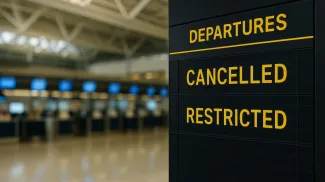
If you've flown through Dubai, Doha, or Abu Dhabi in the past decade, you know the Gulf carriers built their entire business model on being the geographic sweet spot between continents. Airspace closures don't just mean cancelled flights; they mean rerouting everything, burning more fuel, adding flight time, and turning what used to be the world's most efficient hub-and-spoke system into an expensive game of aerial Tetris. IATA didn't mince words about the scale of disruption. The organization is forecasting global airline profits will fall from $45 billion in 2025 to $23 billion in 2026, with net profit margins shrinking from 4.2 percent to 2.0 percent, according to Gulf News. That's industrywide, but the Middle East is taking the hardest hit by a long shot. Walsh acknowledged the impossible position these airlines are in: keeping routes open while taking massive financial losses just to maintain some semblance of connectivity. That "amazing job" he mentioned? It costs money the airlines don't have right now.The Budget Backpacker Calculus Just Shifted
For years, Gulf carriers were the budget traveler's secret weapon. You could fly from Bangkok to Berlin for $400 if you didn't mind a six-hour layover in Dubai. That pricing was built on razor-thin margins, hyper-efficient routing, and the assumption that airspace would stay open. All three of those factors just imploded. A $4.3 billion loss doesn't disappear quietly. It shows up as fare hikes, fewer sales, capacity cuts, and route cancellations. If you've been banking on Emirates, Etihad, or Qatar Airways to get you across continents on a shoestring budget, it's time to start looking at alternatives now, not when your booking window opens. This isn't about loyalty programs or minor schedule tweaks. This is about whether the routes you're counting on will even exist six months from now, and if they do, whether they'll still be remotely affordable. The digital nomad crowd that's been bouncing between Bali and Lisbon via Doha needs to recalculate. Those $500 round-trips were never guaranteed, and right now they look extremely fragile. Southeast Asia to Europe is the most obvious pressure point. Without Gulf hubs functioning at full capacity, you're left with pricier direct flights on European carriers, longer routings through Turkey or North Africa, or significantly more expensive multi-stop itineraries. None of those options are great if you're trying to stretch a travel budget across months instead of weeks.Where This Leaves Long-Term Travelers
If you're planning a big trip in the next 12 to 18 months, build in flexibility. Book refundable when you can, monitor route announcements obsessively, and have backup plans that don't rely on a single hub. The Gulf carriers aren't going under tomorrow, but they're under financial strain that will absolutely trickle down to passengers in the form of fewer options and higher prices. For travelers already on the road, this is a reminder that geopolitical chaos doesn't stay neatly contained in news headlines. It shows up in your flight search results, your layover options, and your bank account. The backpacker circuit has always required adaptability, but right now it requires more contingency planning than usual. The bigger structural question is what happens if this becomes the new normal. Gulf hubs transformed long-haul budget travel over the past two decades. If airspace instability becomes permanent, or even semi-permanent, the entire cost structure of overland travel between continents changes. That's not fear-mongering; that's just logistics. You can't run a low-cost connecting hub when you can't use the airspace that makes the connections efficient. Keep an eye on fare trends over the next few months. If you see prices creeping up on routes you care about, that's your signal. This isn't the time to wait for a better deal that might not come.More travel news
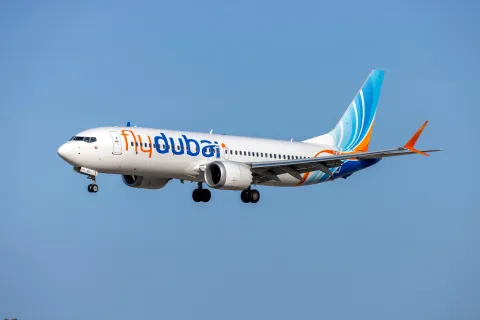
Flydubai passengers reach Tel Aviv after cockpit attack
Passengers reached Tel Aviv after Israeli officials said passengers and crew stopped a co-pilot’s attempt to crash Flight FZ1073.
U.S. Level 3 Advisory Covers Dubai and Abu Dhabi
The nationwide Level 3 advisory is not a travel ban; Americans can still visit Dubai and Abu Dhabi but should assess the risks and prepare for possible flight changes.

Airlines Extend Middle East Flight Suspensions to 2027
LONDON, England - Virgin Atlantic has suspended Dubai flights until October 2027 as global carriers reroute, delay returns and cautiously rebuild Middle East service.

Gulf Airlines Suspend Flights Amid Military Tensions
Dubai, United Arab Emirates - Air Astana halts UAE services and Gulf carriers issue advisories after renewed US-Iran strikes collapse ceasefire, forcing airlines to reroute and rebooking across the region.
About the Author

Mariana Torres
Mariana Torres is South America Editor at Jetsetter Guide, covering backpacking and off-the-beaten-path travel in the Andes and the Amazon.