Stay current with our airline news coverage.
What's Being Inspected, and Why Now
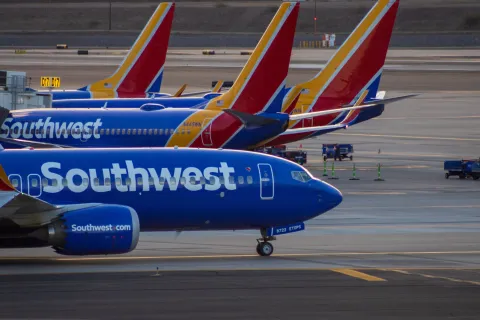
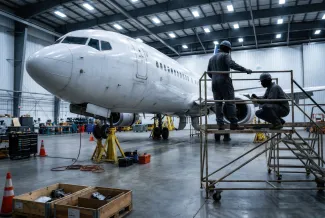
The FAA's airworthiness directive targets three variants: the 737 Max 8, Max 9, and Max 8-200. The bear strap is essentially a metal reinforcement that helps distribute loads around cutouts in the fuselage, like doors and hatches. Cracks there wouldn't necessarily cause an immediate failure, but left unchecked, they could weaken the structure over time, especially given the repeated stress cycles aircraft experience during normal operations. The directive comes as Boeing continues navigating federal oversight and certification delays. The company recently received long-awaited approval for the 737 Max 7, but remains under intense regulatory watch. The FAA noted that Boeing has modified its production process to address the bear strap issue in newly built aircraft, suggesting the problem may be concentrated in planes already delivered rather than an ongoing manufacturing flaw. Importantly, the FAA isn't grounding the fleet. Airlines can continue operating affected jets while scheduling the inspections within the compliance window, which should limit immediate disruptions. That's a different approach than the blanket grounding Boeing faced in 2019, though it still puts pressure on carriers to fit inspections into maintenance schedules that are already tight.The Ripple Effect for Airlines and Passengers
Even without a grounding order, mandatory inspections on this scale will create operational headaches. Airlines will need to pull planes out of rotation for checks, which could mean last-minute aircraft swaps, schedule adjustments, or reduced capacity on some routes. The exact timeline will depend on how quickly each operator can move through its fleet; some may opt to inspect during already-scheduled heavy maintenance visits, while others might need to accelerate the process. Passengers probably won't see wholesale cancellations, but they might notice more gate changes, re-accommodations onto different aircraft types, or slightly reduced frequencies on Max-heavy routes in the coming months. If you've got fall travel booked on a U.S. carrier with a large Max fleet, it's worth keeping an eye on schedule changes and signing up for flight alerts.Boeing's Quality Control Problem Keeps Growing
This isn't just about a single structural issue; it's the latest data point in a years-long pattern. Since the Max returned to service in late 2020, Boeing has dealt with electrical grounding problems, production defects, a door plug blowout on an Alaska Airlines Max 9, and now fuselage cracks. Each incident chips away at confidence, both with regulators and the flying public. The fact that Boeing has already changed its manufacturing process for new aircraft is a positive sign, but it doesn't help airlines stuck with planes already delivered. And while the FAA's decision to allow continued operations suggests the risk is manageable, the directive itself confirms federal authorities aren't giving Boeing much benefit of the doubt these days. For travelers, the practical question is whether to avoid the Max altogether. That's a personal call, but it's worth noting that the FAA and international regulators haven't restricted the plane's operations beyond these inspections. The aircraft meets current safety standards, even if it's required more fixes than anyone would like. Still, perception matters, and Boeing's credibility on quality control has taken a beating.Should You Change Your Travel Plans?
Probably not, at least not immediately. The inspection mandate is serious, but it's also preventive; the FAA isn't saying these planes are unsafe to fly right now, just that they need checks to make sure cracks haven't developed. If you're uncomfortable flying on a Max, most airline apps and booking tools now clearly identify aircraft types, making it easier to choose a different flight. What's harder to predict is whether this will snowball into broader delays or delivery issues for airlines waiting on new Max jets. Boeing's production remains under a microscope, and any additional problems could slow deliveries further, tightening capacity industry-wide. That could eventually push fares higher or reduce schedule options on some routes, though we're not there yet. For now, this is mostly an airline and manufacturer problem. It becomes a traveler problem if inspections drag on, if more serious issues are discovered, or if Boeing's production troubles worsen. Keep an eye on your flight alerts, stay flexible if you're traveling in the fall, and maybe don't be surprised if that Max 8 on your itinerary suddenly becomes a 737-800 or an Airbus instead.More travel news
U.S. Customs and Border Protection to End Routine Passport Stamps
CBP announced routine passport stamping will end during primary inspection, with limited exceptions; foreign visitors can access admission and authorized-stay details through I-94 or CBP Link.

Southwest, United seek older software on new 737 MAX jets
Southwest and United want earlier software on new 737 MAX deliveries as the FAA reviews a glitch that can block automated guidance after a missed approach if pilots alter the flight path.
Certain Boeing 737 Max jets have missed-approach software glitch
Boeing is developing a fix for the glitch affecting in-service Max 8 and Max 9 jets running U.14; Southwest Airlines and United Airlines say their Max fleets la...

Jet Fuel Prices Have Doubled Since January
Jet fuel prices have doubled since January, and Leeham News is modeling potential ticket and cargo price effects if the increase persists.
About the Author

Dana Lockwood
Dana Lockwood is a Travel Writer at Jetsetter Guide covering budget solo travel from her base in Denver, Colorado.