Stay current with our airline news coverage.
Detroit Metro Airport Raises Fees After Spirit Collapse
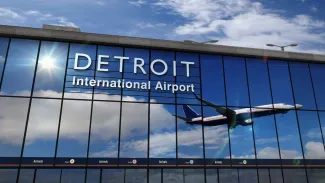
DETROIT, Mich. - If you're flying through Detroit this summer, your ticket might cost a little more, and it's not because of fuel prices or airline greed. Detroit Metro Airport just raised landing fees by 10% and rental fees by as much as 13% on July 1, a direct response to the gaping hole left by Spirit Airlines' bankruptcy and shutdown. Spirit's sudden exit left nine gates sitting empty at Detroit Metro, according to the Associated Press. That's not just an empty terminal problem; it's a revenue crisis. The carrier was Detroit's second-largest airline after Delta, moving more than 1.7 million passengers through the airport in 2025 alone. When an airline that size disappears overnight, it takes a massive chunk of revenue with it: landing fees, gate rent, passenger facility charges, concessions, parking, all of it.Who Pays the Price
The airport's fee hike isn't spread evenly. Airlines operating at the Evans Terminal, where Spirit was based, are seeing rental fees jump by 13%. Those at the McNamara Terminal, Delta's fortress, will only see a 1% increase in rental fees. Landing fees are going up 10% across the board. "When airports impose higher charges on airlines, those costs will be passed down to passengers through increased airfare," said Im Ourek, a former airline executive and educator at Western Michigan University, according to the Associated Press. That's the reality budget travelers need to understand: airport costs don't disappear. They get absorbed somewhere, and usually that somewhere is your ticket price. Even if you never flew Spirit, its collapse is about to cost you.The Ripple Effect Beyond the Tarmac
The fee increases are just one part of the fallout. Spirit's departure hammered nearly every corner of Detroit Metro's business. Concession revenue near the Evans Terminal gates dropped between 40% and 60% after Spirit left, with other vendors in the terminal down about 10%. Parking at the Big Blue Deck fell nearly 20% in May compared to the same month in 2025, according to Wayne County Airport Authority data cited in the research. "The shortfall from passenger facility charges due to Spirit's departure could lead to an increase in debt of roughly 3 million dollars," said Amber Hunt, chief financial officer of the Wayne County Airport Authority, according to background research. That's a lot of lost revenue hitting at once, and airports don't have endless reserves. The fee hike is essentially the airport asking remaining carriers to cover the gap Spirit left behind. Meanwhile, other airlines are circling. "After Spirit's closure, we reintroduced nonstop flights from Detroit to Fort Lauderboard and Las Vegas," said Rob Harris, a Frontier Airlines spokesperson, according to the research. That could help ease the traffic loss, but it won't replace 1.7 million passengers overnight.Where This Leaves Budget Flyers
Here's the hard truth: if you're trying to fly cheap out of Detroit, this makes it tougher. Spirit was the airport's discount workhorse, offering no-frills service at rock-bottom prices. With Spirit gone and airport costs rising, the remaining carriers have less incentive to compete on price. Delta dominates Detroit, and when one airline controls that much capacity, fares tend to drift upward. The fee increases won't show up as a separate line item on your ticket. Instead, they'll quietly fold into base fares or fuel surcharges over the coming months. You won't see "Detroit Metro fee hike" printed anywhere, but you'll feel it when flights that used to run $89 start hovering closer to $120. For solo travelers and backpackers routing through Detroit, this is a good time to get flexible. Consider alternate hubs if you're booking domestic connections. Chicago Midway, Cleveland, and even Milwaukee might offer better deals now that Detroit's cost structure has shifted. If you're locked into Detroit, book early and watch for fare drops; airlines may still run promotions to fill the void Spirit left, especially on routes Frontier or Southwest are trying to claim. The nine empty gates also mean fewer flight options for now. Reduced competition and fewer daily departures usually mean higher prices and less scheduling flexibility, two things budget travelers rely on. Until another low-cost carrier steps in or existing airlines expand significantly, Detroit is going to be a pricier, less convenient hub than it was six months ago. This isn't just about one airport or one bankrupt airline. It's a case study in how quickly the economics of budget travel can shift. When a major low-cost carrier collapses, everyone downstream feels it: the airport scrambles for revenue, remaining airlines absorb higher costs, and passengers end up footing the bill. If you're planning trips through Detroit this year, factor in a buffer for higher fares and keep an eye on route maps as carriers reposition. The landscape just changed, and it's going to take a while to settle.More travel news
Frontier Goes Upmarket After Spirit Shutdown
DENVER, United States - Frontier Airlines is pairing low fares with first-class seats, faster Wi-Fi and loyalty perks after Spirit Airlines exited the market.
Fans Launch Campaign to Resurrect Spirit Airlines
UNITED STATES - A grassroots movement aims to resurrect Spirit Airlines through crowdfunded public investment after the ultra-low-cost carrier's 2026 collapse.
Budget Carrier Collapses as Oil Crisis Grounds Fleets
MIAMI, USA - Viral reports of Spirit Airlines shutting down and Magnicharters filing for bankruptcy due to a U.S.–Iran oil crisis do not align with verifiable airline industry timelines or real-world events.

Repo Crews Seize Planes From Bankrupt Spirit Airlines
PHOENIX — When Spirit Airlines ceased operations in May, aircraft lessors turned to specialized repo firms to recover millions of dollars in abandoned jets scattered across a dozen U.S. airports.
About the Author

Dana Lockwood
Dana Lockwood is a Travel Writer at Jetsetter Guide covering budget solo travel from her base in Denver, Colorado.