
Stay current with our airline news coverage.
When Your Premium Long-Haul Plan Falls Apart
Here's what's actually happening on the ground. United rolled out these new 787-9s with significant fanfare, banking on upgraded business-class product and premium-heavy configurations to compete on profitable long-haul routes. The aircraft in question was supposed to anchor service on routes connecting major hubs in California, Texas, Washington, Illinois, Colorado, and Florida to London Heathrow and other key international destinations. Instead, it keeps breaking down. The technical setbacks have forced last-minute aircraft swaps, flight cancellations, and a scramble to accommodate passengers who booked specifically for the new premium product. If you've ever been downgraded from a lie-flat seat you paid cash or points for because the "equipment changed," you know exactly how this feels. Now multiply that frustration across dozens of flights and six major state markets. London Heathrow service has been particularly hard hit, Reuters noted. Heathrow is already one of the most slot-constrained airports in the world; when an aircraft goes tech and you can't just swap in another plane without disrupting the entire day's schedule, passengers end up stuck. And unlike a quick domestic hop, a busted transatlantic flight means rebooking nightmares, missed connections on the far end, and hotel expenses that may or may not get reimbursed depending on how generous United's gate agents are feeling that day.The Real Cost for Travelers on Tight Budgets
If you're flying premium, you've got leverage and maybe some status to push for compensation. If you're in economy on a cheap fare you booked six months ago, your options shrink fast. Budget travelers and digital nomads who time their transatlantic crossings around fare sales are getting squeezed hardest. When flights cancel, rebooking often means higher fare classes or routing through additional hubs, turning a nonstop into a two-stop odyssey through Newark and somewhere in Europe you never intended to visit. Airlines aren't obligated to put you on a competitor's flight unless they're truly out of options, so you might find yourself camping in an airport lounge you don't have access to, burning through your phone battery and your patience in equal measure. Award ticket holders face their own version of purgatory. If United cancels your Polaris business award, they'll rebook you, but good luck finding the same award space on another date. Saver-level availability evaporates, and suddenly you're either burning more miles or settling for economy. For travelers originating in California, Texas, Washington, Illinois, Colorado, or Florida, the disruptions hit particularly hard because these states represent United's core hub network. San Francisco, Los Angeles, Houston, Seattle, Chicago, and Denver are all major origination points for long-haul international service. When one aircraft in the premium long-haul fleet goes sideways, it doesn't just affect one route; it creates a scheduling crisis that touches every hub.Where This Leaves the Road Crew
I've spent enough years bouncing between continents to know that operational reliability matters more than any flashy new seat design. A fancy suite in the sky means nothing if the plane never leaves the ground. What strikes me about this situation is how it exposes the fragility of ultra-premium, aircraft-specific strategies. United made a calculated gamble: invest heavily in a small number of specially configured planes to win over high-yield business travelers and points enthusiasts. It's a smart move when it works. But when a single airframe becomes the linchpin of your entire premium long-haul network and that airframe keeps failing, you've built a house of cards. For travelers, the lesson is uncomfortable but clear. Book with redundancy in mind. If your entire trip hinges on a single nonstop on a specific aircraft type, have a Plan B. That might mean booking refundable fares when you can afford it, positioning yourself in cities with multiple daily frequencies, or just accepting that sometimes your meticulously planned award redemption is going to get blown up by a mechanical issue three time zones away. The involvement of multiple states suggests this isn't just a customer service headache; it's become a regulatory and perhaps legal concern. When state governments start coordinating responses to an airline's operational problems, it signals that the disruptions have reached a scale that affects commerce, tourism, and passenger rights in ways that demand oversight. That's not the kind of attention any carrier wants. Until United either fixes the technical problems with this aircraft or pulls it from service entirely, travelers flying these routes should plan for uncertainty. Check your flight status obsessively in the 24 hours before departure. Have backup routing options ready. And if you're booking award travel, make sure you've got enough miles cushion to rebook at short notice if saver space disappears. The promise of a cutting-edge premium experience is appealing. But right now, on this particular plane, the more valuable amenity would be an aircraft that actually takes off on time.More travel news
Duplicate American Flight Number Sparks ATC Confusion
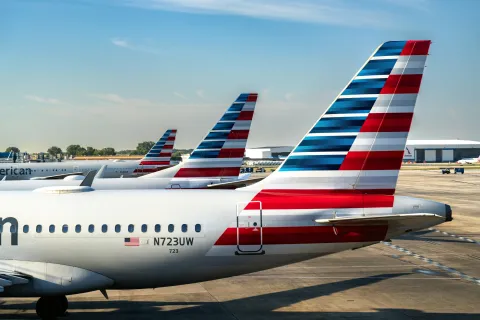
PHOENIX, United States - Two American Airlines Boeing 737s used the same flight number near Phoenix, forcing controllers to untangle a potentially dangerous mix-up.
Airlines Seize Carry Ons While Overhead Bins Sit Empty
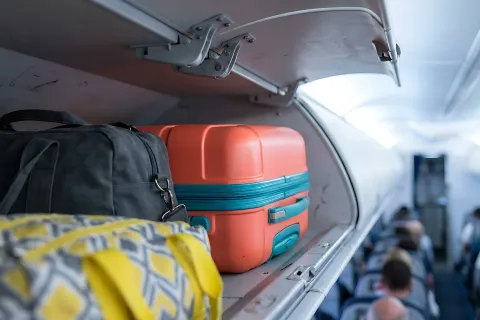
New York, United States - Complaints involving American, Delta and United highlight preemptive gate checking, where departure efficiency can trump passengers' access to open bins.
United Unveils Boston to Jackson Hole Ski Nonstop
BOSTON, United States - United Airlines is adding a short-run nonstop to Jackson Hole, giving New England skiers a direct flight during the core 2026-27 winter season.

American Airlines Barefoot Ban Catches Flyers Off Guard
FORT WORTH, Texas - American Airlines passengers may be surprised by its barefoot rule, but the evidence points to an existing contract provision, not a new ban.

About the Author

Mariana Torres
Mariana is a 33-year-old travel writer and backpacker who specializes in finding the pulse of a place far beyond the tourist maps.