Stay current with our airline news coverage.
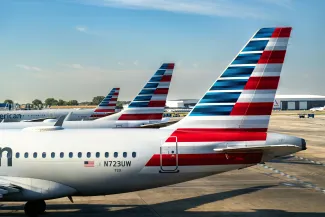
PHOENIX - One flight number, two Boeing 737s and a busy patch of Arizona sky. That was the deeply uncomfortable combination near Phoenix on Aug. 18, when two American Airlines jets simultaneously identified themselves to air traffic control as “American 2482.”
The aircraft were flying in opposite directions between Chicago O’Hare International Airport and Phoenix Sky Harbor International Airport. One was arriving in Phoenix while the other was departing for Chicago, according to Simple Flying. Both were Boeing 737-800s, and both were using flight number AA2482 on the same radio frequency.
Required separation was maintained, and the flights reached their destinations without injuries, according to the Associated Press. Still, the episode exposed a communications hazard that’s easy to understand even if you’ve never listened to an air traffic control frequency: When a controller calls one airplane, both crews might reasonably think the instruction is for them.
How Two American 737s Became Flight AA2482
American routinely uses AA2482 as a round-trip flight number between Chicago and Phoenix, according to One Mile at a Time. Ordinarily, the same aircraft operates both directions, so the two legs don’t overlap.
Weather disrupted that tidy arrangement. The Chicago-to-Phoenix flight was delayed, while another Boeing 737-800 departed Phoenix for Chicago close to schedule, according to Simple Flying. That created a window of approximately 15 minutes in which both aircraft were airborne near Phoenix as American 2482.
The inbound aircraft was N946NN, while the departing jet was N925AN, Simple Flying reported. Their paths were initially converging above the Phoenix area, and both crews were monitoring the same air traffic control frequency.
A Phoenix controller recognized the duplicate call sign and began distinguishing the jets by referring to one as American 2482 on the arrival and the other as American 2482 on the departure, according to Simple Flying. The controller also issued altitude and heading instructions to preserve vertical and lateral separation.
A pilot’s recognition of the mix-up also helped bring the problem into focus. That matters because aviation communication relies heavily on crews reading instructions back to controllers. Duplicate call signs make that error-checking process less clean, especially when two similar aircraft from the same airline are operating close to one another.
The Phoenix Incident Wasn’t an Isolated Mix-Up
The timing makes this more concerning. On Aug. 12, two CRJ-700 regional jets operated by American subsidiary PSA Airlines simultaneously used flight number AA5083 while flying in opposite directions between Philadelphia and Providence, Rhode Island, according to the Associated Press.
The Philadelphia-to-Providence flight was running more than one hour late, prompting PSA to use another aircraft for the scheduled return to Philadelphia. Both jets then operated as Blue Streak 5083, PSA’s radio call sign for the flight, for about 26 minutes.
Boston Center alerted the inbound crew that another aircraft from the same company was using the identical call sign. Providence Approach subsequently differentiated the jets as the inbound and outbound aircraft, the AP reported.
A third example occurred near Louisville on April 22, when two PSA flights used the call sign Blue Streak 5383 while one was arriving and the other was departing, according to the AP. Taken together, the episodes show how delays, replacement aircraft and reused round-trip flight numbers can create an identification problem that normally stays hidden.
American operates up to roughly 7,000 daily flights during peak periods, while industry flight numbers are largely limited to four digits, the AP reported. Reusing numbers is therefore hardly surprising. Allowing two aircraft with the same identifier to overlap on the same frequency, however, is where an administrative convenience becomes a safety concern.
FAA and American Airlines Reviews Underway
The Federal Aviation Administration has opened an investigation into the Phoenix incident, according to the AP. American Airlines is also reviewing its scheduling and dispatch processes to determine why the duplicate call signs weren’t prevented.
The airline has emphasized that required separation remained in place and credited the controllers and flight crews for identifying and resolving the situation, the AP reported. That’s an important distinction: This was a serious communications risk, but the aircraft didn’t breach required separation standards.
The question now is why dispatch systems allowed the overlap in the first place. The AP’s reporting argues that when a delay and aircraft substitution put two identically numbered flights in the air together, American should file a unique air traffic control identifier before releasing the second aircraft.
A Small Identifier With an Outsized Safety Role
From an airline operations perspective, this looks less like a mysterious technical failure and more like a preventable coordination problem. The controllers handled the situation, the pilots stayed alert and nobody was injured. Good outcome. But relying on people to untangle duplicate identities in real time isn’t nearly as reassuring as preventing the duplication before departure.
For passengers, there’s no clear reason here to avoid AA2482, the Chicago-Phoenix route or the Boeing 737-800. The reporting points to dispatch and call sign management, not an aircraft defect. Travelers also shouldn’t expect a visible change to their booking if American assigns a separate radio identifier; the identifier used by controllers can be handled operationally without necessarily changing the flight number displayed on a ticket.
The more useful thing to watch is the FAA investigation and American’s internal review, particularly whether the airline adds a reliable safeguard for delayed round trips operated with substitute aircraft. Two incidents within less than a week, plus the April event near Louisville, make it difficult to wave this away as a one-off bit of bad luck.
Aviation has layers of protection precisely because people catch mistakes. Near Phoenix, those layers worked. Still, flight numbers should help everyone identify an airplane, not turn a routine radio call into a guessing game.
More travel news
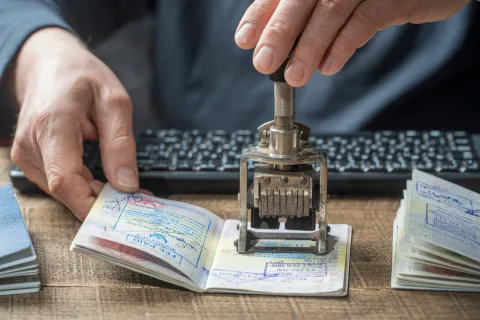
U.S. Customs and Border Protection to End Routine Passport Stamps
CBP announced routine passport stamping will end during primary inspection, with limited exceptions; foreign visitors can access admission and authorized-stay details through I-94 or CBP Link.
American Airlines may adjust capacity if fuel prices stay high
American Airlines says persistently high fuel prices may force further capacity changes, while United Airlines has cut capacity roughly 5% and Southwest Airlines has modified schedules.
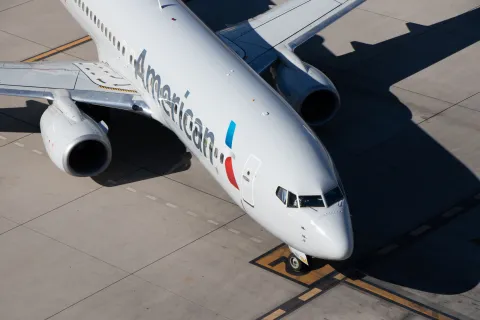
American Led Bag Mishandling Rates on Reportable Domestic Flights in Early 2026
For January through June 2026, the DOT data covers checked bags in airline custody on reportable domestic nonstop scheduled passenger flights; mishandled includes lost, delayed, damaged or pilfered bags.
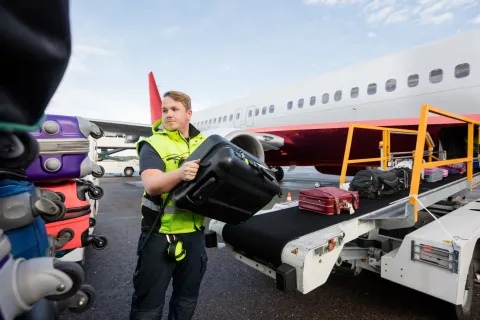
United Flight Attendants Can Refuse ICE Questions
Washington, United States - United flight attendants were told they may remain silent when ICE asks about passengers or coworkers as airport arrests increase nationwide.
About the Author

Bob Vidra
Bob Vidra is News Editor at Jetsetter Guide, covering airlines, airports and the travel industry since 2023.