Stay current with our airline news coverage.
Border Tensions Halt Travel Across Key Southeast Asian Corridor
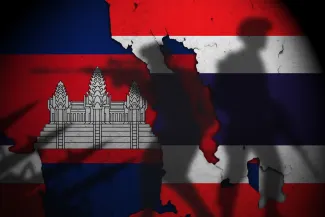
BANGKOK, Thailand — The 550-mile stretch from the Gulf of Thailand to the southern Lao border has become the latest casualty in Southeast Asia's tourism recovery, as escalating tensions between Thailand and Cambodia force governments to issue urgent travel warnings during what should be peak season. Australia's government issued updated guidance telling holidaymakers to "do not travel" within 30 miles of either side of the border, according to Smartraveller, effectively creating a 60-mile no-go zone across one of the region's most traveled corridors. The advisory comes as both nations face their most serious confrontation in years, with fighting forcing more than half a million civilians to evacuate and border crossings shuttered indefinitely. For those of us who've built lives in this region, watching the border close feels like watching a familiar restaurant suddenly go dark. The Thailand-Cambodia frontier isn't just a line on a map—it's a living network of markets, temples, family connections, and the kind of cross-pollinated food culture that makes Southeast Asia so compelling. When borders close, it's not just tourists who suffer; it's the hawker stall owners in Trat, the guesthouse operators in Koh Kong, and the thousands of small businesses built on the assumption that people can move freely.What Travelers Need to Know Now
The Australian government warned that assistance may not be available if travelers encounter difficulties in the advisory zone. This isn't bureaucratic overstatement—when borders become active conflict zones, consular access becomes nearly impossible, and evacuation routes disappear overnight. The current escalation follows deadly clashes in July that resulted in at least 48 deaths and temporarily displaced an estimated 300,000 people, according to Smartraveller. Both sides exchanged rocket and heavy artillery fire during that confrontation, establishing a pattern of rapid escalation that makes the current situation particularly volatile. The 800-kilometer border has long been contested, rooted in colonial-era demarcation disputes and competing claims to historic temple sites. But this year's tensions carry a different weight, arriving at a moment when the region's tourism industry was finally recovering from pandemic losses and rebuilding traveler confidence.Popular Destinations Now Off-Limits
The affected zone encompasses some of Thailand's most distinctive border provinces: Trat, home to the tourist islands of Koh Chang, Koh Kood, and Koh Mak; Chanthaburi, famous for its gem markets and fruit orchards; and Sa Kaeo, a key crossing point for travelers heading between Bangkok and Phnom Penh. On the Cambodian side, popular destinations like Koh Kong and access routes to Preah Vihear temple now fall within advisory zones. For food-focused travelers, this closure means losing access to one of Southeast Asia's most fascinating culinary borderlands. The Thai-Cambodian frontier has always been where Khmer techniques meet Thai ingredients, where prahok (fermented fish paste) shares table space with nam prik, and where market vendors seamlessly switch between languages and currencies. These aren't experiences you can replicate elsewhere—they exist precisely because of the border's porosity.Impact on Peak Season Tourism
December through February represents peak travel season across Southeast Asia, when cooler, drier weather draws visitors to beaches, mountains, and cultural sites. The timing of these tensions couldn't be worse for regional tourism operators already operating on thin margins. More than 400,000 people have been evacuated from Thai border provinces alone, according to reports, with an additional 55,000 relocated on the Cambodian side. These aren't just statistics—they represent emptied hotels, closed restaurants, and suspended livelihoods in communities that depend almost entirely on cross-border trade and tourism. Land border crossings between the two countries remain suspended, meaning travelers cannot currently cross between Thailand and Cambodia by road. This forces significant detours through Laos or reliance on increasingly expensive and limited air connections between Bangkok and Phnom Penh.Alternative Routes and Practical Considerations
For travelers with existing plans involving both countries, flying remains the only viable option. Bangkok Airways and Thai Airways maintain regular service between Bangkok and Phnom Penh, though expect higher prices and fuller flights as demand concentrates on this sole corridor. Those planning travel to either country should avoid the entire border region, including areas that may technically fall outside the 30-mile advisory zone. Artillery doesn't respect precise measurements, and the fluid nature of these confrontations means today's safe zone can become tomorrow's evacuation area. Northern Thailand and Cambodia's Angkor region remain generally accessible and outside immediate conflict zones, though travelers should monitor advisories closely. The U.S. State Department has also issued heightened warnings for the border area, reinforcing Australia's assessment of serious risk.What This Means for Southeast Asia Travel
The closure of the Thailand-Cambodia border represents more than a temporary inconvenience—it's a reminder of how quickly political tensions can reshape travel landscapes in Southeast Asia. For expats and frequent visitors, it's a sobering moment that challenges assumptions about regional stability. The broader impact extends beyond immediate safety concerns. When major travel corridors close, it affects regional flight patterns, cross-border supply chains that keep restaurants and hotels stocked, and the intangible sense of openness that makes Southeast Asia feel accessible compared to other developing regions. For now, travelers should heed official warnings, maintain flexible itineraries, and recognize that some experiences—no matter how compelling—aren't worth the risk. The temples, markets, and border town restaurants will still be there when tensions ease. The question is how long that will take, and what the region's tourism infrastructure will look like when borders finally reopen. Check your government's travel advisories before planning any trip involving Thailand or Cambodia, and maintain travel insurance that covers evacuation and trip cancellation due to political unrest. This is one of those moments when caution isn't just prudent—it's essential.More travel news
Villa Vie Odyssey suspends world voyage in Cambodia
Villa Vie Odyssey residents were ordered ashore in Sihanoukville after rising fuel costs suspended the world voyage; the operator plans 60 days of restructuring, with no assured outcome.

Saudi Arabia: Australia Raises Advisory to Do Not Travel
Australians should postpone all Saudi Arabia trips, including religious travel; those already there should consider leaving if safe and confirm flights before going to an airport.

Aurora Expeditions Welcomes Kids on Remote Voyages
Sydney, Australia - Aurora Expeditions has lowered its minimum age requirement to six, bringing families with school-age children onto expedition ships bound for Antarctica, the Arctic and other remote regions.

Australia Replaces Paper Forms With Digital Travel Cards
Sydney, Australia - The Australian government announces nationwide rollout of digital passenger cards to eliminate paper forms at all international entry points over the next 12 to 18 months.

About the Author

Andy Wang
Andy Wang is Asia Editor at Jetsetter Guide, covering Southeast Asian travel and food from his base in Singapore. A first-generation American, he brings a dual perspective to the region.