Stay current with our airline news coverage.
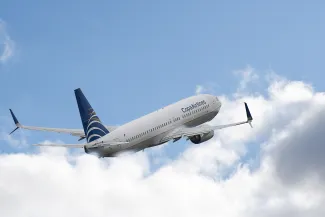
A Copa Airlines passenger jet heading to its gate and a UPS cargo plane taxiing for departure collided at Miami International Airport on Saturday night, leaving two passengers with minor injuries. The collision happened at approximately 9:15 p.m., according to airport officials cited by ABC News. Both aircraft were on the ground.
Miami-Dade Fire Rescue treated the two people at the scene; neither needed to be taken to a hospital, Miami-Dade Aviation told ABC News. Copa said its Boeing 737-800NG carried 166 passengers and six crew members, with everyone other than the two people treated reported to be in good condition.
For travelers with other flights through Miami, the airport’s initial update was reassuring: Aircraft were directed to other taxiways, and airport operations were not affected, according to ABC News. That distinction matters here. This was a collision involving two aircraft, but the airport did not report a broader operational shutdown because of it.
What happened on the Miami taxiway
The Copa aircraft had arrived from Panama City, while the UPS Boeing 767 was preparing to depart for Bogota, Colombia, according to the Associated Press. The National Transportation Safety Board said the aircraft came into contact at a taxiway intersection.
The FAA’s account, reported by ABC News, describes the Copa jet’s wingtip striking the nose of the UPS aircraft. Controllers had instructed the UPS crew to give way to the Copa flight. In other words, the departing cargo aircraft was supposed to let the arriving passenger jet pass.
The NTSB said Sunday that preliminary information indicated the UPS aircraft did not stop after receiving that instruction, according to the Associated Press. That is an initial account of the aircraft’s movement, not a completed finding about why the collision happened.
Air traffic control audio adds another piece to the sequence. The Associated Press reported that a UPS pilot told controllers the aircraft had gone too far at the intersection and was clipped by the Copa jet. The controller then reminded the UPS crew that it had been instructed to yield.
What Copa passengers experienced
Inside the arriving Copa aircraft, passenger Cesar Ferreira described a sudden sideways jolt after rising chatter and a collective scream, according to CNN. Ferreira said the crew reacted quickly and directed passengers to remain seated.
Ferreira told CNN that after about 10 minutes, the captain announced there was no imminent danger and that a tug would be brought in to move the aircraft. Copa subsequently said all 166 passengers and six crew members had disembarked and the plane had been returned to the terminal.
The Associated Press reported that Copa identified the two people treated for minor injuries as passengers. UPS separately said its crew was safe, according to ABC News. Those updates establish a relatively limited injury toll, even as investigators assess the aircraft damage and the circumstances behind the contact.
Minor injuries, but substantial damage to the UPS plane
The injury reports and the aircraft damage tell different parts of this story. The NTSB’s preliminary information described substantial damage to the UPS aircraft, while an assessment of the Copa jet had not yet been completed, according to the Associated Press.
Photos described by the Associated Press showed a horizontal gash on one side of the UPS plane’s nose and a larger hole in the middle. CNN also reported that the Copa pilot advised controllers that the aircraft appeared to be missing its left wingtip. That cockpit report should not be confused with a completed damage assessment.
Investigators examine the taxiway collision
Both the FAA and NTSB opened investigations, according to CNN. The NTSB said Sunday that it expected a preliminary report within 30 days, the Associated Press reported. UPS said it was working with authorities to determine what happened; Copa also pledged to cooperate, according to ABC News.
The UPS crew also referred to a checklist and a runway change in the radio exchange. Simple Flying reported that a pilot said the crew was in the middle of a checklist for a runway change. The publication noted that such a change can require updates to the flight management computer, adding work while an aircraft is taxiing.
Simple Flying also noted that FAA taxiing guidance recommends minimizing cockpit workload and keeping at least one pilot focused outside the aircraft. The checklist reference provides context, but it does not establish the investigation’s eventual explanation.
For now, the immediate passenger outcome is clearer than the cause: Copa’s occupants disembarked, the two injured passengers were treated at the airport, and other flights used alternate taxiways. The instruction to yield is documented in the FAA’s account; why the UPS aircraft continued too far remains a question for investigators.
Explore more North America travel →
More travel news
Nationwide FAA Ground Stop Ends; Cancellations Continue
The nationwide FAA stop was lifted Friday, but cancellations persisted; Southwest's waiver covers customers ticketed for Nov. 13-16, while Delta's covers flights scheduled for Nov. 13-14.
FAA ground stop ended; schedule recovery forecast for Nov. 15
A telecom upgrade triggered the Nov. 13 halt. Under U.S. rules, travelers facing cancellations or delays of three hours domestically or six internationally must be offered alternative travel or a full refund if they do not fly.
American Airlines Restarts Daily Miami–Cap-Haïtien Flights
The Nov. 1 restart restores daily nonstop service to northern Haiti, with more than 90 U.S. connections via Miami; Port-au-Prince service remains suspended.
Boeing 737NG tail inspections ordered for 1,987 U.S. jets
Effective Nov. 23, 2026, the mandate covers 1,987 specified U.S.-registered 737NG aircraft, not the 737 MAX, and may require repeat checks or repairs based on findings.
About the Author

Bob Vidra
Bob Vidra is News Editor at Jetsetter Guide, covering airlines, airports and the travel industry since 2023.