Stay current with our airline news coverage.
United Airlines Resolves System Outage Affecting Departing Flights
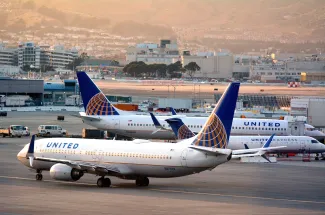
CHICAGO, United States - United Airlines resolved a systemwide technology outage Monday, Nov. 16, after roughly an hour of disruption affecting departing United-operated flights, according to Skift. Flights already airborne and United Express regional flights were not affected by the outage.
The immediate problem was fixed, but that did not establish that every affected flight was back on schedule. Passengers should check their individual flight status through United, review onward connections and confirm any rebooking before leaving the airport or abandoning an existing itinerary.
The distinction matters for connecting passengers: A United Express flight could have been unaffected by the technology failure while a connecting United-operated departure was delayed. Check each segment, not just the reservation’s first flight.
What Happened During the United System Outage?
United acknowledged a “widespread system outage” in responses to passengers on X on Monday afternoon, Forbes reported. Several passengers said their flights could not obtain weight information needed before departure.
According to Forbes, United said it was troubleshooting the problem around 2:30 p.m. Eastern time and confirmed Monday evening that the “technology-related issue” had been resolved. Skift reported that the disruption lasted roughly an hour.
The passenger accounts help explain why aircraft were waiting, but they do not establish the technical cause. United’s public acknowledgment, as described by Forbes, did not identify the failed component or explain what triggered the outage.
United said there was no indication of a cybersecurity incident, according to CNN. That is narrower than a complete explanation of the failure. It addresses one possible cause without establishing another.
How Many United Flights Were Affected?
The exact number of flights disrupted specifically by Monday’s outage was not known, Forbes reported. Skift’s Monday evening tally showed 21 United cancellations and 418 delays, but those figures should not be treated as an outage-only total.
Airlines were still recovering from a separate Federal Aviation Administration telecommunications failure three days earlier. Monday’s flight statistics therefore reflected a broader operating environment, not a clean measurement of United’s brief technology interruption.
Skift reported roughly 300 cancellations and more than 8,000 delays across the industry during the recovery. Those industry figures do not mean other carriers experienced United’s system problem. Skift reported that other airlines did not appear to be affected by the United outage.
For travelers, the useful number was the departure time attached to their own flight. A systemwide resolution notice could confirm that the technical interruption had ended without answering whether a particular connection remained workable.
A Separate FAA Failure Had Already Disrupted Air Travel
Monday’s United outage followed the FAA telecommunications failure on Friday, Nov. 13, which triggered a nationwide ground stop. Skift reported that the nearly five-hour halt was followed by close to 18,000 flight cancellations over the weekend.
Forbes reported that the FAA attributed Friday’s failure to a router overload during technology upgrades by L3Harris. The agency said it had no indication that a cyberattack caused the disruption.
These were two different events with different scopes. Friday’s failure involved national aviation infrastructure and disrupted airlines across the country. Monday’s problem involved United’s departure operations, with United Express and airborne flights excluded.
Skift reported that United did not link its outage to the FAA ground stop. Their proximity on the calendar is not evidence that they shared a technical cause. What they did share was the burden they placed on travelers trying to complete trips during an already disrupted period.
What Affected United Passengers Should Check
United had not announced a specific compensation program for the Nov. 16 outage, according to The Associated Press. Travelers should not assume an automatic payment or a special reimbursement policy applies.
Instead, focus on the details of the individual reservation and ask United what assistance is available:
- Confirm every flight segment. Check the operating carrier, departure time and connection status. The outage’s United Express exemption does not establish that every regional flight was otherwise on time.
- Review connections before accepting a change. Ask whether the revised itinerary still gets you to the intended destination and whether all affected segments have been updated.
- Keep records. Save delay notifications, boarding passes, rebooking confirmations and receipts for expenses you intend to submit for consideration.
- Ask about assistance before spending. Confirm whether United will provide or reimburse meals, lodging or transportation in your circumstances. Do not treat an out-of-pocket purchase as preapproved.
- Notify the next travel provider. If the delay affects a hotel arrival, cruise departure or guided trip, contact that operator directly rather than assuming the airline will handle it.
Why “Resolved” Is Not the Same as Trip Recovered
The practical lesson is to separate the condition of an airline’s systems from the condition of your itinerary. United’s announcement answered the first question: The technology issue was resolved. It did not answer the second: Whether your departure, connection and arrival plans were still intact. That requires a flight-by-flight check.
The back-to-back disruptions also show why identifying the scope of a failure matters. A nationwide FAA ground stop and a United-only departure outage call for different assessments. Monday’s United problem did not, by itself, establish a reason to change a reservation on another carrier. For United passengers, however, it was a reason to scrutinize connections even after the restoration announcement.
For trips tied to an expedition departure, a cruise embarkation or a fixed business commitment, protect the onward arrangements first. Confirm the airline’s revised arrival time, tell the receiving operator what changed and ask about its cutoff or late-arrival options. The useful response to an outage is not simply finding another flight; it is determining whether the full trip still works.
More travel news
United Airlines Blocks Unauthorized Third-Party AI Bookings
Travelers may still use AI to research United flights, but unauthorized third-party personal AI agents cannot complete new bookings; bookings made before Nov. 11 will be honored.
United Airlines to Exit Tulum; Delta to Pause in 2027
Passengers booked on affected Tulum flights can review alternatives or refunds; United’s routes end Jan. 2 and 4, while Delta pauses May 3 and expects a November 2027 return.

Uganda Remains Under U.S. Level 4 Do Not Travel Advisory
The June 4 advisory remains in effect despite Uganda declaring its Ebola outbreak over; Americans with safari bookings should confirm how their policy treats Level 4 travel.

Delta Air Lines, United Airlines and JetBlue Sell Lower-Priced Premium Fares
Travelers booking Delta Basic Business, United Polaris Base or JetBlue Mint Base retain lie-flat seats, but seat selection, bags, lounge access and ticket flexibility vary by fare.
About the Author

Jeff Colhoun
Jeff Colhoun is a photographer and filmmaker whose work has appeared in The Wall Street Journal, the Los Angeles Times, Matador Network and Barron’s.